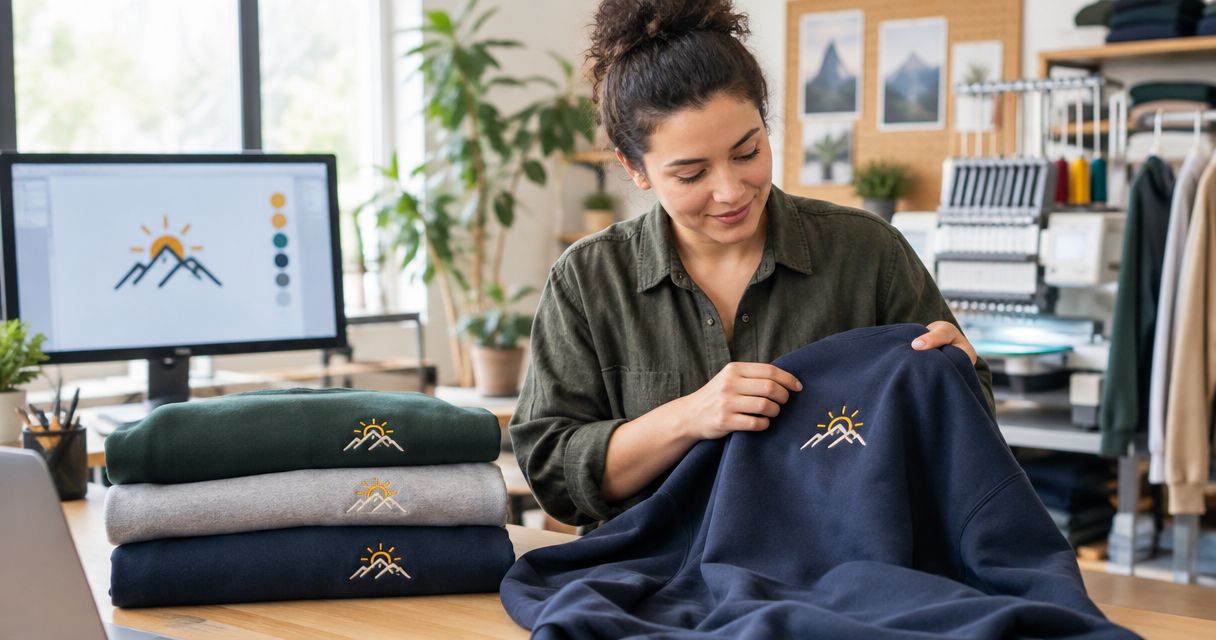
Custom embroidered apparel for small businesses is branded clothing and headwear — polos, caps, jackets, beanies — stitched with a logo, name, or message to build brand recognition without an enterprise marketing budget. Small business orders differ from big-brand runs in three ways: lower minimums, tighter budgets, and a product mix built around what the team actually wears on the job, not what looks good in a catalog photo.
- Custom embroidered apparel for small businesses works best when ordered in a 12-25 unit sample run before a full reorder.
- Embroidery outlasts screen printing on caps, polos, and jackets that get washed weekly through 2026 and beyond.
- Screen printing wins on large flat logos and tight budgets; embroidery wins on durability for client-facing staff.
- Standardizing on one or two garment styles, not ten, is what makes reorders manageable for a small team.
Why this matters
Custom embroidered apparel for small businesses matters because clothing is the cheapest, most durable brand touchpoint a small operation controls. A logo stitched onto a cap or polo travels to job sites, trade shows, and customer counters for years — screen-printed graphics crack and fade long before embroidery thread gives out. For a five-person landscaping crew or a 12-person salon, uniform apparel with a clean embroidered logo does the job of a marketing budget the business doesn't have.
Wholesale For Everyone stocks the blanks small businesses actually need — hats, beanies, bandanas, doo rags — in case quantities that match what an embroidery shop can realistically run, without forcing a 500-unit apparel commitment.
Build your custom embroidered apparel order step by step
1. Pick the base garments first
Decide what your team will physically wear before you touch a single logo file. A crew that works outdoors needs different embroidered pieces than a front-desk team.
- Caps and beanies for outdoor, retail, or delivery staff
- Polos or button-downs for client-facing roles
- Doo rags or bandanas for kitchen and warehouse crews
- Neck gaiters for outdoor work crews in cold or dusty conditions
- Jackets for cold-weather teams that need year-round branding
Corporate-facing teams that want a polished, uniform look tend to start with headwear — see how custom embroidered hats for corporate branding get ranked before you lock a garment list.
2. Set your logo file and stitch requirements
Embroidery digitizing has its own rules — a logo that looks crisp printed can turn to mush stitched.
- Submit a vector file (AI or EPS) or a high-resolution PNG, never a low-res web logo
- Simplify small text under 3/8 inch tall — embroidery blurs fine detail at that size
- Cap thread colors at 6-8 for clean, affordable stitching
- Confirm placement in writing: left chest, back panel, or side of a cap
3. Decide your minimum order quantity and budget
The manual, free-to-check route is calling three or four local embroidery shops and asking their minimum order quantity and turnaround in writing — expect real variation across shops.
- Ask every shop its MOQ before you commit to a design
- Budget for a one-time digitizing fee on your first order
- Split the budget into blanks cost and embroidery cost separately
- Add a 10% buffer for staff turnover and damaged units
- Confirm turnaround in writing, especially around back-to-school and holiday months
The faster path for a small business is ordering pre-stocked blanks and embroidery in the same order rather than shipping garments to a separate digitizer.
Order blanks and embroidery together
Browse hats, beanies, and bandanas built for small business orders.
4. Compare screen print vs embroidery for your item mix
Most small businesses end up mixing the two methods rather than choosing one.
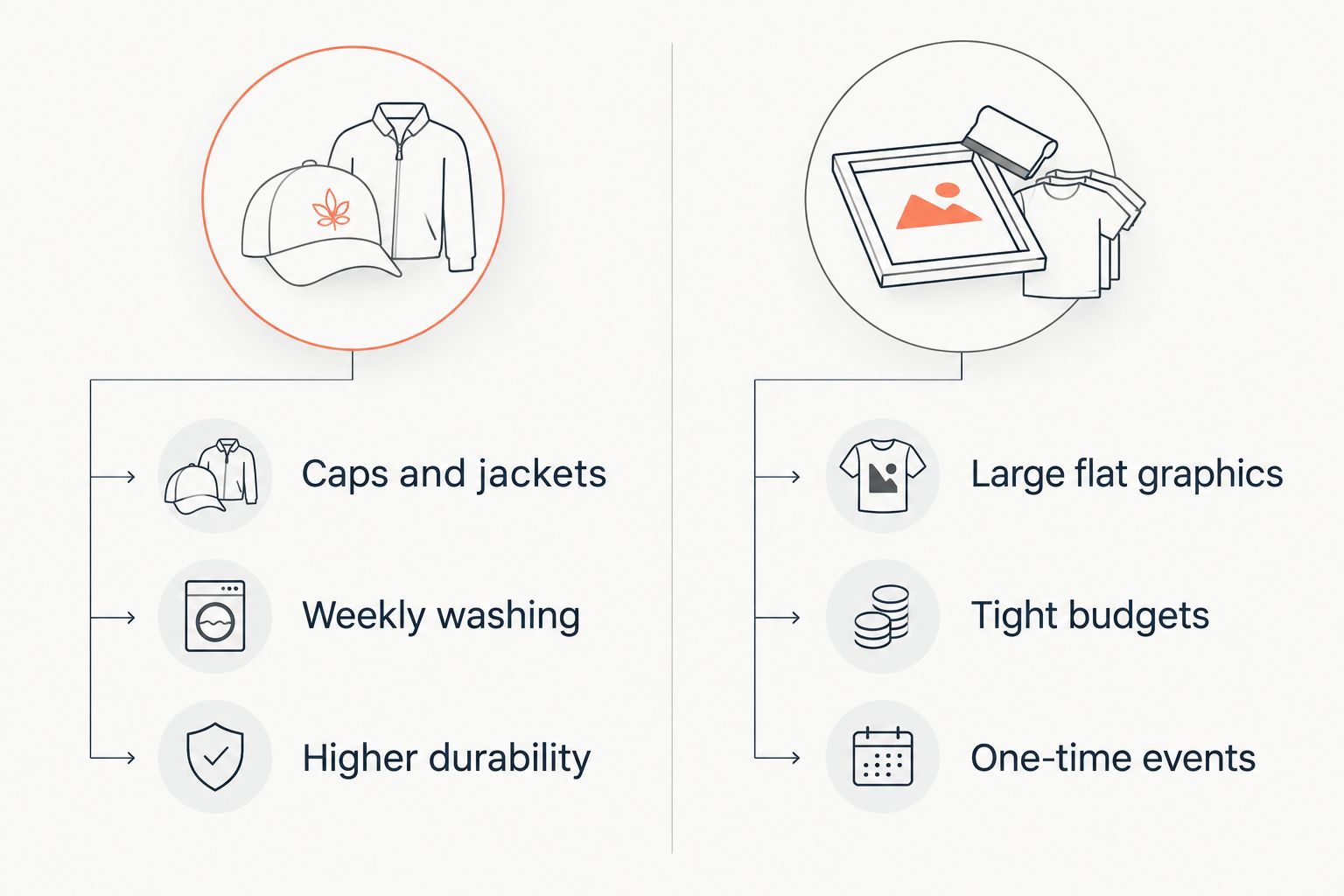
- Screen print wins on large chest or back graphics and tight per-unit budgets
- Embroidery wins on caps, polos, and jackets washed weekly
- Embroidery loses detail under 1/4 inch — keep small text off embroidered pieces
- Mixed orders (embroidered hats plus printed t-shirts) are often cheaper than embroidering the whole run
5. Choose stitch count and thread colors
Stitch density and thread color decide how the finished piece looks and wears.
- Higher stitch density looks richer but raises cost and stiffens the fabric
- Match thread to your brand's Pantone or hex code, not "close enough"
- Test one thread combo on a scrap swatch before full production
- Skip metallic thread on daily-wear items — it frays faster under regular washing
6. Get a proof before production
Skip this step and you're paying to fix your own mistake on the next order.
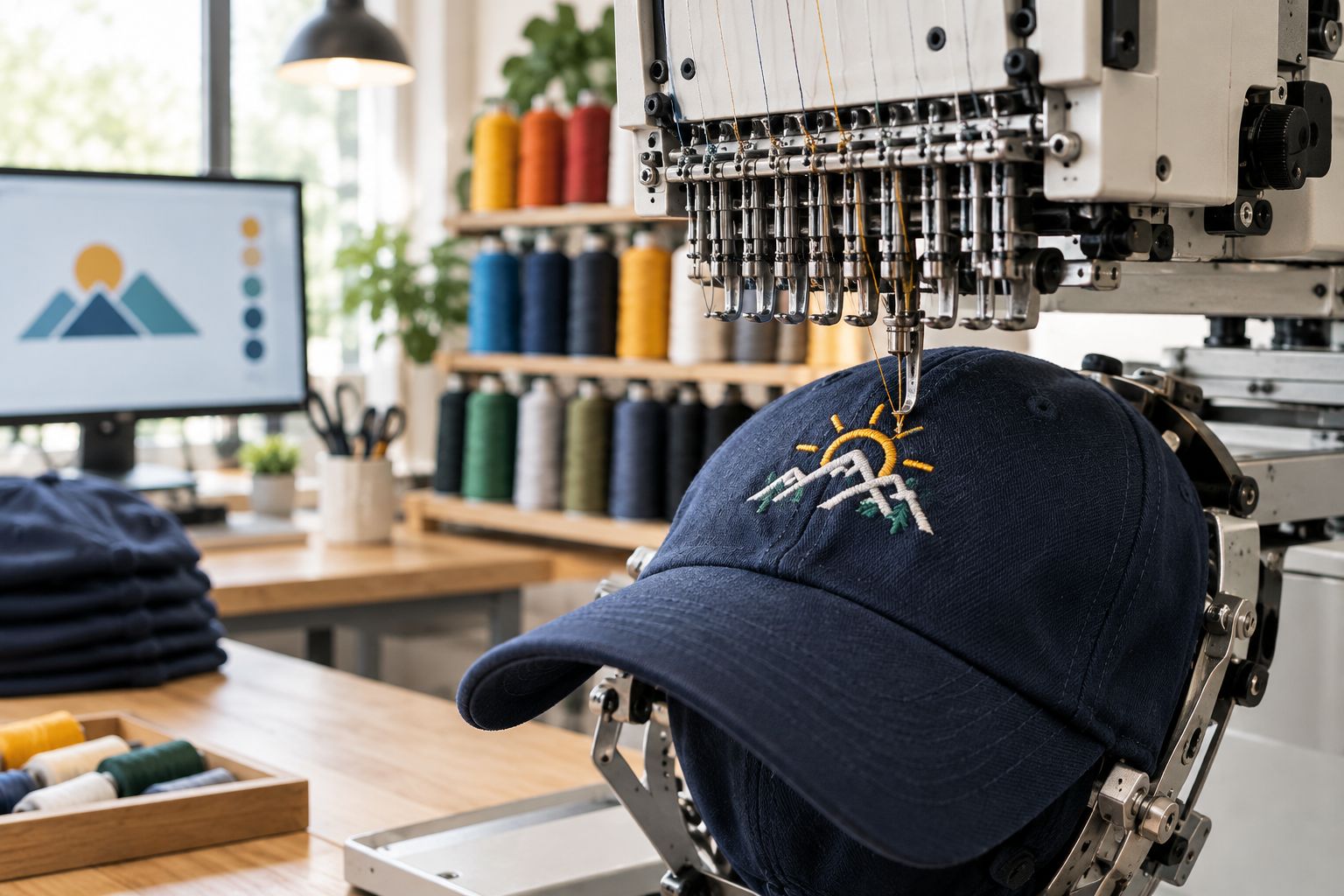
- Request a digital mockup showing exact size and placement
- Ask for a physical stitch-out sample on orders over 50 units
- Check letter spacing and logo scale at actual garment size, not on a screen
- Approve everything in writing — verbal approval creates disputes at reorder time
7. Order a sample run before scaling
A small sample run catches problems a full order won't let you fix cheaply.
- Start with 12-25 units across your top two garment types
- Wash the sample three times before reordering — cheap thread shows fraying by wash three
- Collect staff feedback on fit before locking sizes for the full order
- Use the sample run to finalize your reorder SKU list
8. Plan reorders and inventory
Embroidered apparel is only a branding asset if you can reorder it without starting over.
- Reorder before you run out — small shops don't always fast-track a repeat file
- Keep a running size and quantity log tied to your hiring cycle
- Order ahead of hiring season, not after
- Standardize on one or two garment styles to simplify every future reorder
How the options compare
| Option | Best for | Key limitation |
|---|---|---|
| Local embroidery shop | Small runs, fast turnaround, in-person proofing | Per-unit cost rises fast below 50 units |
| Online embroidery platform | Businesses ordering blanks and embroidery in one checkout | Fewer garment style choices than a local shop |
| Wholesale For Everyone bulk catalog | Businesses that need hats, beanies, bandanas, or doo rags branded in one order | Custom embroidery is limited to select product lines |
| Screen printing shop | Large flat logos, tight budgets, one-time events | Print cracks and fades faster than embroidery on caps |
Wholesale For Everyone is the practical pick for a small business that needs headwear or accessories branded without a factory-size minimum — a dedicated embroidery digitizer still wins on complex, multi-thread corporate logos.
Common mistakes small businesses make with embroidered apparel
- Approving a logo file too detailed for embroidery, then blaming the stitch quality when it turns out muddy
- Skipping the sample-wash test and finding out about thread fraying after the full order ships
- Never comparing digitizing fees between shops, then getting locked into a change fee on the next order
- Standardizing on ten garment styles instead of two, turning every reorder into a research project
- Ordering embroidered gear during the busiest season and getting stuck waiting weeks past the promised date
FAQ
What’s the best custom embroidered apparel for small businesses in 2026?
Caps, polos, and beanies with a simplified logo under 6-8 thread colors hold up best for small business budgets in 2026. Complex, multi-color logos cost more to digitize and stitch cleanly.
Is embroidery better than screen printing for small business logos?
Embroidery outlasts screen printing on caps, polos, and jackets that get washed weekly, but screen printing wins on large flat graphics and tighter budgets. Most small businesses end up using both across different garment types.
How many units do I need to order for custom embroidered apparel?
Start with a sample run of 12-25 units across your top two garment types before committing to a full order. This catches thread color and logo scale mistakes before you scale up.
How much does custom embroidery cost for a small business?
Cost depends on garment type, stitch count, thread colors, and order volume, so get a written quote from each supplier before ordering. Digitizing is usually a separate one-time fee from the per-unit stitching cost.
Can I mix embroidered and screen-printed items in one order?
Yes — embroidering caps and jackets while screen printing t-shirts is common and often cheaper than embroidering an entire order. Match the method to the garment, not the other way around.
What file format do I need for embroidery digitizing?
Submit a vector file (AI or EPS) or a high-resolution PNG at minimum 300dpi. A low-resolution web logo will not digitize cleanly.
How long does custom embroidery take to produce in 2026?
Turnaround varies by shop and season, so confirm a date in writing before ordering. Expect delays around back-to-school and holiday months when embroidery shops run at capacity.
Does embroidery work on hats and beanies?
Yes — caps and beanies are two of the most durable applications for embroidery because the stitched area sees constant friction and washing that screen print doesn’t survive as well.
One last thing
The single biggest embroidery mistake small businesses make isn't the logo file — it's ordering ten garment styles instead of two. Standardizing on one cap style and one polo style keeps your digitized file usable across the whole catalog and cuts reorder friction to almost nothing by the second season.
Related guides
- Best wholesale hats for contractors and work crews
- Best wholesale beanies ranked by price
- Best wholesale trucker hats for promotional giveaways