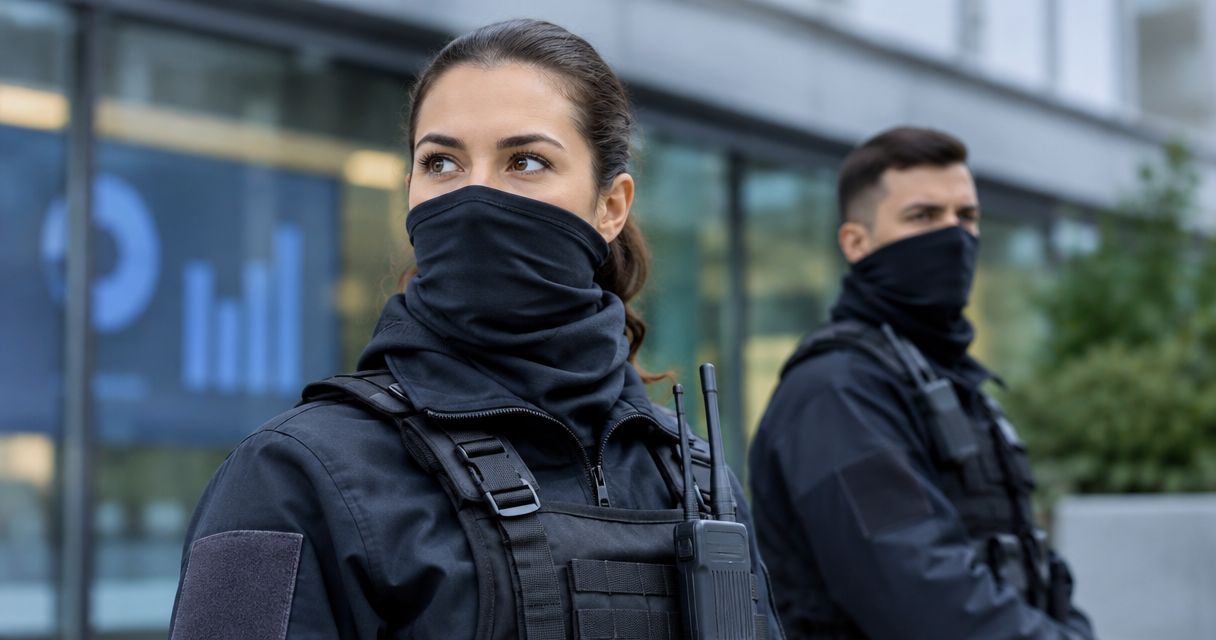
Neck gaiters for security teams are tubular fabric neck covers worn under uniform collars or pulled up over the lower face to block wind, cold, and dust during long outdoor shifts. Security work differs from general outdoor labor because the gaiter has to work with a radio mic, a duty collar, and sometimes a helmet or ballistic vest strap, all while staying uniform in color across an entire shift roster.
- Neck gaiters for security teams work best in a solid, department-matched color so the whole shift looks uniform, not mismatched.
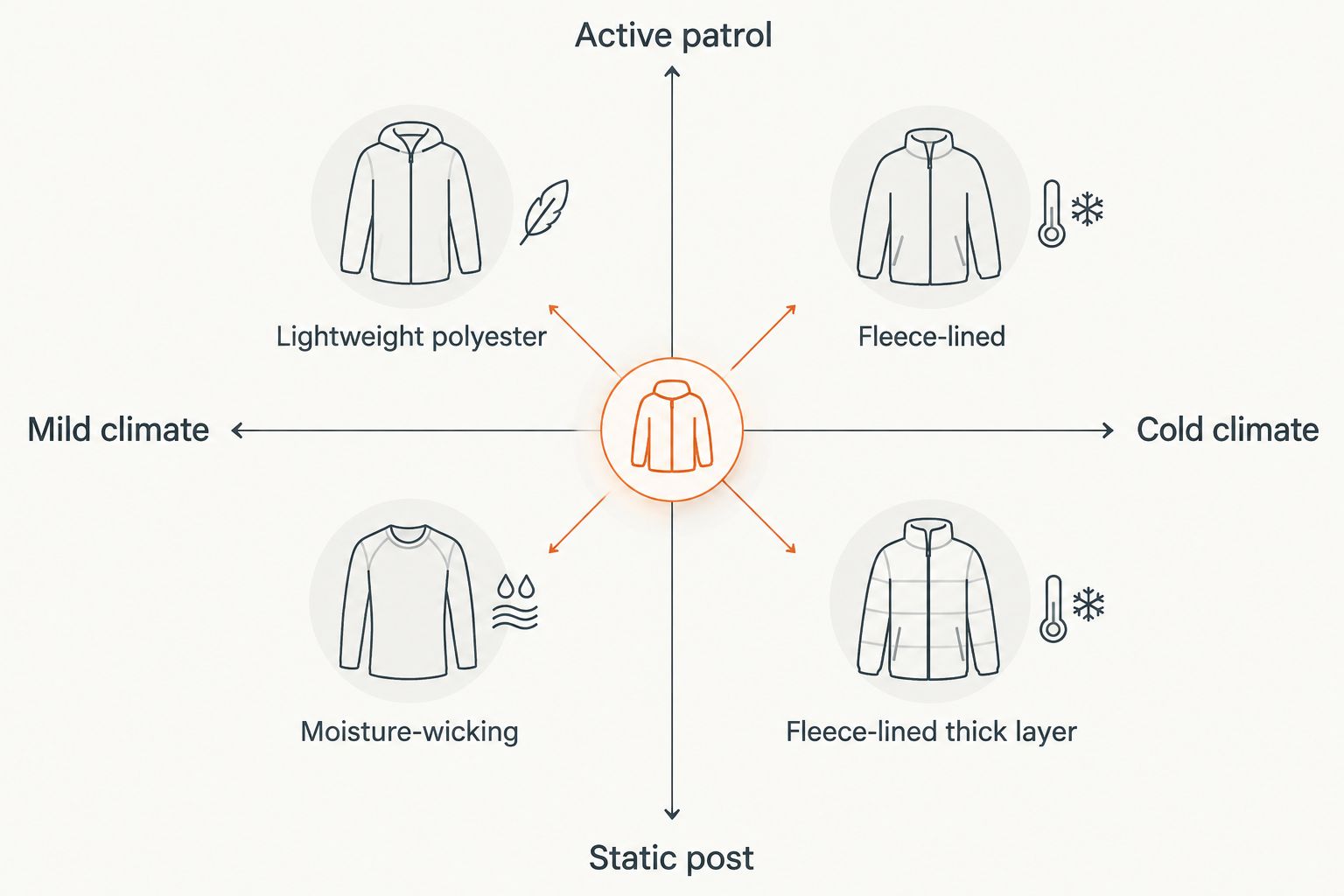
- Fleece-lined gaiters suit static outdoor posts in cold months; lightweight polyester covers overnight and mild-weather patrol shifts.
- Order gaiters two shifts deep per guard so nobody is stuck reusing a sweat-soaked one, and standardize sizing before you order.
- Custom embroidery or printing on the gaiter turns it into an ID layer, useful for teams that rotate guards across sites.
Why neck gaiters matter for security teams
A security post rarely stops for weather. Overnight parking lot patrols, event perimeter checks, and construction-site gate duty all put a guard outdoors for a full shift regardless of wind chill or heat. A neck gaiter solves a problem a jacket collar cannot: it seals the gap between the collar and the chin without adding bulk that interferes with a radio, a duty belt, or a body camera strap.
Uniform consistency matters more for security teams than for most outdoor crews. A construction crew can wear mismatched gaiters and nobody notices. A security detail in mismatched neck gear looks unprofessional to the client walking the perimeter with a site manager, and it undercuts the branding a security company spends money building elsewhere on the uniform.
Set your visibility and identification requirements first
Before ordering anything, decide what the gaiter needs to do beyond warmth.
- Confirm whether the post requires the guard's face visible on camera or to the public, which rules out full face coverage during daylight posts
- Check if the client contract specifies a uniform color or logo placement
- Decide if the gaiter needs to double as an ID layer with a printed badge number or department name
- Note any site rules against face coverings (some retail and event clients restrict this)
- Confirm whether guards need one gaiter or a matched set for both neck and lower-face coverage
Choose the fabric weight for your shift conditions
A gaiter built for a July event gate does the wrong job on a January overnight lot.
- Lightweight polyester or microfiber for overnight patrols in mild climates and long summer shifts
- Fleece-lined or brushed fabric for static winter posts, gate booths, and perimeter walks below freezing
- Moisture-wicking performance fabric for guards who move a lot: foot patrol, event crowd control, stadium perimeter work
- Double-layer fabric for guards who need it to also work as an improvised balaclava on the coldest posts
Match fabric to the actual post, not the season on the calendar. A gate booth guard sitting still in a heated booth needs less insulation than a perimeter walker outdoors the entire shift.
Standardize the color across your team
Mismatched neck gear is the fastest way to make a uniformed team look thrown together. Pick one solid color and buy every gaiter from the same batch.
- Match the gaiter color to the existing uniform shirt or jacket, not a random neutral
- Avoid patterned or paisley designs for client-facing posts; solid colors read as professional, patterns read as casual
- If different sites use different uniform colors, order separate solid-color batches rather than one mixed lot
- Check solid color bandanas built for team uniforms if you're also standardizing lower-face coverage alongside the gaiter
Add your branding or department ID
Once fabric and color are locked, decide if the gaiter carries a logo, company name, or badge number. This step comes after the fabric and color decision, not before, since the printable area shrinks on thicker fleece-lined material.
- Custom embroidery holds up better than screen print through repeated washing on a daily-wear item
- A small chest-height or side placement keeps the design visible when the gaiter is pulled down around the neck
- Department name and site code are more useful on a rotating multi-site roster than a full company logo
- Review the options in the custom embroidered apparel guide for small businesses before finalizing artwork
Get your team’s gaiters branded
Add a department name or badge number to every gaiter in the order.
Fit it to helmets, radios, and PPE
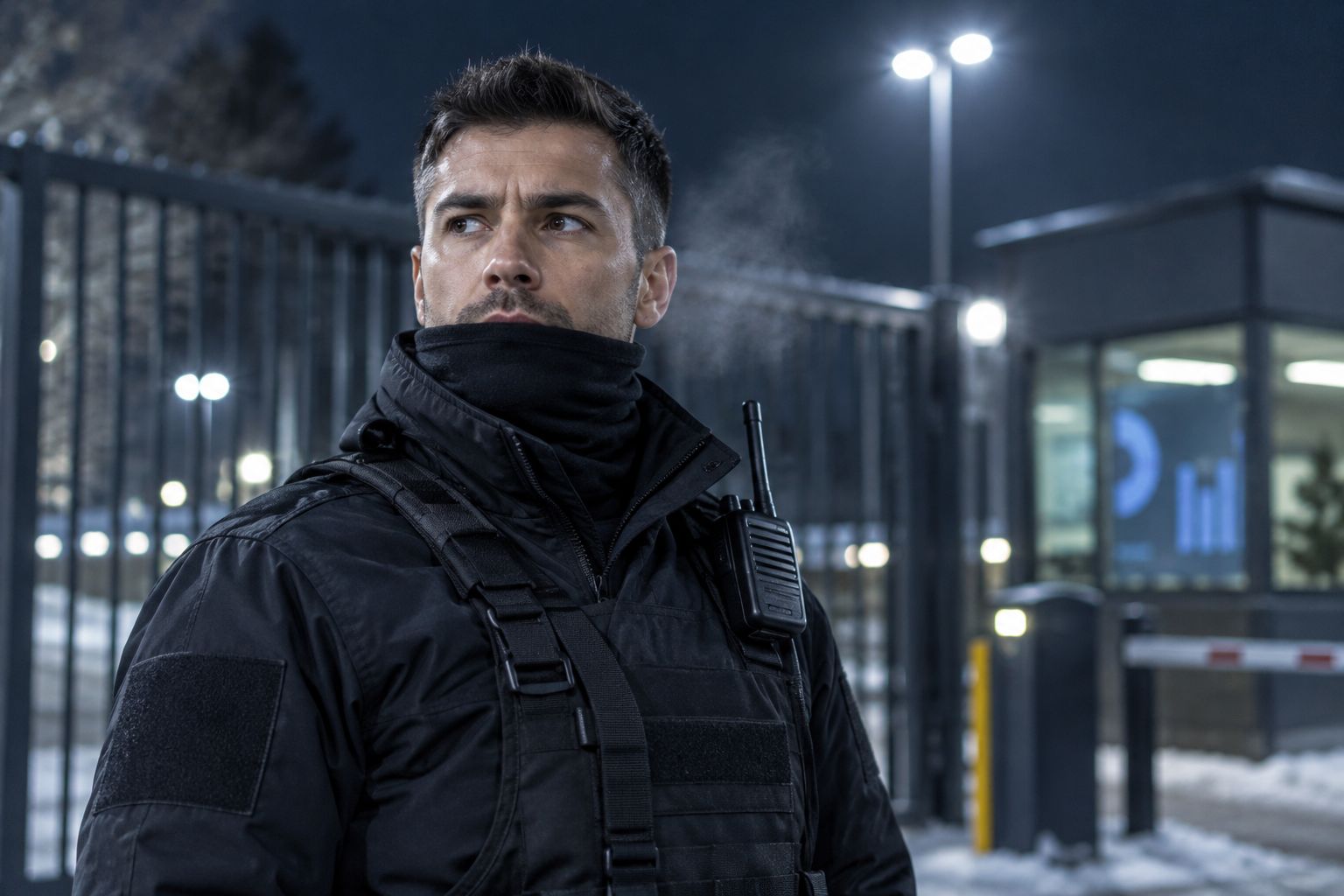
A gaiter that bunches under a radio strap or rides up over a helmet chin strap gets pulled off and forgotten by week two.
- Test one sample gaiter against the exact radio, mic clip, and collar the team already wears before bulk ordering
- A tube length long enough to sit flat under a collar without folding is more important than extra warmth
- Guards wearing ballistic vests need a gaiter that doesn't ride up when the vest strap sits against the neck
- Flag any fit issue during the sample stage, not after 40 units arrive
Set a laundering and rotation schedule
A gaiter worn every shift without rotation gets stiff, stained, and eventually thrown out mid-contract.
- Issue two gaiters per guard so one is always clean while the other launders
- Machine wash on cold and skip the dryer's high heat setting to protect embroidery threads
- Replace a gaiter once the fabric thins or the elastic tube loses its shape, not on a fixed calendar date
- Keep a small reserve stock at the office for new hires and lost-item replacements
Order in bulk and size the order to headcount
Ordering exact headcount with zero buffer means a single lost gaiter puts a guard back to a bare collar mid-shift.
- Count total guards across all shifts, not just one roster, before placing the order
- Add a 10 to 15 percent buffer for loss, damage, and new hires onboarding mid-contract
- Order all sizes and the full color run in one batch to avoid a mismatched second order later in 2026
- Compare bulk suppliers before committing; see the best neck gaiters for construction and outdoor work guide for a side-by-side on fabric weights across outdoor-heavy roles
Comparison table: neck gaiter options for security teams
| Option | Best for | Key limitation |
|---|---|---|
| Lightweight polyester gaiter | Overnight patrols, mild-climate shifts | Thin fabric offers little wind block below freezing |
| Fleece-lined gaiter | Static winter posts, gate booths | Bulkier fit can interfere with tight collar or vest straps |
| Moisture-wicking performance gaiter | Foot patrol, event and crowd-control posts | Costs more per unit than basic polyester |
| Solid-color bandana as neck layer | Teams standardizing color without full gaiter coverage | Doesn't seal the collar gap as well as a tubular gaiter |
Verdict: a solid-color, moisture-wicking neck gaiter is the safest default buy for mixed-shift security teams in 2026, since it handles both active patrol and static-post duty without needing a second fabric weight in inventory.
Common mistakes security teams make
- Ordering one universal size for every guard. A gaiter sized for an average neck rides too high or too low on guards outside that range, and it ends up unworn.
- Skipping the sample stage before a 50-unit order. Fit problems with a radio strap or vest only show up in real wear, not on a spec sheet.
- Mixing colors across sites to save on a second order. It reads as inconsistent to clients who compare guards across locations.
- Choosing fleece for every shift type. Guards on active foot patrol overheat in heavy fleece even in cold weather, and a moisture-wicking layer performs better for movement-heavy posts.
- Treating the gaiter as a one-time purchase. Without a rotation and replacement plan, half the fleet looks worn out well before the contract renews.
FAQ
What’s the best neck gaiter for security guards on overnight shifts?
A lightweight polyester or moisture-wicking gaiter works best for overnight security shifts in mild to moderate climates, since it blocks wind without trapping heat during long standing or walking posts. Switch to a fleece-lined version once temperatures drop below freezing.
Should security teams match gaiter color to the uniform?
Yes, matching the gaiter to the existing uniform color keeps the team looking uniform to clients and the public. Ordering one solid-color batch for the whole roster avoids the mismatched look that comes from guards buying their own gear.
Can a neck gaiter interfere with a security guard’s radio or vest?
A poorly sized gaiter can bunch under a radio strap or ride up against a vest collar. Test one sample against the exact gear a guard wears before ordering in bulk to avoid this.
How many neck gaiters should a security company order per guard?
Issue at least two gaiters per guard so one is always available while the other is being washed. Add a 10 to 15 percent buffer across the full order for loss, damage, and new hires.
Is a fleece-lined gaiter too warm for active patrol work?
Fleece-lined gaiters can cause overheating on guards doing active foot patrol, even in cold weather. A moisture-wicking performance fabric handles movement-heavy posts better than fleece.
Can security teams add a department name or badge number to a neck gaiter?
Yes, custom embroidery on a neck gaiter can carry a department name, site code, or badge number, and it holds up to repeated washing better than screen printing.
Are patterned gaiters appropriate for client-facing security posts?
Solid colors read as more professional than patterned designs for client-facing security work. Patterns like paisley suit casual or event settings better than a uniformed guard post.
What’s the difference between a bandana and a neck gaiter for security work?
A neck gaiter is a tubular fabric piece that seals fully around the neck without knotting, while a bandana needs to be tied and can loosen during a shift. Gaiters generally hold position better under collars and vest straps.
One last thing
The detail that gets missed most in 2026 orders is the sample stage. Teams that skip testing one gaiter against the actual radio strap, collar, and vest end up with a bulk order that half the roster refuses to wear by the second week. Order one sample per fabric weight, run it through an actual shift, and only then commit to the full headcount.
Related guides
- Best neck gaiters for construction and outdoor work
- Custom embroidered apparel for small businesses: complete guide
- Best solid color bandanas for team uniforms
- Best wholesale hats for contractors and work crews
- Wholesale For Everyone