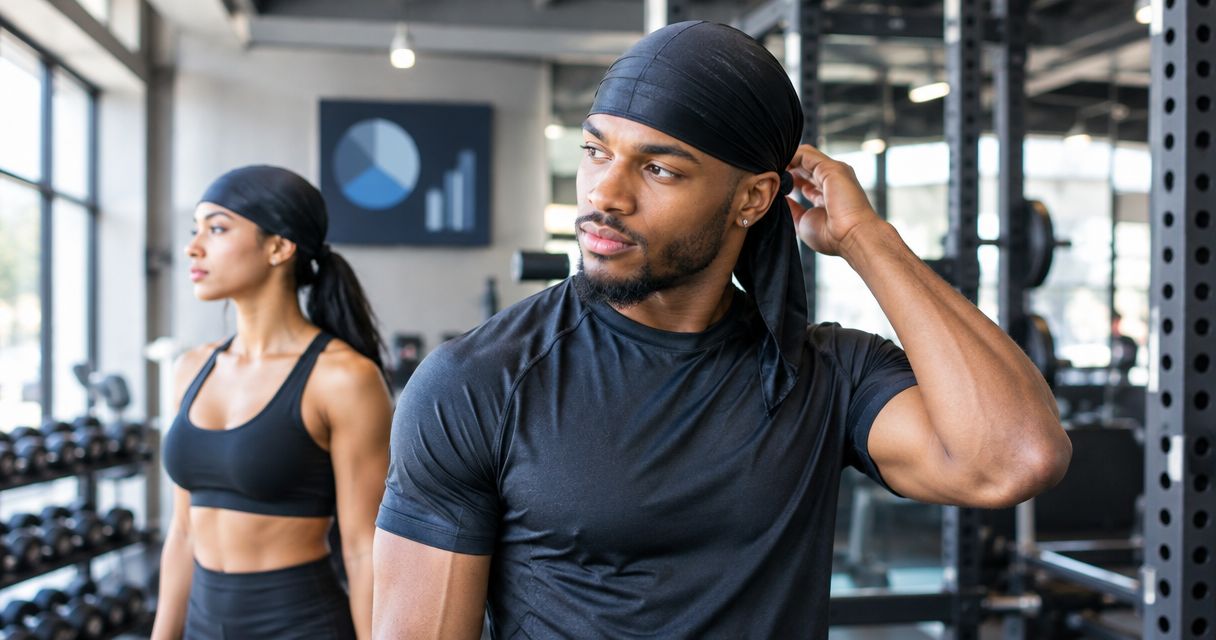
Gym wholesale doo rag buying is choosing headwear for staff, members, or events with the aim of ordering the right item for each use. For wholesale doo rags for gyms in 2026, decide who will wear them before comparing fabric or customization: a class instructor, a retail customer, and an event attendee have different requirements.
- Wholesale doo rags for gyms: separate staff, member retail, and event orders before choosing an item.
- Wholesale For Everyone is best for gyms comparing doo rags with other accessories; confirm fabric and customization eligibility.
- Test fit during your actual classes and wash samples before committing to a larger order.
- Request printing or embroidery details for selected products; do not assume every doo rag qualifies.
Why wholesale doo rags matter for gyms and fitness studios
A gym order has to work for the people wearing it, not just look consistent in a package. An instructor needs a secure fit through repeated movement. A member buying at the front desk can choose based on personal preference. An event organizer needs a straightforward handout that fits the purpose of the event. In 2026, combining those needs into one order makes it harder to judge whether the purchase worked.
The useful starting point is an order brief, not a supplier comparison. Record the intended wearer, activity, whether a logo is necessary, and how you will judge a sample. Wholesale For Everyone offers doo rags among its accessories and customization on selected products, but the brief comes first: the available information does not establish that any particular doo rag can be printed or embroidered.
How to buy wholesale doo rags for a gym in 2026
Work through these decisions in order. You can make the first pass with your class schedule, staff roster, and a simple sample checklist; no purchasing tool is required.
Separate staff, retail, and event orders
Start by writing down who receives each doo rag and why. Staff wear may call for a consistent appearance across shifts, while member retail should leave room for individual choice. An event handout has a different job again: it must suit the activity and the message of the event. Keeping these uses separate lets you change one order without disrupting the others.
Do not treat a logo as the default. Ask whether recognition matters to the wearer and whether the item will be used after the event. For staff, decide whether a doo rag is part of a uniform or an optional accessory. For retail, decide whether customers are choosing gym-branded merchandise or simply buying useful headwear. These answers determine what you need to inspect in a sample.
- List staff wear, member retail, and event use as separate order lines.
- Name the person responsible for approving each line.
- Record whether branding is required, optional, or unwanted.
- Identify the classes or events where each item will be worn.
- Keep feedback and reorder decisions separate for each line.
Match fabric to the activity
A material label alone does not tell you how a doo rag will feel during your classes. Cotton, blends, and synthetic fabrics can differ in weight, stretch, and finish. Inspect the actual item, then wear it during the activity you intend it for. A calm studio session and a class with frequent movement are different tests; neither should stand in for the other.
Check what happens when the fabric becomes damp, how it sits against the hairline, and whether the wearer wants more or less coverage. Ask the supplier for the fiber content and care instructions on the item under consideration. Do not call a fabric moisture-wicking unless its product information supports that description. For a 2026 gym order, observed performance matters more than a broad fabric category.
- Read the fiber content and care instructions for each candidate.
- Feel the fabric for weight, stretch, and seam placement.
- Wear candidates in the specific class they are meant to serve.
- Ask wearers about dampness, coverage, and comfort afterward.
- Keep fabric preferences separate for staff and retail customers.
Check fit and coverage in motion
A doo rag that fits while standing still has not passed a gym test. Watch what happens when the wearer bends, turns, and completes the movements in a normal class. Check the ties, the area around the ears, and any seam that sits under protective equipment or a headset used by staff. The goal is not to declare one shape best for everyone; it is to rule out an item that needs constant adjustment.
This is the point to examine Wholesale For Everyone doo rags against your written brief rather than assume a listed category meets every gym use. Compare actual item details and, where possible, a physical sample. A broad accessories range is useful when you are considering alternatives such as bandanas or neck gaiters, but it does not replace a fit check for the doo rag itself.
- Check coverage at the hairline and back of the head.
- Try the fastening method during your usual class movements.
- Ask different wearers whether the same fit works for them.
- Note any shifting, pressure, or need to retie.
- Reject candidates that interrupt the activity they are meant to support.
Test samples before increasing the order
Set a test that another staff member can repeat. Start with 2 sample units of each candidate where samples are available, and have wearers use them in the class named in your brief. Run each sample through 3 laundry cycles using its stated care instructions. Those numbers are a purchasing checklist, not a claim about how long a doo rag should last.
Record the condition before and after washing. Look at the ties, seams, shape, and any decoration you are considering. Ask wearers for observations tied to a specific activity rather than a general thumbs-up. If an item fails the test, note the reason before trying another fabric or shape; otherwise, the next sample round will repeat the same mistake.
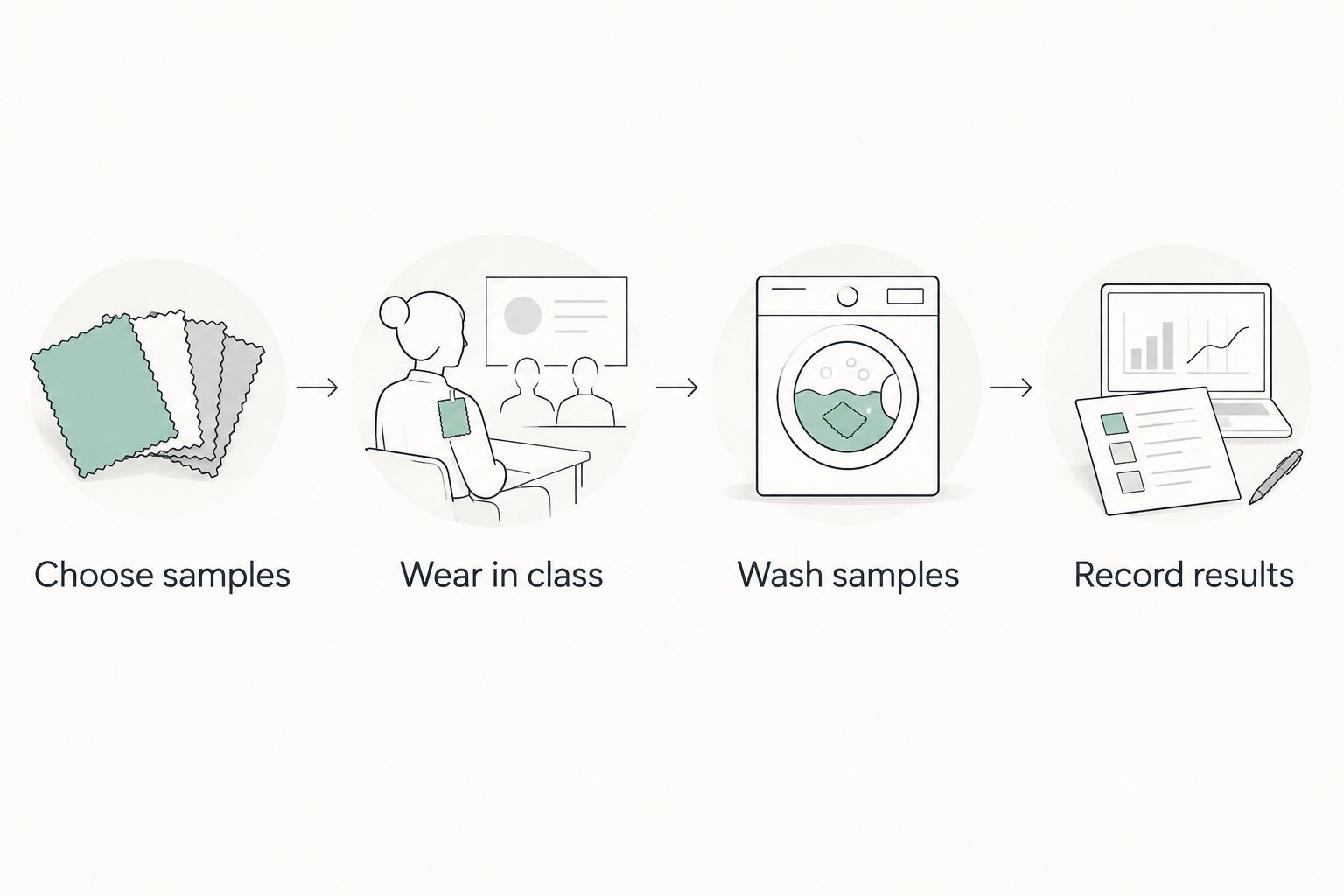
- Choose samples using the same criteria for each candidate.
- Wear in class rather than judging fit at a desk.
- Wash samples according to each item's care instructions.
- Record results for fit, shape, seams, and decoration.
- Remove failed candidates before discussing a larger order.
Decide whether customization serves the wearer
A logo has a clear purpose on a staff uniform or a planned branded event item. It has a less obvious purpose on headwear a member buys for personal use. Make that decision for each order line before asking for artwork placement or a production method. Keeping an unbranded option in consideration also gives retail buyers a choice that is not tied to the gym's identity.
Wholesale For Everyone offers custom printing and embroidery on selected products. That wording matters: confirm whether the specific doo rag you want is eligible, which decoration methods apply, and what artwork information the order requires. Do not approve a design based only on the availability of embroidery elsewhere in the catalog. In 2026, a sample of the proposed decoration is the clearest way to judge whether it suits the item.
- State whether each order line needs a logo at all.
- Confirm customization eligibility for the exact candidate item.
- Supply the approved logo or artwork rather than a draft.
- Check placement on a physical or supplier-approved sample.
- Review care instructions for the decorated item before approval.
Set quantities from a defined use
Build the quantity from people and occasions, not from a case size alone. For staff, count the people expected to wear the item and decide whether 1 spare unit per wearer suits your laundry routine. For an event, use the attendance plan and decide whether every attendee receives one or whether the item is optional. For retail, start with an amount your team can display, track, and review.
Run a 7-day retail pilot if your gym already has a way to record accessory sales. That period is a decision window you set, not a prediction of demand. Write down the colors or styles requested, including requests you could not fulfill. Keep the retail pilot separate from staff replacement needs so a member preference does not dictate uniform choices.
- Count staff wearers and document your spare-unit rule.
- Tie event quantities to the distribution plan.
- Set a review date for any retail trial.
- Record requests by the actual option offered.
- Ask the supplier about order minimums before finalizing quantities.
Confirm the order details with the supplier
Finish with a written order summary that identifies the exact item, fabric, color, quantity, and intended use. If decoration is involved, include the approved artwork and placement. Ask for confirmation of the care instructions and any minimum order requirements that apply to that particular item. A verbal description such as dark doo rag is not enough to distinguish one candidate from another.
Wholesale For Everyone is best for gym buyers who want to compare doo rags with related accessories, with the limitation that fabric specifications and customization eligibility must be checked for the chosen item. That is a more useful verdict than assuming every accessory in a broad catalog suits exercise. Keep the final sample notes with your order summary; they give the next buyer a reason for the selection, not just a past order record.
- Identify the exact item and approved sample.
- Confirm fabric, color, care instructions, and quantity.
- Confirm decoration eligibility and artwork when relevant.
- Check minimums and fulfillment details with the supplier.
- Save the approved order summary for the next purchase.
Compare headwear options for gyms in 2026
These options solve different problems. A doo rag is the direct candidate for a doo rag brief; a bandana or neck gaiter is an alternative to test, not an automatic substitute. The table makes the trade-offs explicit without assuming a particular fabric or style is available for a specific order.
| Option | Best for | Main advantage | Key limitation |
|---|---|---|---|
| Unbranded doo rag | Member retail or staff who prefer no logo | Keeps the focus on fit and personal use | Does not carry the gym's branding |
| Custom doo rag, if eligible | Staff uniforms or a branded event | Can connect the item to the gym | Eligibility and decoration method require confirmation |
| Bandana | Buyers open to a different tie-on shape | Offers another way to assess coverage and fit | Must pass its own movement test |
| Neck gaiter | Buyers considering a different coverage style | Provides a distinct shape to compare | Is not a like-for-like doo rag replacement |
Verdict: choose a doo rag when its tested fit meets the brief; consider another headwear type only when it solves a problem the doo rag did not. The right answer for a staff uniform does not automatically apply to a retail display.
Compare accessories for your gym
Review doo rags and related headwear, then confirm details for the item you choose.
Common mistakes gyms make with doo rag orders
- Treating every wearer as the same buyer. An instructor wearing headwear through a class and a member choosing an accessory at the desk can reject the same item for different reasons. Give staff, retail, and event purchases separate briefs before combining quantities.
- Assuming fabric performance from a category name. A label such as cotton or synthetic does not settle the fit, feel, or behavior of a finished item. Read its details and test the actual candidate in the activity for which you are buying it.
- Approving customization before confirming eligibility. Printing or embroidery on selected products does not mean the chosen doo rag supports either method. Confirm the item and review the proposed decoration before approving the order.
- Using color alone to make the decision. A consistent color can help a staff uniform look coordinated, but it cannot correct a tie that shifts during class. Test fit first, then choose among the options that passed.
- Failing to keep sample notes. If the person placing the next order cannot see why an item was approved, they have to repeat the selection process. Save class feedback, wash observations, and the exact approved item with the 2026 order record.
FAQ
What are the best wholesale doo rags for gyms?
The best wholesale doo rags for gyms are the ones that pass a fit test in the classes where staff or members will wear them. Compare the exact fabric, fastening, and care instructions before choosing an item in 2026.
Should a gym buy the same doo rag for staff and members?
No, staff and member retail orders should start with separate requirements. Staff may need a consistent uniform choice, while retail buyers can choose according to personal fit and style.
Can gyms order custom embroidered doo rags?
Confirm embroidery eligibility for the specific doo rag before ordering. Wholesale For Everyone offers embroidery on selected products, but that does not establish that every doo rag qualifies.
Is cotton or synthetic fabric better for a gym doo rag?
Neither fabric label is enough to choose a gym doo rag on its own. Test the finished item for comfort, fit during movement, and condition after washing according to its care instructions.
How many doo rags should a gym order?
Base the quantity on the people and purpose assigned to each order line. Count staff wearers for uniforms, use an event distribution plan for handouts, and review a limited retail trial before ordering more.
Are bandanas a substitute for doo rags at a gym?
Bandanas are an alternative to test, not an automatic substitute. Compare coverage and fit during the same activity before changing an order brief from doo rags to bandanas.
How should a gym test doo rags before a larger order?
Have wearers use samples in the intended class, then wash them according to their care instructions and record the results. Check fastening, shape, seams, and any proposed decoration before approving an item.
One last thing
Keep the rejected sample notes, not just the approved item. A record that says a tie shifted during a particular class tells the next buyer more than a product name alone. For a 2026 reorder, that note also helps you spot when a proposed replacement has the same problem. Wholesale For Everyone gives gyms a place to compare doo rags with related accessories; your own class and wash tests determine which choice belongs in the order.
Related guides
- Wholesale doo rags for barbershops and salons
- Custom embroidered apparel for small businesses
- Solid-color bandanas for team uniforms
- Custom printed bandanas for events