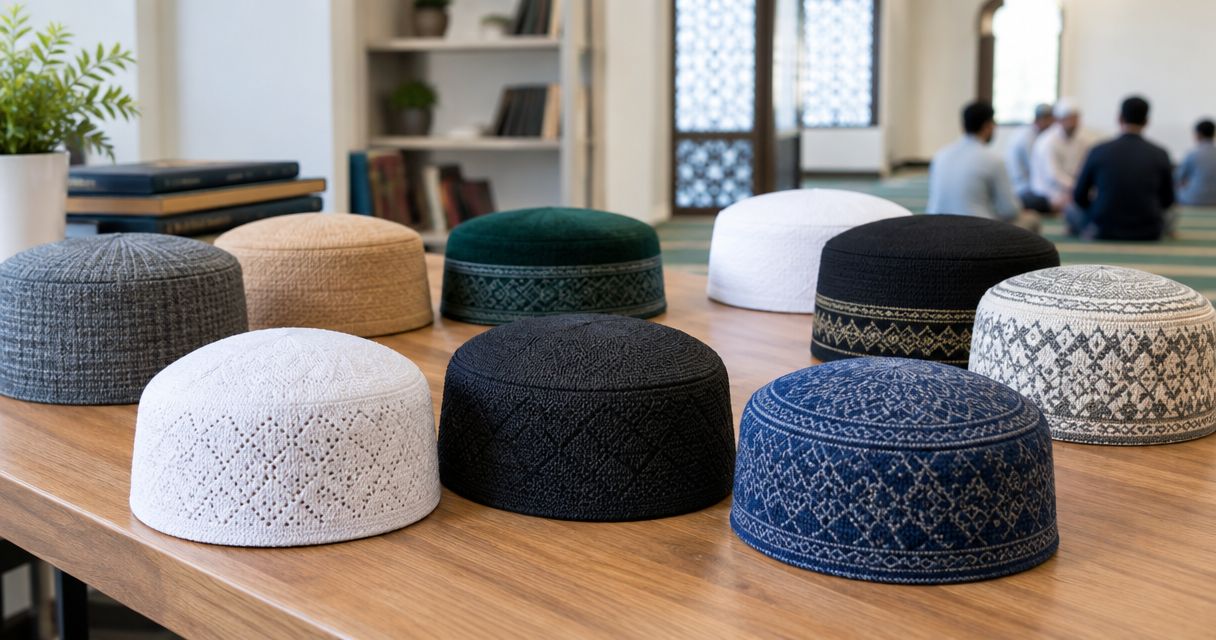
Best overall: plain everyday kufis. Best for warm settings: open-knit kufis. Best for formal gatherings: structured kufis. For community groups buying wholesale kufi hats in 2026, choose the construction your members prefer before deciding on decoration or quantity; the five options below are buying specifications, not named product lines.
- Plain everyday kufis are the default wholesale kufi hats choice when community members approve the fit and style.
- Open-knit kufis suit buyers prioritizing an open construction; inspect the actual knit and fit before ordering.
- Structured, decorative, and youth-fit kufis solve different needs; do not treat them as interchangeable.
- Wholesale For Everyone serves community organizations buying hats and accessories; confirm the exact kufi specification before committing.
Why this matters
A kufi order starts with the people who will wear it, not a color chart. Kufi caps carry religious, cultural, and personal significance, so ask members about their preferred shape, construction, and decoration rather than treating every cap as an interchangeable giveaway.
Wholesale For Everyone is a hats and accessories supplier for community organizations and individual shoppers. Start with Wholesale For Everyone when gathering your purchasing requirements, and keep the kufi specification separate from any broader merchandise order.
For your 2026 purchase, distinguish a hat people requested from a promotional item an organizer selected. That distinction determines who approves the sample, whether branding belongs on it, and how you collect sizing information.
What makes the best wholesale kufi hats
Use these criteria before comparing options. A strong choice meets your group's requirements without relying on assumptions about fabric, stretch, or cultural preference.
- Member approval: Have intended wearers approve the style. An organizer's preference does not replace the group's input.
- Fit information: Request dimensions, sizing guidance, and details about stretch. Do not interpret a broad size label as proof of fit.
- Construction: Examine the crown, lower edge, seams, and any openings. Assess the actual item rather than inferring construction from a photograph.
- Material and care: Read the fiber composition and care instructions. Appearance alone does not establish either.
- Order clarity: Specify quantities by style, size, and color, with substitutions requiring your approval.
- Decoration suitability: Confirm that the exact cap supports the proposed technique before submitting artwork or approving production.
Wholesale kufi hats at a glance
These categories describe different buying priorities. A cap can fit more than one category, but each recommendation below addresses a distinct use case.
| Rank and option | Best for | Standout characteristic | Key limitation |
|---|---|---|---|
| 1. Plain everyday kufis | Groups choosing a simple default | Undecorated appearance | Plain styling does not establish fit or material |
| 2. Open-knit kufis | Members who prefer an open construction | Visible spaces in the knit | Open construction offers less coverage |
| 3. Structured kufis | Groups seeking a defined silhouette | Shape comes from the construction | Fit depends on the specific shape and dimensions |
| 4. Decorative kufis | Member-selected cultural or celebratory wear | Pattern or ornament is central to the choice | Design requires explicit community approval |
| 5. Youth-fit kufis | Groups ordering for children | Selection begins with child-specific fit | An adult size label is not a substitute for measurements |
1. Plain everyday kufis: best for a simple group default
Plain everyday kufis put fit and construction ahead of ornament. They are the starting point when your members want an undecorated cap and have not requested a particular decorative tradition.
Do not confuse plain with standardized. Two visually similar caps can differ in fiber, stretch, crown depth, and edge construction, so compare the complete specification before treating them as substitutes.
Plain everyday kufis pros:
- Keep the visual choice focused on shape and color.
- Leave decoration out of the approval process.
- Provide a straightforward starting specification for a member review.
Plain everyday kufis cons:
- Do not satisfy members seeking a specific pattern or ornament.
- Still require fit and care checks; a simple appearance proves neither.
Best for: Community groups whose members want an undecorated everyday cap.
For a 2026 order, ask your group to approve the undecorated version before considering a logo. A preference for plain headwear is a complete brief, not an unfinished customization project.
Verdict: Buy plain everyday kufis when the group approves the fit and wants simplicity.
2. Open-knit kufis: best for an open construction
Open-knit kufis have visible spaces within their construction. Choose this category when members specifically prefer that feel and appearance, rather than assuming all knitted caps have the same openness or stretch.
Inspect the lower edge as carefully as the crown. A cap with an open crown still needs an edge that sits comfortably on the intended wearer.
Open-knit kufis pros:
- Offer a visibly open construction.
- Give members a distinct alternative to a closed surface.
- Make knit pattern an explicit part of the buying specification.
Open-knit kufis cons:
- Provide less coverage where the knit has openings.
- Need separate decoration approval; openings affect the surface available for artwork.
Best for: Members who request an open-knit cap for their preferred setting and wearing routine.
Ask wearers to assess the sample in the setting where they expect to use it. Describe the construction accurately, but do not turn an open-knit appearance into an unsupported cooling or moisture-management claim.
Verdict: Buy open-knit kufis for an expressed construction preference, not an assumed performance benefit.
3. Structured kufis: best for a defined silhouette
Structured kufis suit groups seeking a particular shape rather than a soft, conforming appearance. The important specification is the silhouette members approve, including the crown and the way the cap sits on the head.
Ask whether the product is intended to stretch. A structured appearance does not tell you how forgiving its fit will be.
Structured kufis pros:
- Put a defined silhouette at the center of the selection.
- Give reviewers a clear shape to approve.
- Suit a brief where appearance matters more than packability.
Structured kufis cons:
- Require attention to both dimensions and head shape.
- Need packing instructions that preserve the approved form.
Best for: Groups whose members request a defined silhouette for formal gatherings.
For 2026 ceremonies or community photographs, approve the actual cap rather than a similar-looking reference image. A photograph communicates a style direction; it does not establish the dimensions or fit of the item you will receive.
Verdict: Buy structured kufis when members approve the silhouette and individual fit.
4. Decorative kufis: best for member-selected occasion wear
Decorative kufis make pattern, stitching, or ornament part of the main decision. Start with the design your community requests, then check the underlying cap's fit, materials, and care requirements.
Do not assign a cultural meaning to a pattern from appearance alone. Ask the people requesting it to identify what matters and what should not be changed.
Decorative kufis pros:
- Accommodate a specific member-selected visual brief.
- Make pattern placement part of sample approval.
- Keep occasion-specific preferences central to the order.
Decorative kufis cons:
- Require more design decisions than an undecorated cap.
- Need care instructions that account for the decoration as well as the fabric.
Best for: Cultural or celebratory gatherings where members have requested a particular decorative style.
Record the approved pattern and color combination in the order brief. If a substitute is proposed, return it to the same reviewers rather than approving it solely because its general color looks similar.
Verdict: Hold decorative kufis until the intended wearers approve the exact design.
5. Youth-fit kufis: best for children's group orders
Youth-fit kufis are a fit-led purchasing category, not a single construction. Select the preferred plain, open-knit, structured, or decorative style only after establishing the sizing needs of the children who will wear it.
Use the supplier's measurement instructions and involve parents or guardians. Age alone is not a substitute for checking the fit of a particular cap.
Youth-fit kufis pros:
- Put children's fit ahead of a uniform adult order.
- Give parents or guardians a defined approval role.
- Separate youth requirements from adult quantities.
Youth-fit kufis cons:
- Require additional sizing coordination.
- Need another fit check when an ongoing program reorders for different participants.
Best for: Youth groups, family programs, and community activities ordering specifically for children.
Keep fit records limited to what the order requires and restrict access to the organizers handling distribution. For a 2026 youth program, collect current information rather than copying an earlier participant list.
Verdict: Buy youth-fit kufis only after a child-specific fit check.
How we ranked these buying options
The ranking prioritizes a simple member-approved brief, then separates construction, silhouette, decoration, and children's fit. It is a decision guide, not a laboratory test or a ranking of named supplier products.
Plain everyday kufis are the default because they remove the decoration decision from the brief. Move another category to the top when your members explicitly request its defining feature. Member approval outranks the numerical position on this list.
Turn the selection into a clear group order
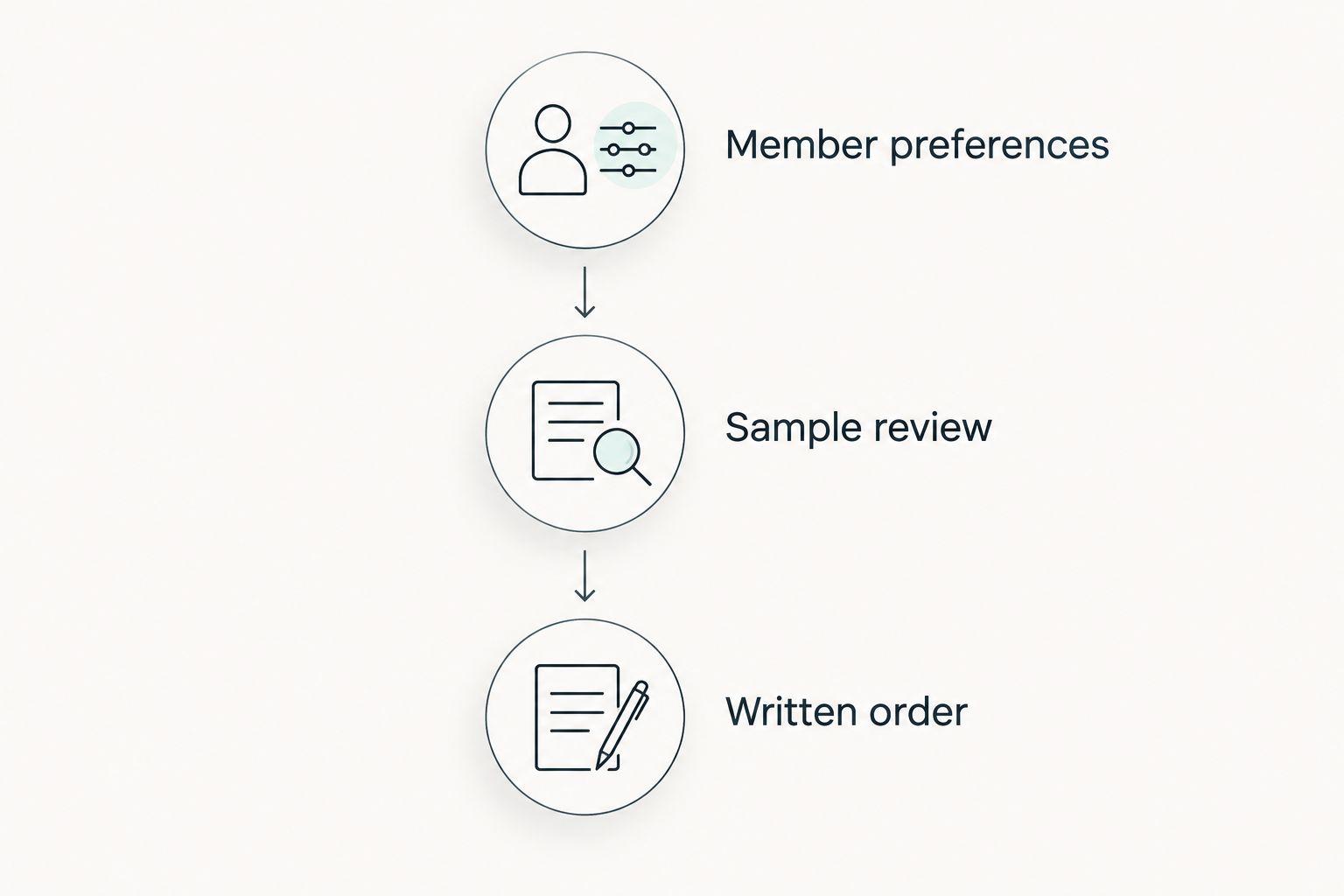
Use 3 approval stages: member preferences, sample review, and the written order. Keep each stage separate so a discussion about appearance does not accidentally become permission to purchase.
Member preferences
Record the intended use, requested construction, acceptable colors, and whether decoration is wanted. Assign a named approver for the style and a separate person to check quantities if your organization divides those responsibilities.
Sample review
Measure head circumference in centimeters using the supplier's method. Ask wearers to assess comfort, crown depth, and the lower edge; a measurement supports that review but does not replace it.
Written order
Write each style-size-color combination on its own line. For a participant-specific distribution, plan 1 hat per confirmed wearer, then list any additional hats separately so the organizer can approve the reason for them.
Check 2 records against each other before authorizing payment: the approved group brief and the supplier's order summary. Match the description, quantities, decoration instructions, and required arrival date. Resolve differences in writing rather than assuming the summary carries the earlier conversation forward.
Should your community add a logo?
Add branding only when members want it and the exact cap supports the proposed process. A kufi does not need a logo to serve a community purpose.
Wholesale For Everyone offers custom printing and embroidery on selected products. That does not establish that every kufi construction supports either technique; confirm the exact item and placement before preparing a final design.
For a branded project, the custom embroidered apparel guide for small businesses provides a related planning starting point. Keep approval tied to the selected cap, not merely to an artwork file viewed on its own.
Ask who will approve the finished appearance and what happens if a proposed placement is unsuitable. Settle those questions before authorizing decoration, especially when the cap already has a member-selected pattern.
Which wholesale kufi hats should you choose?
Choose plain everyday kufis as your default, then change the specification only for a clear member need. Pick open-knit for a requested open construction, structured for a defined silhouette, decorative for an approved occasion-specific design, and youth-fit for children's sizing requirements.
For your 2026 order, use Wholesale For Everyone as a hats and accessories sourcing contact while keeping approval conditional on the exact kufi specification. A clear brief is more useful than a broad request for the best cap.
Start Your Group Hat Selection
Use your member-approved fit, construction, and quantity requirements to guide the next step.
FAQ
What’s the best type of wholesale kufi hat for a community group?
Plain everyday kufis are the default when members want an undecorated cap and approve the fit. Choose another construction when the group requests an open knit, a defined silhouette, or a particular decorative style.
Are open-knit kufis better than structured kufis?
Open-knit and structured kufis answer different preferences, so neither is universally better. Open-knit describes an open construction, while structured describes a defined shape; compare the actual caps and ask intended wearers to approve their choice.
Can adults and children wear the same kufi size?
Do not assume that adults and children can wear the same kufi size. Follow the supplier’s measurement instructions and check fit separately for the children in your group.
Can community groups add embroidery to kufi hats?
Embroidery requires confirmation for the exact kufi and proposed design. Wholesale For Everyone offers embroidery on selected products, so confirm suitability and placement before authorizing work.
How many kufi hats should a group order?
For a participant-specific distribution, plan one hat per confirmed wearer and list additional hats separately. Approve those additional quantities for a defined purpose rather than applying an arbitrary allowance.
What should I ask before ordering wholesale kufi hats?
Ask for the exact construction, fiber composition, dimensions, sizing guidance, care instructions, and order requirements. Put the approved style, quantities, decoration, substitution rules, and required arrival date in writing.
Should a community group choose matching decorative kufis?
Choose matching decorative kufis only when the intended wearers approve the design. Do not infer cultural meaning or member preference from a pattern’s appearance.
One last thing
The sample reviewer should include someone who will actually wear the cap. A cap can match the organizer's photograph and still fail the wearer's fit or style requirements; wearer approval is the final purchasing check, not an optional courtesy.
Related guides
- Wholesale caps for churches
- Best wholesale blank hats for custom embroidery
- How long does it take to get a quote for a bulk order?