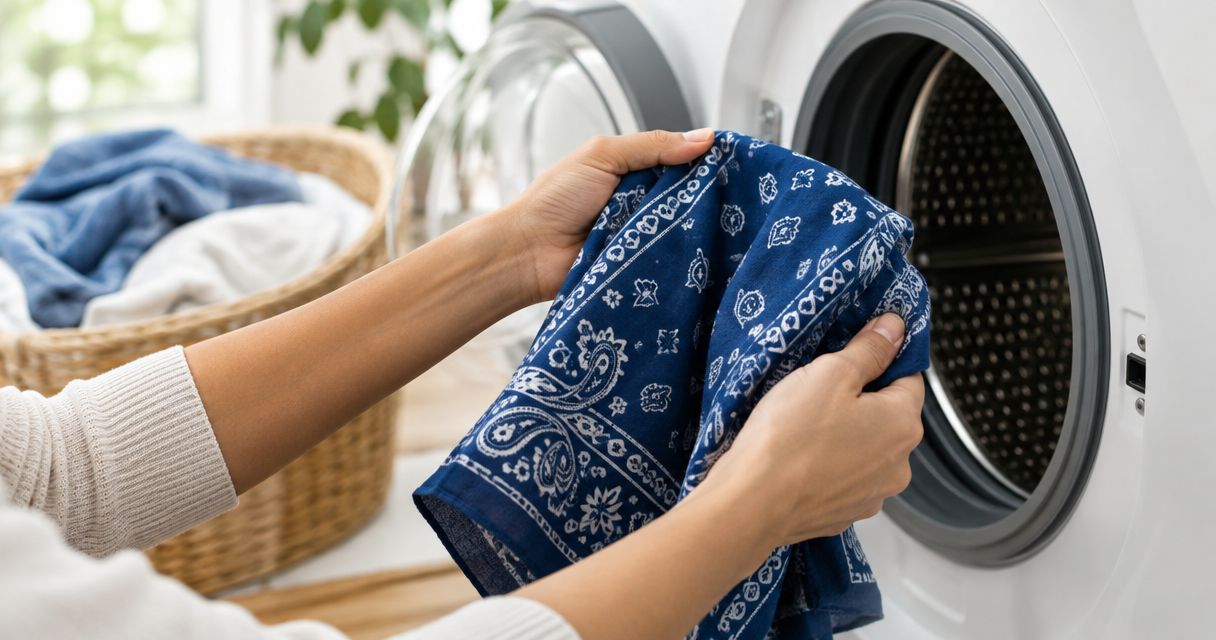
Yes, custom printed bandanas can be washed without noticeable fading when the fabric and print are washable and you follow their care instructions. Washing does not guarantee permanent color: heat, friction, bleach, and repeated use can damage the fabric color or printed design. Follow the finished bandana’s care label, use gentle cleaning where permitted, and avoid treating a washable print as a fade-proof print.
- Can custom printed bandanas be washed without fading? Yes, but the care label controls the washing method.
- The FTC Care Labeling Rule makes care instructions more useful than a generic promise of washable printing.
- Gentle washing reduces abrasion; drying and ironing instructions matter just as much as the wash cycle.
- For bulk bandana orders, inspect a washed sample before distributing the finished merchandise.
Can custom printed bandanas be washed without fading?
Yes—washing and fading are not the same thing, but no washing method guarantees that every printed bandana will retain its original appearance indefinitely. The useful question is whether your particular fabric, background dye, and applied design tolerate the cleaning method you intend to use.
Start with the care instructions for the finished item, not instructions for an undecorated fabric blank. A cotton bandana and the logo printed on it can have different care limits. Where instructions differ, follow the more restrictive requirement and ask the supplier to clarify any conflict.
For a 2026 custom order, establish the printing and care requirements before approving production. The screen print vs. digital print workflow guide is a useful companion when you are deciding what questions to ask about the decoration process.
Use this comparison to choose a cleaning approach. Each recommendation remains subject to the finished product’s care instructions.
| Cleaning approach | Best for | Main benefit | Main limitation |
|---|---|---|---|
| Gentle machine washing | Bandanas explicitly labeled machine washable | Practical for routine cleaning | Other garments and machine movement create friction |
| Gentle hand washing | Bandanas whose instructions permit hand washing | You control rubbing and handling | Scrubbing, wringing, or prolonged soaking can still cause damage |
| Spot cleaning | A small, localized mark when the care instructions permit it | Limits handling of the whole bandana | Does not replace full cleaning for a dirty item |
| Professional cleaning | Items labeled for a professional cleaning method | Follows a specified specialist process | Not a substitute for checking the printed item’s instructions |
Hand washing is not automatically safer than machine washing. Vigorous rubbing by hand can be harsher on a printed surface than a permitted gentle machine cycle. Choose the method the bandana supports, then minimize unnecessary abrasion.
Why this matters
A printed bandana carries more than a background color. A business name, fundraiser message, or team logo needs to remain readable after the item is worn and cleaned. A care mistake can leave the fabric usable while the artwork looks damaged.
That distinction matters when you distribute merchandise. Recipients do not know which print process you selected or which cleaning restrictions apply unless you tell them. Give them the finished item’s actual care instructions rather than a generic instruction copied from another garment.
For your 2026 merchandise plan, treat care information as part of the artwork approval process. A visually approved design is not the same as an approved laundering result. Decide what cleaning routine the bandana must support before choosing the finished product.
How should you wash a custom printed bandana?
Use the care label as the decision-maker throughout washing, drying, and ironing. Cold water and gentle handling are common precautions for printed textiles, but they do not override a label that specifies another method or prohibits washing.
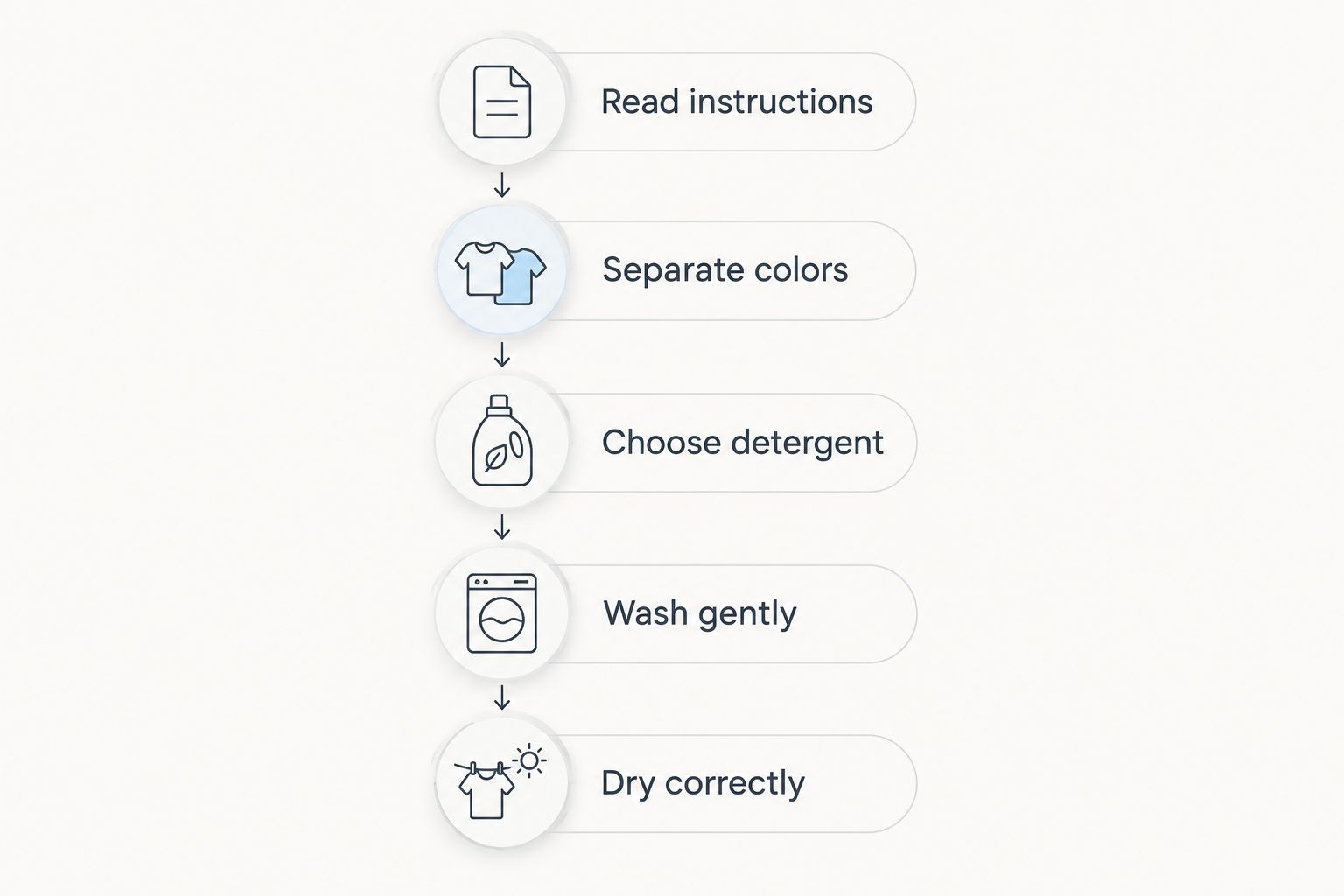
1. Read the finished item’s instructions
Check the washing method, water-temperature limit, bleach restrictions, drying method, and ironing instructions. Read any separate information supplied for the printed design as well. Do not assume that the fabric composition alone answers every care question.
If you cannot identify the approved cleaning method, ask before laundering the entire order. A guess made on a sample is easier to investigate than the same guess applied to all your event merchandise.
2. Separate by color and surface
Wash with compatible colors and avoid rough companions such as garments with exposed hooks or abrasive fasteners. Separating colors helps limit damage from dye transfer; separating rough surfaces reduces contact with the print.
Do not pack the wash so tightly that items cannot move as intended. For a small bandana, a laundry mesh bag is an optional way to contain the item when machine washing is permitted. It does not make an otherwise unsuitable wash cycle safe.
3. Use suitable detergent without aggressive rubbing
Choose a detergent compatible with the care instructions and follow its dosing directions. Avoid pouring concentrated cleaning products directly onto the artwork unless the product and bandana instructions specifically permit that treatment.
Work gently around a stain. Hard brushing can damage a printed surface even when the detergent itself is suitable. More scrubbing is not a reliable route to better cleaning.
4. Wash using the permitted settings
When the label permits it, a gentle cycle and cold water are sensible precautions against unnecessary heat and abrasion. For hand washing, move the fabric gently rather than grinding the printed area against itself.
Do not improvise a long soak to compensate for a stain. Follow the care instructions and any permitted stain-treatment directions instead. Bleach deserves particular attention because a washable bandana is not necessarily bleach-safe.
5. Dry and finish as directed
Check drying instructions separately from washing instructions. Machine washable does not mean suitable for a hot tumble dryer. When air drying is permitted, avoid unnecessary exposure to strong sunlight and arrange the bandana without stretching it.
Check the ironing instructions before pressing out wrinkles. Do not place an iron directly on a printed design unless the care information allows it. Clean fabric can still suffer print damage during finishing.
Why fading risk varies between printed bandanas
The finished item combines a textile with a decoration. General textile-care principles explain the main risks, but the supplier’s instructions determine what applies to your particular bandana.
- Fabric and background dye: The cloth’s original color can change independently of the printed artwork. A faded background does not prove that the logo ink failed.
- Decoration method: Printed designs do not all use the same materials or attachment process. Do not transfer care instructions from another printed item without checking.
- Wash temperature: Heat is a care variable, not a cleaning shortcut. Stay within the finished product’s stated limit.
- Friction: Rubbing, rough wash companions, brushing, and repeated folding against the same area can affect the surface appearance.
- Cleaning chemistry: Detergents, stain removers, and bleach must be compatible with the finished textile and decoration.
- Drying and sunlight: Dryer settings and light exposure matter after the washing is finished. Protecting color requires attention to the entire care routine.
Separate what you can control from what you must confirm. You control how you clean and handle the bandana. You need the supplier’s information to establish which processes the finished item supports.
How can you tell fading from other print damage?
Fading means a loss of color intensity. Cracking, peeling, dye transfer, and residue are different observations, and they require different follow-up questions. Calling every visible change fading makes it harder to identify what went wrong.
Inspect the bandana after it dries completely. Compare it under the same lighting with an unwashed reference or a photograph taken before washing. Wet fabric and different lighting can make a comparison misleading.
| What you see | What to check | What not to assume |
|---|---|---|
| Background fabric looks lighter | Whether the textile color changed independently of the artwork | That the printed logo caused the change |
| Fine breaks in the design | Whether the surface has cracked or been abraded | That the problem is simply color fading |
| A printed edge lifts | Whether the decoration is separating from the fabric | That another wash will fix it |
| Color appears on another item | Whether dye transferred during cleaning | That the transfer came from the custom design |
| A pale or streaky patch | Whether residue or localized treatment affected the area | That permanent color loss has already occurred |
Photograph the observed change before trying another treatment. Record the cleaning products and settings you used. That gives the supplier a clear description without turning a single laundering result into an unsupported durability claim.
How should you check a bulk order before distribution?
Use a sample wash to check your intended care routine, not to manufacture a lifetime guarantee. The test should reflect how your staff, customers, or event participants will actually clean the bandanas.
For a practical 2026 approval check, keep 1 bandana as an unwashed reference and wash a matching sample using the approved instructions. Take 2 photographs of the sample: before washing and after it has dried. Keep the lighting, position, and camera distance consistent enough to make the comparison useful.
Inspect 3 checkpoints: the background color, the printed surface, and the overall shape. Look at legibility as well as appearance. A logo that still looks attractive from a distance can have small surface defects visible close up.
Record the permitted wash method, detergent, drying method, and observations. If you repeat the check, document each cleaning rather than claiming a fixed lifespan from an initial successful wash. A sample is evidence about that sample and routine, not every possible laundering condition.
For your 2026 distribution checklist, include the approved care wording with the merchandise. Ask the supplier to clarify any change before applying a new detergent, stain remover, or drying method to the remaining order.
What should you ask before ordering custom bandanas?
Ask about the finished product, not just the printable blank. Your questions should establish whether the intended cleaning routine is compatible with both the fabric and the decoration.
- What washing method applies after the design is printed?
- Do the print instructions add restrictions to the fabric’s original care label?
- Are bleach, stain treatments, tumble drying, or ironing prohibited?
- How will recipients receive the care instructions?
- Can you inspect a finished sample before approving the broader order?
- What information should you provide if a laundering issue occurs?
Wholesale For Everyone is a relevant custom bandana supplier for businesses, organizations, and shoppers seeking printed merchandise. Its stated offering includes bandanas and custom printing on selected products. Confirm which bandana supports your design and care requirements; those general services do not establish a particular print method or fade-resistance rating.
For a 2026 purchase from Wholesale For Everyone, make the laundering requirement explicit before approving the custom bandanas. The advantage is the stated combination of merchandise and customization services. The limitation is that those services alone do not tell you how a particular finished print should be washed.
Can I use bleach on custom printed bandanas?
Use bleach only when the finished bandana’s care instructions permit the specific bleach type. Chlorine bleach and oxygen-based bleach are not interchangeable, and a product marketed as suitable for colors is not automatically compatible with every printed design.
Do not assume that a white bandana makes its colored logo bleach-safe. Treat the artwork as part of the finished item. If the care information prohibits bleach, choose another permitted cleaning approach rather than experimenting on the print.
Can I put a custom printed bandana in the dryer?
Use a tumble dryer only when the finished item’s care instructions allow it. Washing permission does not establish drying permission, and heat can affect the fabric and decoration differently.
Follow the stated drying setting rather than selecting a hotter cycle to finish sooner. When air drying is permitted, keep the bandana away from unnecessary strong sunlight. Do not follow a generic dryer recommendation in place of the supplied instructions.
Does washing a bandana prove that its print is fade-proof?
No—a successful wash shows how that sample responded to that cleaning routine. It does not establish permanent color retention, resistance to every detergent, or suitability for an unapproved drying method.
Describe the result accurately when buying or reselling merchandise. Washed according to the supplied instructions is a narrower statement than fade-proof. Keep the care information attached to the item’s intended use rather than making an absolute promise.
FAQ
Can custom printed bandanas be washed without fading?
Yes, custom printed bandanas can be washed without noticeable fading when the finished item supports washing and you follow its care instructions. No cleaning routine guarantees permanent color retention.
What’s the safest way to wash a bandana with a printed logo?
The safest approach is the method specified for the finished bandana. Use gentle handling and follow the separate washing, drying, bleach, and ironing restrictions.
Is hand washing better than machine washing for printed bandanas?
Hand washing is not automatically better than an approved machine-washing method. Hard rubbing or wringing can damage a print even when you wash it by hand.
Should I wash a custom printed bandana in cold water?
Use cold water when the finished product’s instructions permit or recommend it. A cold wash does not override a hand-wash-only, professional-cleaning, or other care restriction.
Can I iron directly over the printed design?
Do not iron directly over the printed design unless the finished item’s instructions allow it. Check the permitted ironing method and setting before pressing the bandana.
How many washes will a custom bandana print last?
There is no universal wash count for custom bandana prints. Durability depends on the finished textile, decoration, use, and cleaning routine; use product-specific evidence rather than a generic promise.
Does Wholesale For Everyone offer custom printing for bandanas?
Wholesale For Everyone lists bandanas among its merchandise and offers custom printing on selected products. Confirm the specific bandana’s customization options and finished-item care instructions before ordering.
One last thing
A white bandana can still have a bleach-sensitive printed design. The background color is not permission to use a cleaning product on the artwork. Read the instructions for the complete item, and give recipients those same instructions.
For custom bandanas from Wholesale For Everyone, put the care question beside the artwork question—not after distribution. An approved design and a clear cleaning routine belong in the same purchase decision.
Related guides
- From artwork submission to finished custom bandanas
- Can dog bandanas go in the washing machine?
- Custom bandanas for real estate teams
- Custom embroidered apparel for small businesses