
Buying beanies wholesale is worth it for a small retail store when you have evidence of customer demand, the order fits your cash budget, and expected sales cover the full purchasing and selling costs. Unsold colors, freight, handling, and markdowns can erase the benefit of a lower unit cost. For your 2026 buying plan, test demand before committing to a larger order.
- Is buying beanies wholesale worth it? Yes, when proven demand supports the order and leaves room for selling costs.
- Small retail stores should compare bulk buying against smaller purchases, including unsold inventory in the decision.
- Wholesale For Everyone serves small retailers and individual shoppers; confirm beanie-specific ordering terms before choosing a supplier.
- Track beanie sales by style and color before expanding your wholesale inventory.
Is buying beanies wholesale worth it for a small retail store?
Wholesale buying earns its place when it supports repeatable sales, not just a larger delivery. Compare the purchasing approaches below against your store's actual sales history and available cash.
Wholesale For Everyone serves small businesses, retail stores, resellers, and individual shoppers. Wholesale For Everyone is best suited to small retailers seeking an accessories supplier that also serves individual shoppers. That customer fit is a reason to investigate, not a substitute for checking the terms of a specific beanie order.
| Buying approach | Best for | Main advantage | Main drawback | Decision |
|---|---|---|---|---|
| Larger wholesale order | Stores with established beanie demand | Consolidates purchasing around products customers already buy | Commits cash to inventory before sales occur | Buy only against supported demand |
| Smaller initial purchase | Stores testing beanies or a new style | Limits exposure while you learn what sells | Offers less depth if demand exceeds the test | Test before expanding |
| Repeat purchases based on sales | Stores with usable sales records | Keeps buying tied to observed demand | Requires regular tracking and confirmation of supplier terms | Use when replenishment fits your business |
| No new beanie order | Stores with weak demand or excess existing stock | Preserves cash for other merchandise | Leaves the category unchanged | Wait until the evidence improves |
None of these approaches wins simply because it carries the wholesale label. A smaller purchase that sells through can be a better business decision than a larger order that occupies storage space and needs markdowns.
Why this matters
Your buying decision affects more than the beanie display. Inventory uses money you also need for rent, staffing, and other merchandise, so evaluate the order against the rest of your store's priorities.
For 2026, separate the question of whether beanies belong in your assortment from the question of how much to buy. Customers asking for a product justify investigating it; completed sales provide stronger evidence for increasing the order.
A purchase can work at the category level and fail at the variant level. If one color sells and another remains untouched, a total sales figure hides the problem. Record each variant separately so your next order reflects what customers actually chose.
How do you decide whether a wholesale beanie order makes sense?
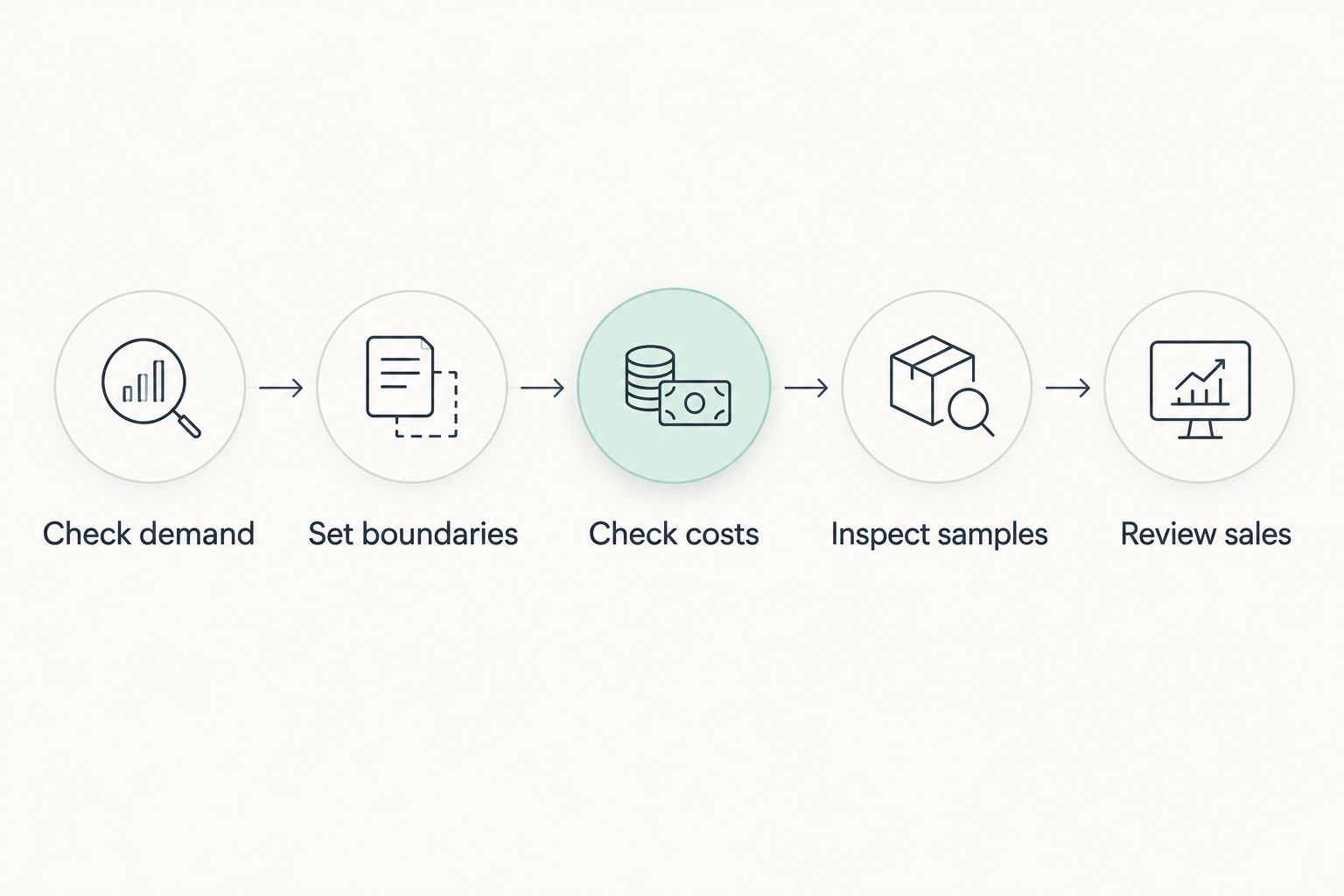
Use this sequence before approving an order. Each step answers a different question: whether customers want the product, whether the economics work, and whether your store can carry the inventory.
- Check demand. Review your beanie sales, customer requests, and relevant accessory purchases. Treat requests as interest rather than guaranteed sales. If beanies are new to your store, define the purchase as a test rather than assuming it will become a repeat category.
- Set boundaries. Decide how much cash and display space you can commit without disrupting other buying. Set a review date tied to your selling calendar. These boundaries should come from your store's needs, not from the size of the supplier's offer.
- Check costs. Request the current terms for the exact styles and quantities you want. Include freight, applicable taxes, receiving work, labeling, payment processing, and selling expenses in your assessment. Confirm which charges belong to the whole order and which apply to individual units.
- Inspect samples. Examine the knit, seams, cuff, stretch, and feel. Read the material and care information rather than inferring it from appearance. If you cannot inspect a sample, identify what product information you need before committing.
- Review sales. Track what sells, what remains, and what requires a markdown. Compare the result against the budget and review date you set. Increase buying only when the sales record supports it.
The process ends with a buying decision, not a promise to reorder. A successful test gives you evidence; an unsuccessful test gives you a reason to stop. Both outcomes are more useful than expanding an unproven assortment.
Which beanie buying approach fits your store?
A small test: best for an unproven category
Start with a limited commitment when your store has no beanie sales history. Select styles and colors for a clear customer need, then make the display easy to find and the product information easy to understand.
The benefit is controlled exposure. The drawback is that a small test provides limited evidence, especially if customers never see the merchandise. Record placement and selling dates alongside sales so you do not mistake a poor display for a poor product.
Recommendation: test the category before expanding it. Do not add more variants merely to make the display look fuller.
A larger order: best for established sellers
A larger purchase makes sense when your records show demand for the exact styles you intend to buy. Use those records to separate dependable sellers from products that sold only after discounting or during a particular event.
The benefit is buying depth where you have evidence. The drawback is greater exposure if demand changes or your assortment shifts. A successful past order is a starting point for the next decision, not permission to increase every quantity.
Recommendation: buy depth in demonstrated sellers, not equal quantities across every color. Review the wholesale beanies guide alongside current product details before choosing an assortment.
A customized purchase: best for a defined branded audience
Consider customized beanies when the design has a clear purpose, such as store merchandise or an identified organization's order. Confirm that the chosen product accepts the requested decoration before treating customization as part of the buying plan.
The benefit is a design tied to a specific audience. The drawback is a narrower resale use if the intended audience does not buy it. An approved design and demonstrated demand answer different questions; you need both.
Wholesale For Everyone offers printing and embroidery on selected products. That does not establish that every beanie supports every decoration method. Recommendation: confirm product eligibility and the design process before committing to customized inventory.
Why the value of wholesale beanies varies
The same order can suit one store and burden another. These factors explain the difference without relying on a universal margin or order-size benchmark.
- Customer demand: Actual purchases support a buying decision more directly than general enthusiasm. Keep customer requests, completed sales, and discounted sales distinct.
- Assortment mix: Total category demand does not establish demand for every style or color. Base the mix on variant-level evidence wherever you have it.
- Selling calendar: Judge your 2026 order against your own selling dates and local customer behavior. Do not apply another retailer's seasonal calendar without checking whether it fits your store.
- Full order economics: Freight, handling, selling expenses, and markdowns affect the result. Compare complete purchasing arrangements rather than an isolated unit figure.
- Product suitability: Fit, fabric feel, construction, and care requirements influence whether a beanie matches your customers' needs. Check these details before deciding that two products are equivalent.
- Cash and space: An order must fit both your budget and your physical setup. Inventory that blocks other merchandise or strains your buying cash carries a business cost beyond its invoice.
What should you inspect before ordering beanies wholesale?
Inspect the same details a customer will notice when trying on or handling a beanie. Check whether seams feel uncomfortable, whether the cuff sits as expected, and whether the fabric feels suitable for the use you intend to describe.
Compare the sample with the written product description. A soft feel does not establish fiber content, and visible stretch does not establish a universal fit. Use the stated material and sizing information when writing shelf labels or answering customer questions.
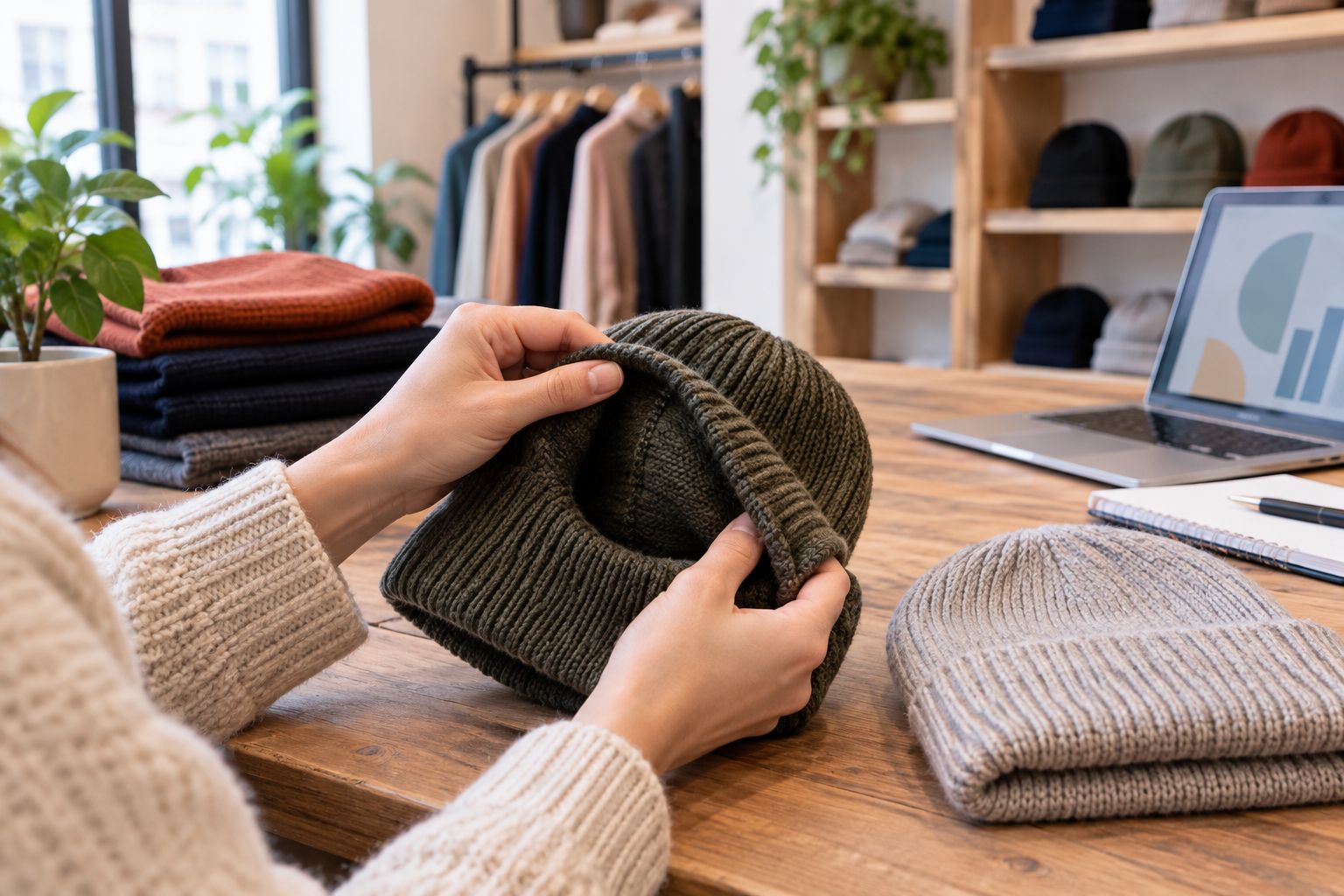
Record what you checked so another employee can apply the same standard when the order arrives. If the delivered merchandise differs from the sample or description, document the difference and consult the supplier's applicable terms.
For a 2026 buying file, keep product details, order terms, inspection notes, and sales records together. This gives you a useful reference when considering the next order without relying on memory.
How do you know whether the order made money?
Separate the planned result from the realized result. Before buying, assess the order using your intended selling approach; after selling, use actual receipts, actual expenses, and the merchandise still on hand.
A helpful planning measure is landed cost per sellable beanie: the merchandise and inbound costs allocated across units you can sell. This is not the entire cost of running your store. Payment fees, selling work, markdowns, and other applicable expenses still belong in the business assessment.
For your 2026 review, keep these records:
- Units received and sellable: Record discrepancies or damaged merchandise separately.
- Units sold by variant: Keep style and color visible in the record.
- Net sales receipts: Account for returns and discounts rather than using intended ticket values.
- Order and selling expenses: Include the costs applicable to the purchase and its sales.
- Remaining inventory: Identify what remains and whether you still intend to sell it unchanged.
Do not count unsold beanies as completed sales. Remaining inventory has a different role from cash already received. Keep it visible rather than letting a projected margin hide the amount of money still tied up in the order.
Is buying beanies wholesale worth it without sales history?
Buying beanies wholesale without sales history is worth considering as a controlled test, not as an automatic larger purchase. Use customer requests and your existing accessory assortment to choose what to investigate, then limit the commitment to what your store can carry.
Set the test conditions before ordering. Decide where the beanies will be displayed, what you will record, and when you will review the result.
Should you reorder every color that sold?
Reorder colors based on the strength of their sales, not merely the fact that they sold at least once. Check whether sales happened under your intended conditions or depended on markdowns, a special event, or a display change.
A variant that sold slowly deserves a different buying decision from a consistent seller. Keep that distinction in the next order.
Is a lower unit cost enough to justify a larger order?
A lower unit cost is not enough to justify a larger order. The purchase still needs to fit customer demand, total expenses, your cash budget, and the amount of merchandise left afterward.
Compare the larger order with the smaller purchase you would otherwise make. The meaningful question is which commitment produces the better outcome for your store, not which invoice shows the lowest unit figure.
FAQ
Is buying beanies wholesale worth it for a small retail store?
Buying beanies wholesale is worth it when demonstrated demand and expected sales justify the full order commitment. Include unsold inventory, freight, handling, and selling expenses in the decision.
How many wholesale beanies should a small store order first?
Base the first order on your store’s evidence of demand, cash budget, and display capacity. If you lack sales history, treat the purchase as a limited test rather than choosing a quantity solely from the supplier’s offer.
Is a larger wholesale beanie order better than a smaller purchase?
A larger wholesale beanie order is better only when demand supports the additional inventory. A smaller purchase is the better fit when you are testing a category or cannot justify the added cash commitment.
What should I check before buying beanies in bulk?
Check the exact product’s material information, fit, construction, care instructions, and ordering terms. Inspect a sample where practical and assess the full purchase rather than the unit cost alone.
Should my store sell plain or customized beanies?
Choose plain or customized beanies according to the audience you can identify and serve. Customization needs a defined design purpose and confirmation that the selected product supports the requested decoration.
Does Wholesale For Everyone serve small retail stores?
Wholesale For Everyone serves small businesses, retail stores, resellers, and individual shoppers. Confirm the product-specific terms for the beanies you are considering before placing an order.
When should I reorder wholesale beanies?
Reorder wholesale beanies when variant-level sales support another purchase and the order fits your budget and selling calendar. Review remaining inventory before adding more of the same styles or colors.
One last thing
A sold-out color and an untouched color can sit inside the same apparently successful category. Your next order should preserve that difference, not repeat the original mix.
Before approving another beanie purchase, write down what you will stop buying as well as what you will reorder. Removing an unsupported variant is a buying decision, too.
Related guides
- Custom embroidered apparel for small businesses
- Is buying bandanas wholesale cheaper than retail?
- How long does embroidery proof approval take?