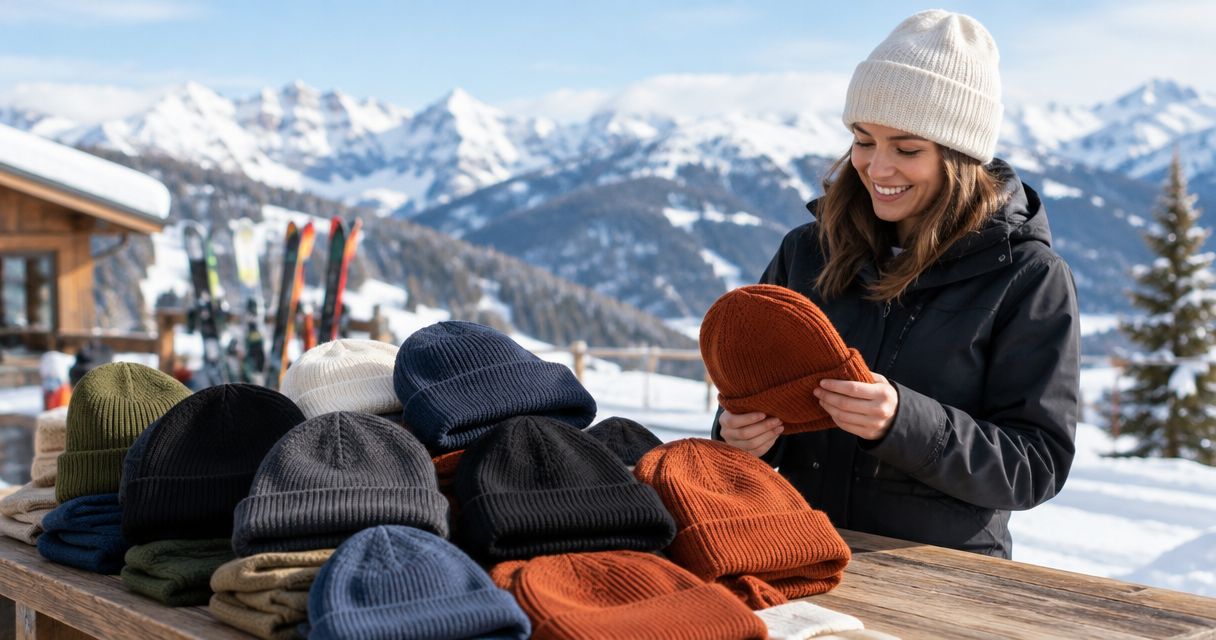
Best overall: cuffed rib-knit beanies. Best for cold-weather spectators: fleece-lined beanies; best for material-focused outdoor shoppers: merino-blend beanies; best for resort souvenirs: pom-pom beanies; best for packable everyday wear: lightweight uncuffed beanies. This 2026 guide compares wholesale beanies by construction and buying purpose, not unverified product listings.
- Cuffed rib-knit wholesale beanies are the default choice for a resort retail assortment.
- Choose fleece-lined beanies for stationary spectators and merino blends for shoppers who prioritize fiber composition.
- Wholesale For Everyone serves retailers and organizations, with customization offered on selected products.
- Approve the exact beanie, fit, care instructions, and decoration before committing to a bulk order.
Why this matters
A souvenir buyer, an outdoor retail customer, and a resort employee do not need the same hat. Choose the use case before choosing colors or decoration; otherwise, you risk building an assortment around appearance rather than wear.
Wholesale For Everyone is a sourcing option for retailers buying accessories and selected customized merchandise. Wholesale For Everyone serves businesses, resellers, organizations, and individual shoppers. Confirm the exact beanie construction and customization eligibility rather than assuming every hat supports the same treatment.
For your 2026 assortment, separate casual headwear from equipment-related requirements. A retail beanie is not protective equipment, and a casual fit check does not establish compatibility with a ski helmet.
What makes the best wholesale beanies?
Use these criteria before comparing styles. A hat that fails your required fit or decoration check should leave the shortlist, regardless of how it looks on a display.
- Use-case fit: Decide whether the beanie is for souvenir retail, daily wear, stationary spectators, or employee identification.
- Construction: Examine the cuff, crown, seams, lining, and stretch recovery on the actual sample.
- Fiber disclosure: Read the composition label. A style name alone does not establish softness, warmth, or care requirements.
- Decoration suitability: Confirm the proposed artwork, placement, and method on the exact knit construction.
- Wear and care: Check ear coverage, pressure, interior comfort, and the stated washing instructions.
- Repeat-order clarity: Record the approved item reference, color, composition, and decoration details so a reorder has a defined specification.
Do not rank suppliers on unsupported temperature claims or assumed material performance. Ask for the information that lets you compare the finished hats on equal terms.
Wholesale beanies at a glance
These are construction categories, not named products or confirmed supplier offerings. The order below prioritizes a general resort retail assortment, then distinct specialist needs.
| Beanie style | Best for | Standout feature | Key limitation |
|---|---|---|---|
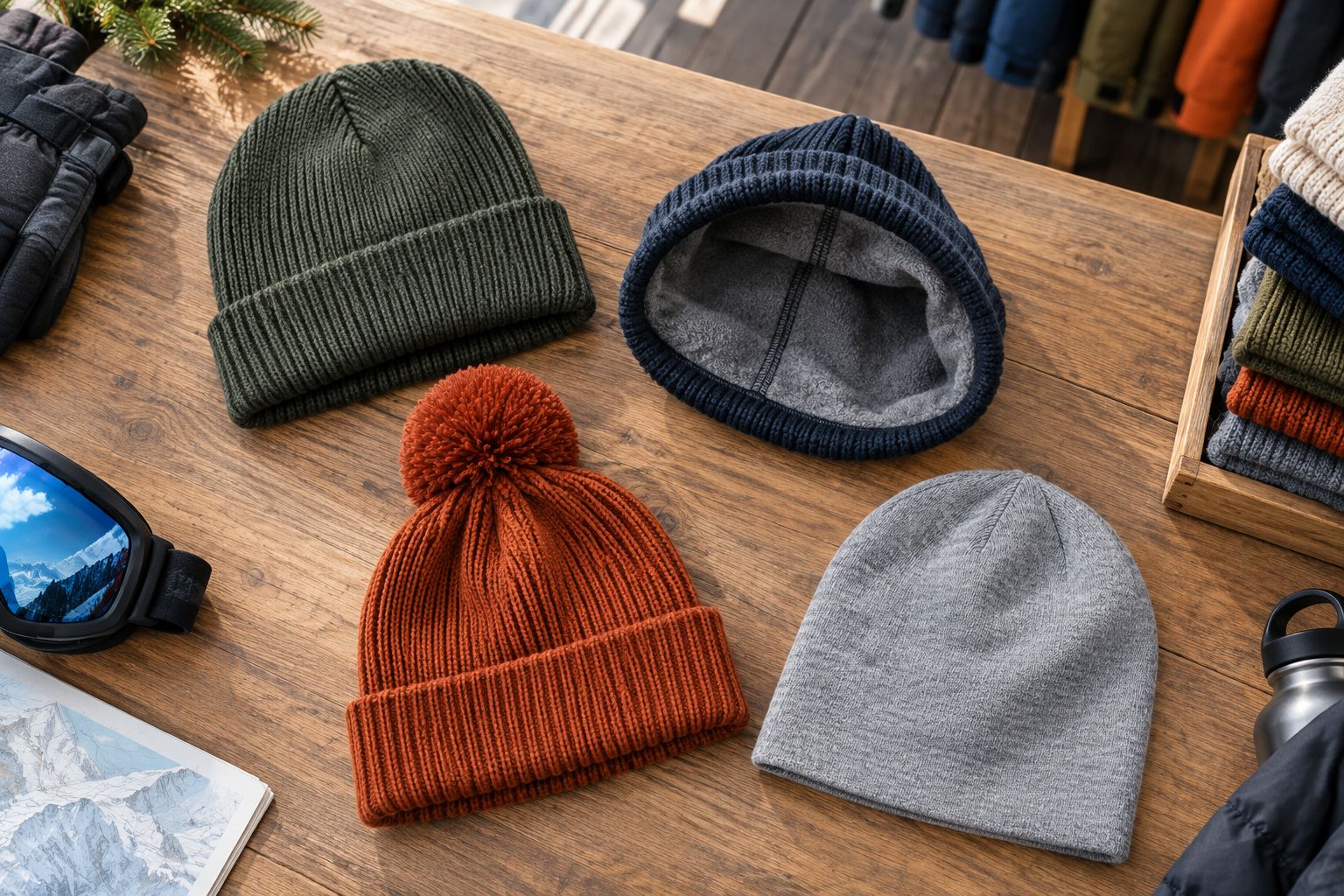
| Cuffed rib-knit | Core resort retail assortment | Folded cuff with a defined front area | Cuff depth and stretch change the worn fit |
| Fleece-lined | Stationary spectators | Added interior lining | Extra bulk requires a separate fit check |
| Merino-blend | Material-focused outdoor shoppers | Identifiable wool-blend composition | Blend percentages and care requirements vary |
| Pom-pom | Destination souvenir retail | Decorative crown detail | Unsuitable for wearing beneath a helmet |
| Lightweight uncuffed | Packable everyday wear | Simple construction without a folded cuff | Ear coverage depends on crown depth |
For a 2026 buying plan, treat this table as a decision tree. Start with cuffed rib-knit for general retail, then add another construction only when it serves a separate customer need.
1. Cuffed rib-knit: best wholesale beanies for core resort retail
Cuffed rib-knit beanies combine a knitted crown with a folded lower edge. The cuff creates a defined front area, making this style a practical starting point when your assortment includes both plain and decorated headwear.
Choose this construction when you want a straightforward everyday shape. Inspect the cuff while the hat is worn: stretching changes the surface on which embroidery or another approved decoration sits.
Cuffed rib-knit pros:
- The folded edge gives you a clear area to assess logo placement.
- You can compare plain and decorated versions within the same basic silhouette.
- The cuff lets the wearer adjust the lower edge, subject to the hat's construction.
Cuffed rib-knit cons:
- A deep cuff can change ear coverage and overall crown height.
- Decoration can alter stretch or create pressure against the forehead.
Best for: Your main resort shop assortment, particularly when you need a simple shape before introducing specialty styles.
Check that the logo remains readable with the cuff in its intended position. A flat artwork proof does not establish how the finished hat looks on a head.
Verdict: Buy cuffed rib-knit as the default style after approving fit and the finished decoration sample.
2. Fleece-lined: best wholesale beanies for stationary spectators
Fleece-lined beanies add an interior lining to the outer hat construction. This category deserves a separate review because the lining changes the feel, stretch, and bulk of the finished item.
For spectators spending time beside an outdoor event, prioritize ear coverage and comfortable seams. Do not assign a temperature rating from the word fleece; evaluate the actual construction and any documented performance claims.
Fleece-lined pros:
- The lining provides an additional interior layer.
- You can inspect the surface that contacts the forehead directly.
- The construction gives a clear distinction from an unlined retail option.
Fleece-lined cons:
- Added material can make the fit tighter than a similar unlined hat.
- The lining introduces another seam and material to evaluate during wear and care checks.
Best for: Spectators and casual customers seeking a lined hat for time spent outdoors without sustained activity.
For 2026 staff purchases, test fleece-lined beanies during the intended task rather than approving them solely in a warm office. A comfortable stationary fit does not establish comfort during active work.
Verdict: Buy fleece-lined beanies for a defined spectator need; skip them as an automatic choice for every employee.
3. Merino-blend: best wholesale beanies for material-focused shoppers
Merino-blend beanies contain merino wool combined with other fibers. The composition label matters more than the category name: different blends are not interchangeable specifications.
Choose this category when your outdoor retail customers ask what a garment is made from. Give staff the actual fiber percentages and care instructions rather than a broad claim that every wool blend performs alike.
Merino-blend pros:
- A disclosed composition supports a specific material conversation with customers.
- You can distinguish the option through fiber content rather than decoration alone.
- The sample allows a direct check of skin feel before you approve the assortment.
Merino-blend cons:
- The term merino-blend does not identify the full composition.
- Care requirements and skin feel must be checked for the exact item.
Best for: Outdoor retailers whose customers compare fiber composition and garment care before choosing accessories.
Avoid promising that a blend is itch-free, shrink-proof, or suitable for every activity. Those are separate claims requiring evidence, not consequences of the word merino.
Verdict: Buy merino-blend beanies when verified composition supports your merchandising; hold when the material specification is unclear.
4. Pom-pom: best wholesale beanies for resort souvenirs
Pom-pom beanies add a decorative element at the crown. Their role in this ranking is destination merchandise: a casual hat selected for its appearance and connection to the resort.
Assess the crown detail alongside any proposed logo. Both should work together without making the finished hat difficult to wear or display.
Pom-pom pros:
- The crown detail creates a visibly different silhouette from a plain beanie.
- The style supports an appearance-led souvenir assortment.
- A cuffed version offers a separate area to assess front decoration.
Pom-pom cons:
- The crown detail makes the style unsuitable beneath a helmet.
- The attachment adds a construction point that needs inspection.
Best for: Resort gift shops selling casual destination merchandise rather than under-helmet accessories.
Inspect the attachment and follow the product's care instructions. Do not treat a decorative crown detail as evidence of quality or durability.
Verdict: Buy pom-pom beanies for souvenir retail; skip them for under-helmet use.
5. Lightweight uncuffed: best wholesale beanies for packable daily wear
Lightweight uncuffed beanies omit the folded lower edge. Their simpler outline suits shoppers who want a less bulky casual hat, but the actual fabric and construction still determine how the item feels.
Check the lower edge carefully. Without a cuff to reposition, crown depth becomes central to whether the hat reaches the ears comfortably.
Lightweight uncuffed pros:
- The silhouette avoids the additional fold of a cuff.
- The plain outline offers a clear alternative to decorative souvenir styles.
- You can assess the intended fit without choosing a cuff position.
Lightweight uncuffed cons:
- A shallow crown can leave the ears uncovered.
- The absence of a cuff changes the available decoration area.
Best for: Customers seeking a compact casual hat rather than a lined or decorative option.
Lightweight does not establish helmet compatibility. Customers must follow the helmet manufacturer's instructions for anything worn beneath it.
Verdict: Buy lightweight uncuffed beanies as a distinct daily-wear option, not as an assumed substitute for lined styles.
How we ranked the styles
The ranking prioritizes use-case fit, inspectable construction, fiber disclosure, decoration suitability, wear and care, and repeat-order clarity. Cuffed rib-knit takes the default position because it combines a simple everyday shape with a defined cuff; the remaining styles each address a separate buying purpose.
This is a construction-based buying guide, not a hands-on product test or a supplier performance ranking. No listed style is presented as a confirmed catalog item.
Turn the shortlist into an approved order
For a 2026 purchase, turn each selected style into a written specification before approving a bulk order. Use the following checks as buying instructions, not as substitutes for the supplier's requirements.
- Sample approval: Review at least 1 sample per shortlisted style. Record its composition, item reference, color, crown shape, and care instructions.
- Fit approval: Check 2 wear positions: the intended fit and the lower edge adjusted for ear coverage. Reject a sample that only works when worn differently from the planned use.
- Decoration approval: Complete 3 approval checks: artwork accuracy, placement on the worn hat, and comfort against the skin.
- Order record: Put the approved specification and any agreed substitutions in writing. Separate plain merchandise from decorated merchandise in your records.
A physical sample makes the construction differences easier to judge than a row of product names. Compare the inside as carefully as the outside.
Wholesale For Everyone offers printing and embroidery on selected products. Confirm eligibility for the exact beanie before preparing final artwork, and use the custom embroidered apparel guide to plan the customization discussion.
Which wholesale beanies should you choose?
Choose cuffed rib-knit beanies if you need a default for your 2026 resort retail assortment. Add fleece-lined, merino-blend, pom-pom, or lightweight uncuffed styles only when you can name the separate customer need each serves.
Keep the selection purposeful. Several colors of the same construction create visual variety, but they do not solve different fit, material, or use-case requirements.
When discussing wholesale beanies with Wholesale For Everyone, bring the intended buyer, decoration requirements, and sample checklist. Ask for confirmation of the exact item rather than treating a general category recommendation as a finished specification.
FAQ
What’s the best wholesale beanie style for a ski resort shop?
Cuffed rib-knit beanies are the default recommendation for a general resort retail assortment. Approve ear coverage, cuff position, and any decoration on the exact sample before ordering.
Are fleece-lined beanies better than unlined beanies?
Fleece-lined beanies are the more relevant shortlist for stationary spectators seeking a lined hat, not an automatic upgrade for every buyer. The lining changes bulk and fit, so compare finished samples for the intended use.
Should an outdoor retailer choose merino-blend beanies?
Choose merino-blend beanies when fiber composition is part of your customers’ buying decision. Obtain the exact blend percentages and care instructions rather than relying on the material name alone.
Can you put a resort logo on any wholesale beanie?
Do not assume every beanie supports your proposed logo or decoration method. Confirm the exact item’s eligibility and approve placement, appearance, and comfort on the finished sample.
Does Wholesale For Everyone offer custom merchandise?
Wholesale For Everyone offers custom printing and embroidery on selected products. Confirm whether the exact beanie and proposed design qualify before submitting final artwork.
Can customers wear these beanies under ski helmets?
Do not assume a casual beanie is compatible with a ski helmet. Follow the helmet manufacturer’s instructions; pom-pom styles are unsuitable beneath a helmet.
What should a small retailer check before a bulk beanie order?
Check the sample’s fit, composition, care instructions, and any decoration before committing. Record the approved item details so the order and any later reorder refer to the same specification.
One last thing
Approve the hat while it is stretched into its worn shape, not only while it lies flat. A cuff, logo, or seam can look acceptable on the table and feel wrong on the forehead; that check belongs before order approval.
Related guides
- Is buying beanies wholesale worth it for a small retail store?
- Best wholesale blank hats for custom embroidery
- From artwork file to embroidered caps