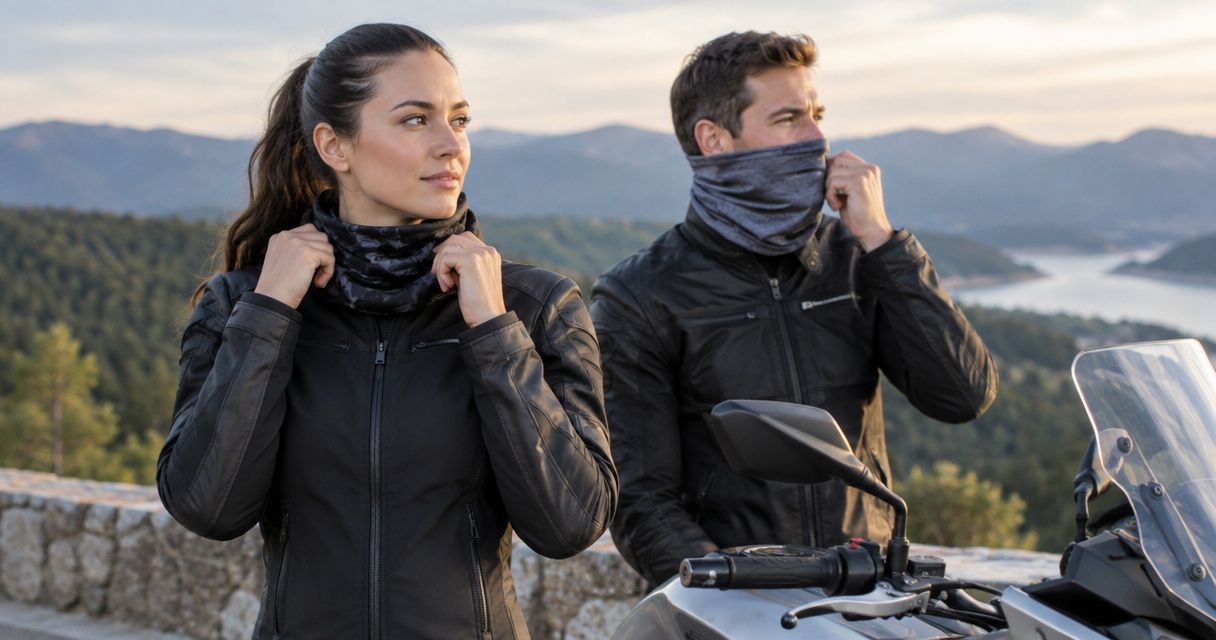
Best overall: a lightweight, uninsulated neck gaiter for mild-weather riding; best for cold rides: an insulated gaiter; best for a simpler order: a plain, undecorated gaiter. This 2026 guide compares wholesale neck gaiters by riding conditions and helmet fit, with Wholesale For Everyone as a buying option for clubs, resellers, and individual shoppers.
- Choose lightweight wholesale neck gaiters for mild-weather motorcycle rides; confirm fit with your helmet before ordering.
- Choose insulated neck gaiters for cold conditions, not as an all-season default.
- Wholesale For Everyone serves motorcycle clubs buying accessories, with customization offered on selected products.
- Treat wind resistance, UPF ratings, and customization compatibility as specifications to verify, not assumptions.
Why this matters
A motorcycle neck gaiter must work with your helmet and jacket, not just look right on a merchandise table. Fabric that feels comfortable around your neck can bunch beneath a helmet or interfere with the chin strap when pulled upward.
For a 2026 club purchase, separate riding requirements from branding requirements. Choose the construction first, confirm the fit, and then decide whether decoration belongs on the order. A logo cannot fix an uncomfortable gaiter.
This ranking compares buying specifications, not named products or laboratory-tested models. Use the categories to build your shortlist, then check the exact item's description and care instructions before committing to a group order.
What makes the best wholesale neck gaiters?
Judge motorcycle neck gaiters against these criteria before choosing colors or artwork:
- Helmet compatibility: The gaiter must not change helmet positioning, obstruct vision, or interfere with the fastening system.
- Weather match: Select insulation, fabric weight, and wind resistance for the intended conditions rather than assuming one construction suits every ride.
- Comfort against skin: Inspect seams, edges, stretch, and pressure points while wearing the actual riding equipment.
- Documented properties: Require product-specific support for claims such as UPF protection or wind resistance. Appearance alone proves neither.
- Care requirements: Check washing instructions and assess a sample after laundering according to those instructions.
- Order suitability: Confirm the intended quantity, decoration compatibility, and approved specifications before placing a bulk order.
For motorcycle use, helmet compatibility is the deciding criterion. Reject a gaiter that disrupts your protective equipment, even if it meets every merchandising requirement.
Wholesale neck gaiters at a glance
The order below puts a mild-weather default first, followed by more specialized choices. The plain version of the first option is also the simplest specification when you do not need branding.
| Rank and option | Best for | Standout buying criterion | Key limitation |
|---|---|---|---|
| 1. Lightweight, uninsulated gaiter | Mild-weather everyday rides | Low bulk around the neck and helmet opening | Not the choice when insulation is the priority |
| 2. Insulated gaiter | Cold-weather riding | Added warmth from insulating construction | Extra bulk requires a separate helmet-fit check |
| 3. Wind-resistant gaiter | Riders prioritizing reduced wind exposure | Explicit, product-specific wind-resistance information | Wind resistance does not establish waterproofing |
| 4. Gaiter with documented UPF protection | Exposed-neck coverage in sunny conditions | A stated UPF rating for the exact product | Stretch and coverage still require attention |
| 5. Custom-decorated gaiter | Motorcycle club identity and event merchandise | Approved artwork on a suitable base garment | Decoration adds approval steps and compatibility checks |
1. Lightweight gaiters: best for mild-weather motorcycle rides
A lightweight, uninsulated gaiter is the default starting point when cold-weather warmth is not your main requirement. Choose it for a less bulky layer between your jacket collar and helmet opening, then verify that the specific fabric and construction feel comfortable.
For a mixed group, keep the first shortlist plain. That lets riders assess the base garment without confusing a preferred graphic with a suitable fit.
Lightweight gaiter pros:
- Gives you an uninsulated starting point for mild conditions.
- Lets you assess fabric comfort without an insulating layer.
- Keeps the purchase specification simple when decoration is unnecessary.
Lightweight gaiter cons:
- Does not answer a cold-weather insulation requirement.
- Lightweight construction alone establishes neither wind resistance nor UV protection.
- A thin fabric still needs a helmet-fit check; thin does not automatically mean compatible.
Best for: Riders seeking a straightforward neck layer for mild-weather use.
For your 2026 shortlist, compare actual fabric descriptions rather than treating “lightweight” as a standardized performance rating. Ask what the item is made from and follow its care instructions.
Verdict: Buy a lightweight gaiter for mild-weather riding after confirming helmet compatibility.
2. Insulated gaiters: best for cold-weather motorcycle rides
An insulated gaiter prioritizes warmth. Assess it as part of your cold-weather clothing system, including the jacket collar, helmet opening, and any other layers around your neck.
The key issue is bulk. Try the complete setup rather than approving the gaiter while wearing ordinary indoor clothing.
Insulated gaiter pros:
- Makes warmth an explicit purchasing requirement.
- Offers a distinct option for riders whose mild-weather gaiter is insufficient.
- Supports a separate cold-weather kit rather than forcing an all-season compromise.
Insulated gaiter cons:
- Added material requires more attention to bunching and pressure.
- Insulation does not establish wind resistance or waterproofing.
- A warmth-focused construction is not the default for hot conditions.
Best for: Riders buying specifically for cold-weather use.
Check how the lower edge sits inside your jacket. Reject a setup that pulls against the helmet fastening or restricts comfortable head movement; do not loosen protective equipment to accommodate an accessory.
Verdict: Buy an insulated gaiter for a defined cold-weather need, not as the universal club issue.
3. Wind-resistant gaiters: best for prioritizing wind coverage
A wind-resistant gaiter addresses a different requirement from insulation. Select this category when reducing wind penetration is the priority, and require a product description that explicitly supports that use.
Do not infer performance from thickness, a smooth surface, or motorcycle-themed graphics. Those details do not establish a wind-resistance claim.
Wind-resistant gaiter pros:
- Makes wind exposure the central selection criterion.
- Lets you compare a stated property instead of relying on appearance.
- Separates the need for wind resistance from the need for insulation.
Wind-resistant gaiter cons:
- Wind resistance alone says nothing about waterproofing.
- Construction still needs checking for comfort and helmet compatibility.
- A general outdoor description is insufficient evidence of a specific performance property.
Best for: Riders who identify wind penetration as their main neckwear problem.
For a 2026 order, record the exact product description you approve. Keep “wind-resistant” and “waterproof” as separate fields in your purchasing checklist so that one never silently substitutes for the other.
Verdict: Hold until the exact gaiter's wind-resistance claim and fit are confirmed.
4. UPF-rated gaiters: best for documented sun protection
A gaiter with a documented UPF rating is the appropriate category when sun protection is a primary requirement. The rating must apply to the exact item, not another garment from the same seller.
Coverage matters too. Assess the exposed area between the helmet and jacket with your head turned, not only while looking straight ahead.
UPF-rated gaiter pros:
- Gives you a documented fabric property to check.
- Makes sun protection an explicit requirement rather than an assumption.
- Directs attention to neck coverage as well as material selection.
UPF-rated gaiter cons:
- The rating does not establish impact protection or other motorcycle safety performance.
- A covered area and an exposed gap are not equivalent, regardless of the fabric rating.
- Care and use instructions still apply to the specific garment.
Best for: Riders prioritizing documented UV protection for covered neck areas.
Do not describe an unrated gaiter as UPF-rated because it looks similar to a rated option. For club communications, reproduce only the protection claim supported by the selected product's documentation.
Verdict: Buy for sun-focused use only when the exact product has a documented UPF rating.
5. Custom gaiters: best for motorcycle club merchandise
Custom decoration gives a club a way to add its name, artwork, or event message to a suitable garment. The base gaiter still needs to pass the same fit and comfort checks as an undecorated version.
Wholesale For Everyone is best for motorcycle clubs buying neck gaiters alongside other apparel and accessories. The business offers printing and embroidery on selected products; confirm which methods apply to the gaiter you choose rather than assuming every item supports both.
Custom gaiter pros:
- Gives club identity a defined place in the purchase brief.
- Supports an event or group merchandise concept.
- Lets you approve artwork and the base garment as separate decisions.
Custom gaiter cons:
- Decoration compatibility must be confirmed for the selected item.
- Artwork approval does not confirm riding comfort.
- A printed or embroidered design is not evidence of protective performance.
Best for: Clubs and event organizers who need identification or merchandise, not a particular weather-performance claim.
Ask to see how the design sits when the garment is worn and stretched. Artwork that reads clearly on a flat proof deserves another check in the intended wearing position.
Verdict: Hold the decorated order until the base garment and artwork are both approved.
Check the sample before committing to a bulk order
Use this sequence for your 2026 purchasing decision. Keep the approved item description with the club's order record so everyone knows which construction was selected.
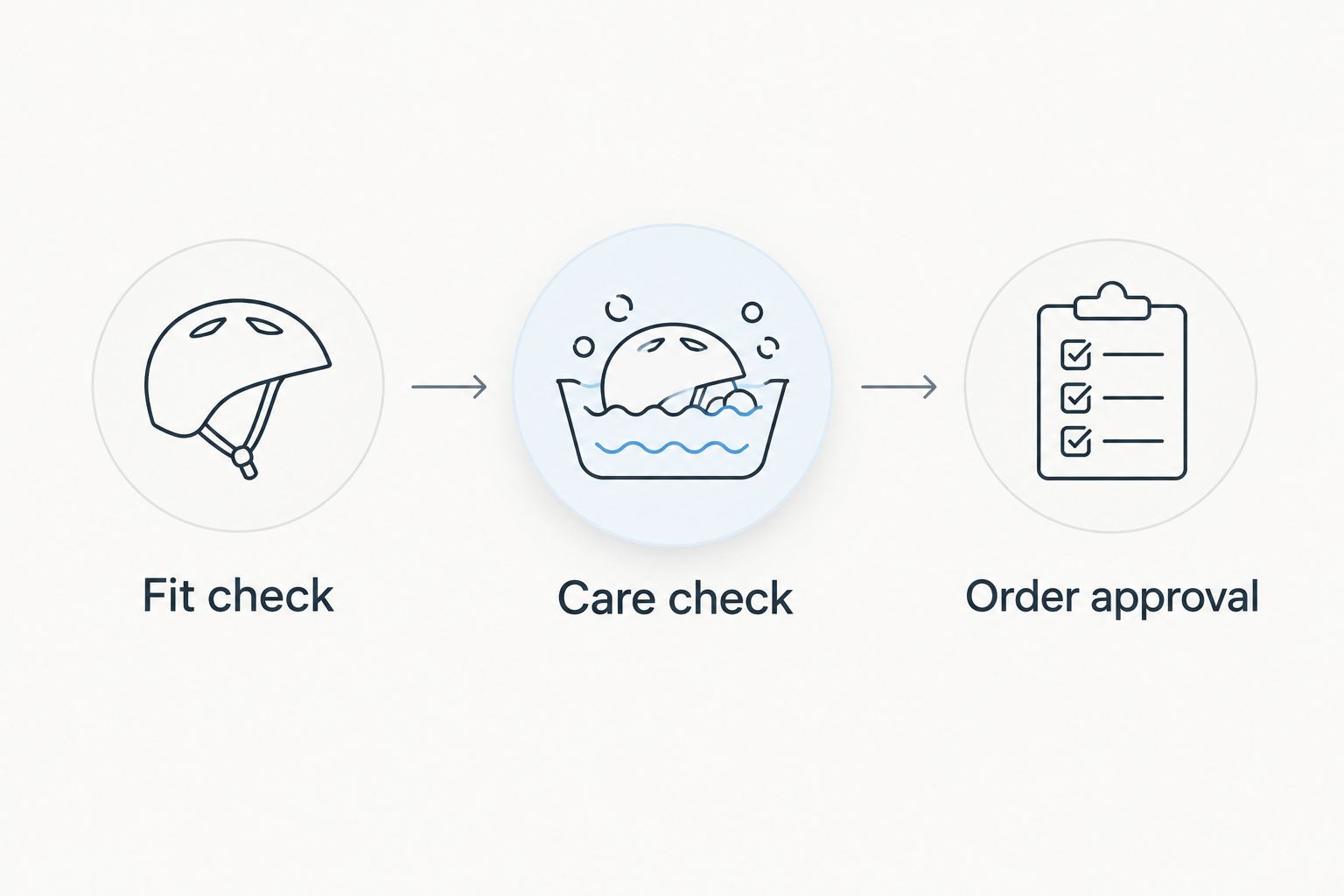
Fit check
Put on the gaiter with the helmet and jacket you intend to wear. Complete 3 checks while stationary: fasten the helmet normally, turn your head comfortably, and confirm an unobstructed field of view.
Do not change the helmet's intended fit to make room for fabric. Follow the helmet manufacturer's fitting instructions.
Care check
Wash the sample according to its care label, then repeat the fit assessment. Look for changes in shape, edges, seams, and decoration rather than assuming the unwashed fit tells the whole story.
For a club, use 2 review stages: assess the garment before washing and assess it again afterward. These are purchasing checks, not a durability certification.
Order approval
Keep 1 approved sample as the reference for the order. Record the selected construction, color, decoration instructions, and any product-specific performance claims you intend to communicate.
For a mixed riding group, collect feedback from riders with different helmet and jacket setups. One person's approval does not establish fit for the entire club.
How the options are ranked
This ranking prioritizes helmet compatibility, weather match, documented properties, and order suitability. Lightweight gaiters come first as a mild-weather starting point; the remaining categories serve specific insulation, wind, sun, or branding needs.
No brand receives a performance score here. Wholesale For Everyone supplies neck gaiters and serves group buyers, but the selected item's specifications determine whether it fits your motorcycle use case.
Which wholesale neck gaiters should you choose?
Choose a plain, lightweight gaiter for an undecided mild-weather group, then approve its fit before adding decoration. Choose insulated, wind-resistant, or UPF-rated construction only when that requirement is part of the riding brief.
For a 2026 club event, distinguish merchandise from riding equipment in your messaging. A gaiter can carry club artwork without being represented as protective motorcycle gear.
Explore your club merchandise options
Browse neck gaiters and other accessories, then confirm the specifications needed for your group.
FAQ
What’s the best type of wholesale neck gaiter for motorcycle riders?
A lightweight, uninsulated gaiter is the starting choice for mild-weather riding. Choose insulated, wind-resistant, or documented UPF-rated construction when that specific requirement matters, and confirm compatibility with your helmet.
Are thicker neck gaiters always better for riding?
No. Thickness does not establish wind resistance, waterproofing, or helmet compatibility. Choose insulation for a warmth requirement and check the complete helmet-and-jacket setup.
Can I wear a neck gaiter under a motorcycle helmet?
Only use a gaiter in a position that does not interfere with the helmet’s intended fit, fastening, or your vision. Follow the helmet manufacturer’s instructions and reject fabric arrangements that create pressure or bunching.
Does a neck gaiter replace protective motorcycle equipment?
No. Treat an ordinary neck gaiter as an accessory, not a substitute for a motorcycle helmet or other protective riding equipment. Do not infer impact or abrasion protection from its appearance.
Can motorcycle clubs customize wholesale neck gaiters?
Customization depends on the selected garment. Wholesale For Everyone offers printing and embroidery on selected products, so confirm compatibility with the exact gaiter before preparing the final order.
What should I check before placing a bulk gaiter order?
Check helmet fit, care instructions, and the exact product specification before approving the order. For decorated garments, approve the base garment and artwork separately.
Does every neck gaiter provide rated sun protection?
No. Describe a gaiter as UPF-rated only when documentation supports that claim for the exact product. Also check that it covers the intended neck area in your riding position.
One last thing
Approve the gaiter in the position riders will actually use. A garment that works around the neck has not automatically passed the same check when pulled over the nose or tucked farther beneath a helmet.
Write that wearing position into the purchasing brief. It gives your club a clearer approval standard than a color choice or artwork proof alone.
Related guides
- Custom bandanas for motorcycle clubs
- Neck gaiters for construction and outdoor work
- Custom embroidered apparel for small businesses