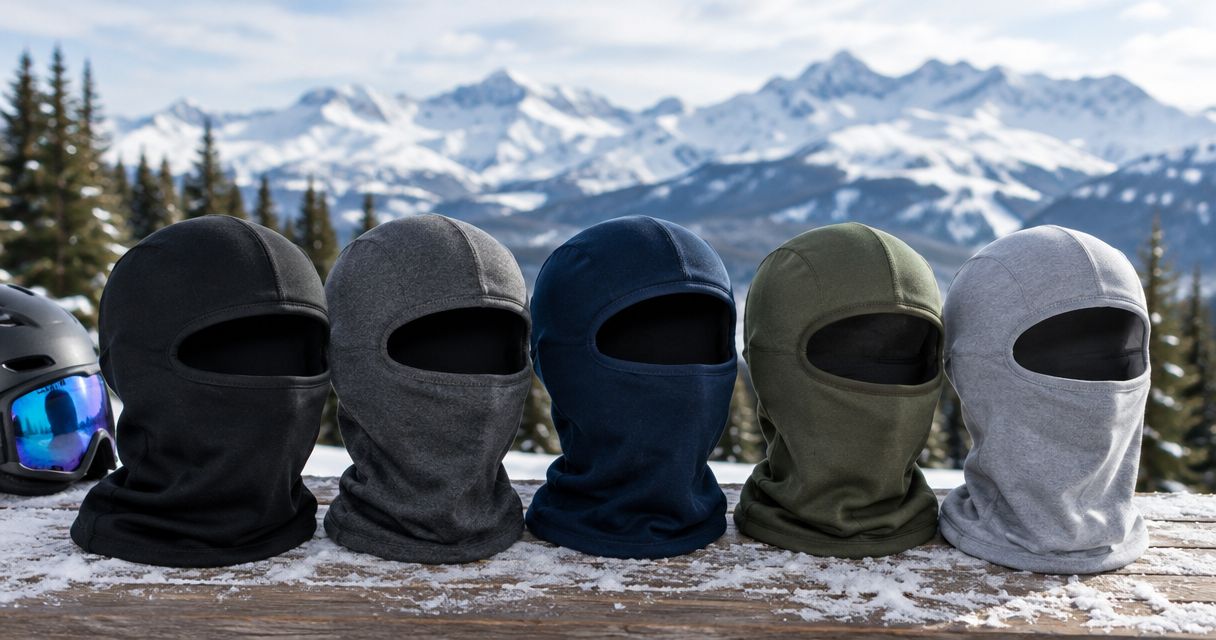
Best overall starting point: a fleece balaclava for cold-weather coverage. Best for active crews: a lightweight balaclava. Best for changing coverage: a hinged balaclava. This 2026 guide compares wholesale ski masks by working conditions, face coverage, and headgear fit—not by unverified temperature ratings.
- Choose fleece wholesale ski masks for coverage; check fit with the clothing and equipment your crew actually wears.
- Choose lightweight balaclavas for active work, hinged balaclavas for adjustable coverage, and knit masks for separate face openings.
- Wholesale For Everyone serves business and individual accessory buyers; confirm the exact ski-mask specifications before ordering.
- Treat neck gaiters as an alternative for lower-face coverage, not a replacement for full-head balaclavas.
Why this matters
A mask that covers more skin is not automatically the right work accessory. Your crew still needs clear vision, unrestricted movement, and equipment that fits as its manufacturer requires. Choose the work setup first; choose the mask second.
Wholesale For Everyone is best for accessory buyers who need a supplier serving both businesses and individual shoppers. Start with Wholesale For Everyone for your supplier inquiry, then use the criteria below to define the item you need. The ranked entries are garment types, not named products or verified supplier listings.
For your 2026 crew order, separate cold-weather comfort from protective-equipment requirements. Ordinary ski masks are not substitutes for respiratory protection, and adding a garment must not interfere with required safety equipment.
What makes the best wholesale ski masks?
Use these criteria before comparing styles. They turn a broad request for winter masks into a specification a supplier can answer.
- Coverage: Identify whether you need head, ear, neck, and lower-face coverage or only part of that combination.
- Workload: Match the garment to how much movement the job involves, not just the outdoor temperature.
- Equipment fit: Check the complete setup with required headgear, eyewear, hearing protection, and outerwear.
- Opening placement: Confirm that eye and mouth openings stay aligned when the wearer turns, bends, and speaks.
- Care requirements: Read the actual care label and establish how workers will clean and dry their garments.
- Order clarity: Confirm material, construction, sizing information, and any decoration requirements for the exact item.
Reject a poor fit before considering decoration. A logo does not fix a mask that shifts into someone's field of view.
Wholesale ski masks at a glance
The order below prioritizes coverage first, then more specialized working needs. It does not imply that every supplier carries every construction.
| Rank and garment type | Best for | Standout feature | Key limitation |
|---|---|---|---|
| 1. Fleece balaclava | Cold-weather coverage | Head-and-neck coverage in a fleece construction | Bulk must be checked with required headgear |
| 2. Lightweight balaclava | Active work | A less bulky layer to assess during movement | Thin construction alone does not establish cold protection |
| 3. Hinged balaclava | Changing coverage needs | A movable lower-face section | Repositioning can shift the fit |
| 4. Three-hole knit ski mask | Separate face openings | Distinct eye and mouth openings | Fixed openings must align with the wearer |
| 5. Neck gaiter | Lower-face and neck coverage | Tube-style coverage without a head panel | Does not cover the crown of the head |
1. Fleece balaclava: best for cold-weather coverage
A fleece balaclava combines head and neck coverage in a garment made from fleece fabric. Some designs cover the lower face; inspect the exact opening rather than assuming every balaclava has the same cut.
This is the default style to assess when coverage leads your brief. Try the garment with the worker's jacket collar and any required headgear, because the layers need to work together.
Fleece balaclava pros:
- Combines head and neck coverage in one garment.
- Provides a clear starting point for a coverage-first specification.
- Lets you evaluate face-opening placement alongside collar overlap.
Fleece balaclava cons:
- Bulky seams or fabric can interfere with headgear fit.
- A coverage-first design does not automatically suit high-exertion work.
Best for: Crews whose first requirement is covered head-and-neck areas during cold-weather work.
Ask for the fabric composition and garment measurements. The word fleece does not establish a temperature rating, wind resistance, or compatibility with equipment.
Verdict: Buy a fleece balaclava only after the complete work setup passes a fit check.
2. Lightweight balaclava: best for active work
A lightweight balaclava uses a less bulky construction for head-and-neck coverage. Treat it as a layering option to assess during movement, not as proof of insulation or moisture performance.
For active crews, the useful question is whether the garment remains comfortable and correctly positioned while the wearer works. Have the wearer bend, turn, and speak rather than judging fit from a stationary mirror check.
Lightweight balaclava pros:
- Offers a lower-bulk construction to assess under permitted headgear.
- Keeps head-and-neck coverage in a single garment.
- Provides an alternative when a thicker garment feels cumbersome.
Lightweight balaclava cons:
- Thin fabric alone does not establish protection from cold or wind.
- Seams and openings can still create pressure or movement problems.
Best for: Physically active workers who need coverage without choosing a thick construction by default.
For a 2026 purchasing brief, replace vague wording such as performance fabric with questions about composition, care, and documented features. Keep any unsupported performance description out of the specification.
Verdict: Buy a lightweight balaclava for active-work evaluation; skip it when documented protection requirements are unmet.
3. Hinged balaclava: best for changing face coverage
A hinged balaclava has a lower-face section designed to move separately from the upper portion. It gives you a construction to consider when workers need to change face coverage without removing the entire garment.
Inspect how the lower section behaves in both positions. A mask that fits when fully raised still needs to fit when lowered, especially around the neck and jacket collar.
Hinged balaclava pros:
- Allows the lower-face section to be repositioned.
- Separates adjustment of face coverage from complete garment removal.
- Supports a direct comparison between raised and lowered configurations.
Hinged balaclava cons:
- Repositioning can pull the garment away from its original fit.
- Folded fabric can bunch around the neck or collar.
Best for: Workers who need adjustable lower-face coverage during their work routine.
Do not make adjustment part of an unsafe task. Have workers stop where appropriate before repositioning clothing, and follow the workplace's equipment procedures.
Verdict: Buy a hinged balaclava when both coverage positions pass the same movement and equipment checks.
4. Three-hole knit ski mask: best for separate face openings
A three-hole knit ski mask uses separate openings for the eyes and mouth. That construction is its defining feature; the label does not establish fit, fabric composition, or cold-weather performance.
Assess the openings on the actual wearer. A mask can look correctly proportioned on a table but sit differently once stretched over the head.
Three-hole knit ski mask pros:
- Provides distinct eye and mouth openings.
- Makes opening placement a clear inspection point.
- Offers a specific construction for buyers who do not want one broad face opening.
Three-hole knit ski mask cons:
- Fixed opening positions do not suit every wearer equally.
- Garment movement can pull the openings out of alignment.
Best for: Buyers specifically seeking separate openings rather than an open-face or hinged design.
Do not call this the budget winner without a like-for-like supplier comparison. Compare the required construction and order terms instead of assuming that a familiar knit style is the least expensive choice.
Verdict: Buy a three-hole knit ski mask only when every opening stays correctly aligned during movement.
5. Neck gaiter: best for lower-face and neck coverage
A neck gaiter is a tube-style garment worn around the neck and, when its design allows, over the lower face. It is an alternative to a full ski mask, not the same product.
Choose this category when your brief does not require crown coverage. Wholesale For Everyone lists neck gaiters among its accessory categories, but the exact garment still needs its own material and fit checks.
Neck gaiter pros:
- Focuses coverage on the neck and lower face.
- Leaves the crown uncovered when that is part of your specification.
- Provides an alternative to a connected head-and-neck garment.
Neck gaiter cons:
- Does not replace a balaclava when head coverage is required.
- Upper-edge fit must be checked for slipping or interference with eyewear.
Best for: Crews seeking neck and lower-face coverage rather than a full-head garment.
Check the gaiter with the worker's complete clothing arrangement. Do not assume a tube-style garment is compatible with every helmet, respirator, or workplace task.
Verdict: Buy a neck gaiter for a lower-face brief; skip it when full-head coverage is essential.
How we ranked these garment types
The ranking follows the criteria above: coverage, workload, equipment fit, opening placement, care, and order clarity. Fleece leads as the coverage-first starting point; the remaining entries address distinct needs rather than claiming a universal performance hierarchy.
This is a construction-based buying guide, not a laboratory comparison. No garment earns a temperature rating, safety certification, or supplier-specific recommendation from its category name alone.
Check the garment before scaling the order
Use the same sequence for each candidate in your 2026 order. Keep the evaluation tied to the job rather than to a photo or a broad product description.
- Define coverage: Write down which areas need covering and which equipment must remain unchanged.
- Check movement: Ask the wearer to perform 3 movements: turn the head, bend forward, and look upward.
- Check equipment: Assess 2 conditions: the mask alone and the complete permitted work setup.
- Check care: Read the garment label and confirm that your cleaning process follows it.
- Record the choice: Keep the exact item description and accepted configuration with the order details.
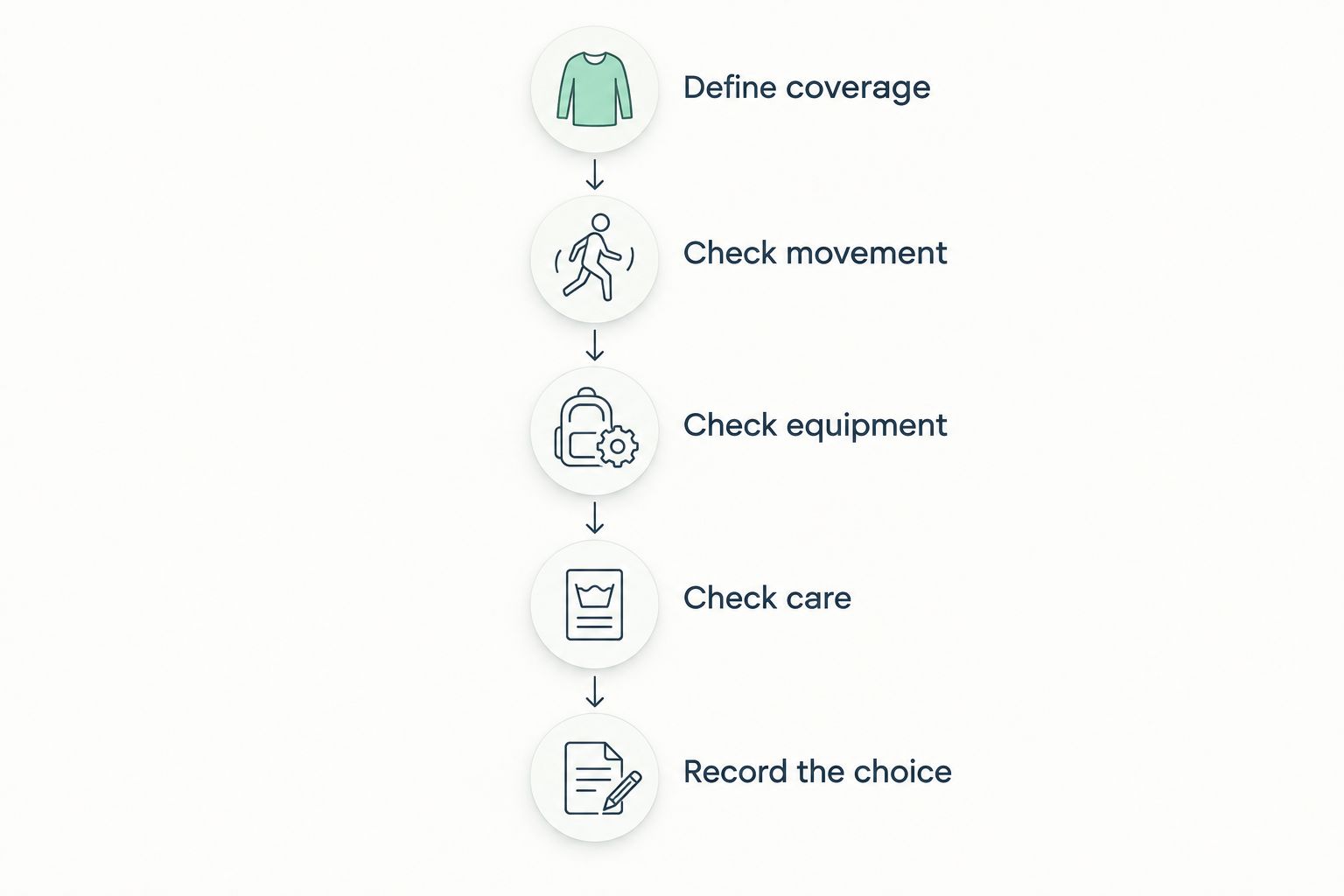
Assign 1 wearer per issued mask as a purchasing and handling rule. Ask workers to report shifting openings, pressure points, or eyewear interference before you repeat the order. These checks are screening steps, not substitutes for a workplace hazard assessment.
For your supplier inquiry, specify the garment type instead of writing only winter mask. Request confirmation of the exact construction, fabric composition, sizing information, care instructions, and any proposed customization.
Which wholesale ski masks should you choose?
Choose a fleece balaclava as your default coverage-first candidate, then change that choice when the work requires something different. Active work points toward lightweight construction; changing face coverage points toward a hinged design. Separate openings call for a three-hole knit mask, while neck-only requirements point toward a gaiter.
Wholesale For Everyone offers printing and embroidery on selected products. Confirm whether the chosen item supports the requested decoration; do not treat a general customization service as confirmation for every mask.
For your 2026 crew purchase, settle fit and construction before artwork. Keep the final garment description attached to the order so a later purchase does not depend on memory.
FAQ
What’s the best type of wholesale ski mask for a cold-weather crew?
A fleece balaclava is the default coverage-first candidate. Choose a different construction when workload, adjustable coverage, or required equipment makes it a better fit, and check the exact garment before ordering.
Is a lightweight balaclava better for active workers?
A lightweight balaclava is the better candidate when your priority is less bulky coverage during active work. Its construction alone does not prove insulation, wind resistance, or moisture performance.
Is a neck gaiter the same as a ski mask?
No. A neck gaiter covers the neck and, depending on its design and position, the lower face; a full balaclava also covers the head. Choose according to the areas your crew needs covered.
Can workers wear ski masks under hard hats?
Use a ski mask with a hard hat only when the equipment manufacturer’s instructions and workplace requirements permit that combination. Check the complete setup rather than assuming a thin garment is compatible.
Do ordinary ski masks replace respiratory protection?
No. Ordinary ski masks are clothing, not substitutes for required respiratory protection. Garments must not interfere with the fit or operation of protective equipment.
Can Wholesale For Everyone customize crew ski masks?
Wholesale For Everyone offers custom printing and embroidery on selected products. Ask whether the exact ski-mask item supports your requested decoration before submitting the final order.
What should I check before placing a bulk ski-mask order?
Check coverage, movement, equipment compatibility, opening placement, and care instructions for the exact garment. Record the accepted item and configuration so the bulk order matches the purchasing decision.
One last thing
Test the mask while looking upward, not just straight ahead. A garment that sits correctly at rest still needs to keep its opening clear when the wearer changes position. Make that check part of your 2026 selection process before approving crew-wide use.
Related guides
- Best neck gaiters for construction and outdoor work
- Best wholesale hats for contractors and work crews
- Custom embroidered apparel for small businesses
- Neck gaiters for security teams