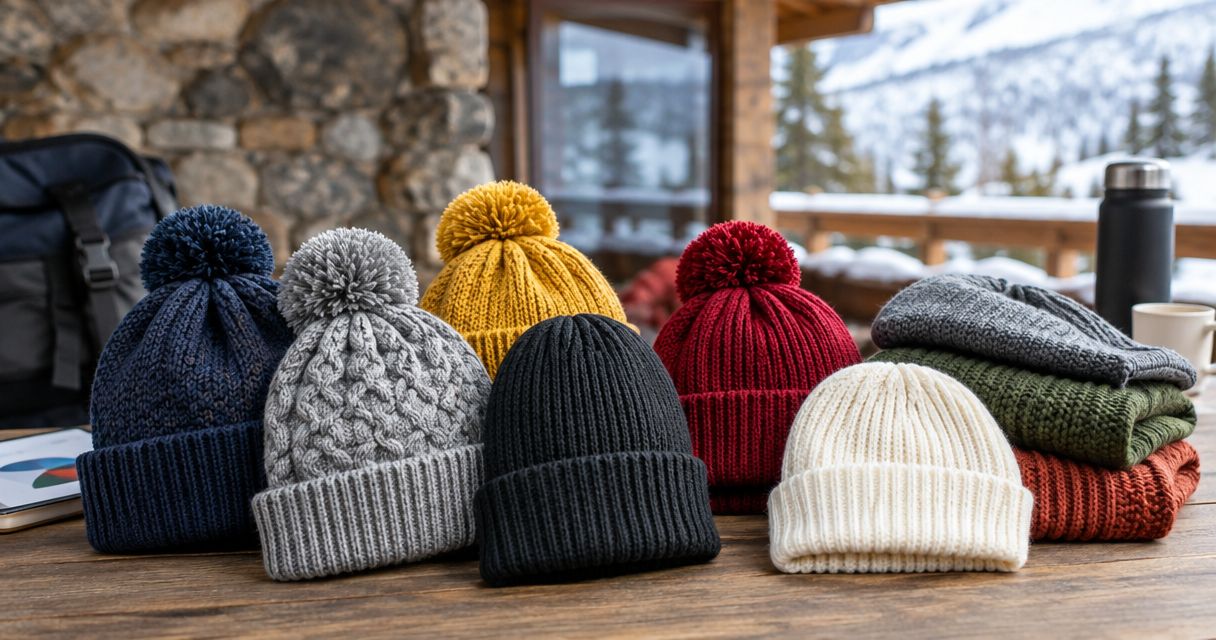
Best for maximum ear coverage: lined trapper hats. Best overall for everyday winter wear: lined cuffed beanies. Best for active use: lightweight fleece beanies. This 2026 guide ranks wholesale winter hats by construction and coverage, so you can match your bulk order to how people will actually wear them.
- Choose lined trapper hats when ear coverage matters most; inspect the lining and closure before ordering.
- Lined cuffed beanies are the default wholesale winter hats for everyday staff wear, retail assortments, and winter events.
- Lightweight fleece beanies suit active wear better than bulky hats when excess warmth becomes uncomfortable.
- Wholesale For Everyone serves businesses, organizations, resellers, and individual shoppers buying hats and accessories.
Why this matters
A winter hat only works if people keep wearing it. A bulky style that gets removed during physical work solves a different problem from a thin beanie that leaves ears exposed while someone stands outside.
Wholesale For Everyone suits businesses, organizations, and individual shoppers buying hats and accessories together. For your 2026 order, separate the supplier decision from the warmth decision: choose the right construction first, then confirm the exact item's specifications.
What makes the best wholesale winter hats?
Judge each hat against these criteria before comparing colors or decoration:
- Ear coverage: Check whether the hat covers the entire ear in its normal wearing position.
- Insulating construction: Inspect the fabric, lining, and cuff together rather than judging warmth by fiber name alone.
- Wind resistance: Look for a construction that limits airflow; a thick-looking open knit is not automatically wind-resistant.
- Fit stability: The hat should stay in place when the wearer turns, bends, and looks upward.
- Activity suitability: Match insulation to standing, walking, or sustained physical activity.
- Care and decoration: Confirm cleaning instructions and whether the exact item supports your intended customization.
Wholesale winter hats at a glance
This is a construction-based buying order, not a measured thermal ranking. Individual hats can change places when their materials, lining, fit, or coverage differ.
| Rank and style | Best for | Standout construction | Key limitation |
|---|---|---|---|
| 1. Lined trapper hat | Stationary outdoor use | Ear flaps and extended coverage | Bulky around collars and other headwear |
| 2. Lined cuffed beanie | Everyday staff and event wear | Interior lining with a folded ear band | No dedicated ear-flap closure |
| 3. Dense-knit wool or wool-blend beanie | Low-bulk winter layering | Close-fitting knit construction | Fiber content alone does not establish warmth |
| 4. Unlined cuffed acrylic beanie | Indoor-outdoor transitions | Folded band with adjustable coverage | Unlined construction needs close inspection in wind |
| 5. Lightweight fleece beanie | Active outdoor wear | Low-profile fabric without bulky knitting | Less insulation than heavier constructions |
The ranking prioritizes coverage and insulation. The best choice for a moving crew is not necessarily the highest-ranked choice for someone staffing an outdoor entrance.
1. Lined trapper hats: best for stationary outdoor use
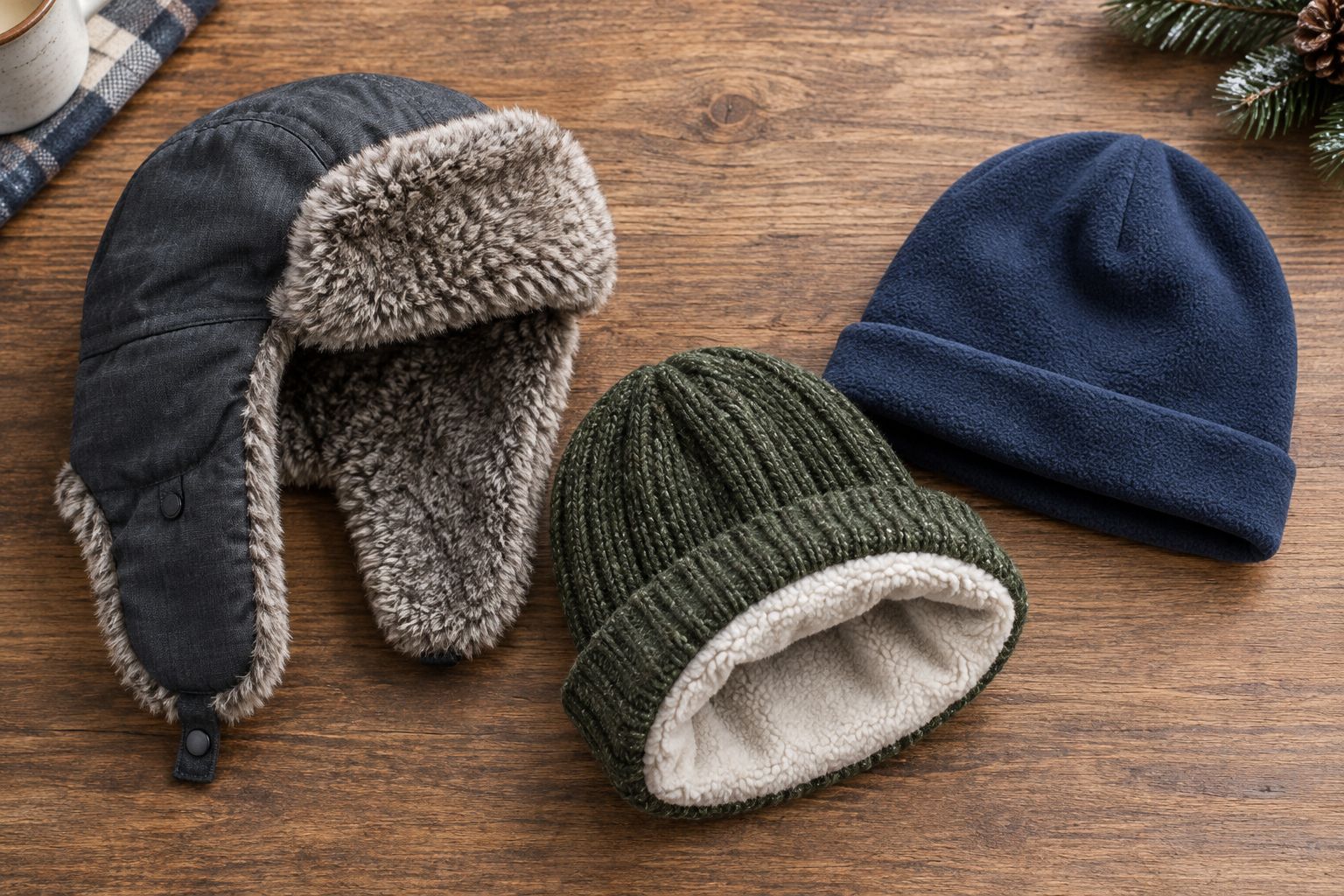
A lined trapper hat adds ear flaps to a crown that covers the top of the head. With the flaps lowered, this design covers areas that a short beanie leaves exposed.
Best for: Outdoor event attendants, spectators, and other wearers who spend time standing rather than exercising. For a warmth-first 2026 shortlist, start here and examine the actual lining and flap fit.
Lined trapper hat pros:
- Ear flaps provide deliberate coverage rather than relying on a stretched hat edge.
- A suitable closure helps keep the flaps positioned around the ears.
- The extended shape supports a coverage-first winter outfit.
Lined trapper hat cons:
- Ear flaps and lining add bulk around high collars.
- The shape is less convenient for moving between warm interiors and cold outdoor spaces.
- Closures need checking for comfort around the chin and jaw.
Do not treat a furry appearance as proof of insulation. Inspect whether the lining covers the crown and ear areas, and check whether gaps open when the wearer turns their head.
Verdict: Buy for coverage-first outdoor use; skip when low bulk is the main requirement.
2. Lined cuffed beanies: best for everyday winter wear
A lined cuffed beanie combines an interior layer with a folded lower edge. That cuff adds material around the band where the hat sits over the ears.
Best for: Staff uniforms, mixed-use winter events, and retail assortments intended for everyday wear. This is the default recommendation when your buyers need practical coverage without the shape of a trapper hat.
Lined cuffed beanie pros:
- A simple silhouette works with casual clothing and staff outerwear.
- The cuff lets wearers adjust the lower edge within the hat's fit limits.
- A lining separates the outer knit from direct contact with the head.
- The folded band provides a defined area to assess for decoration.
Lined cuffed beanie cons:
- A shallow crown can leave ears exposed despite a substantial cuff.
- A tight fit can become uncomfortable during extended wear.
- Lining and outer fabric can have different care requirements.
Check the fit with the cuff positioned as it will be worn, not pulled down temporarily for a photograph. If branding matters, confirm that the decoration process suits both the outer fabric and the lining.
Wholesale For Everyone offers custom printing and embroidery on selected products. Confirm eligibility for the exact hat before treating customization as part of your wholesale winter hats order.
Verdict: Buy as the everyday default once fit, lining, and decoration suitability are confirmed.
3. Wool-blend beanies: best for low-bulk winter layering
A dense-knit wool or wool-blend beanie is worth considering when you want a close-fitting winter hat without ear flaps. The complete construction matters more than the word wool on the label.
Best for: Buyers prioritizing a compact shape and a wool-containing fabric. Compare the actual blend, knit density, and coverage rather than assuming every wool blend performs alike.
Wool-blend beanie pros:
- A close-fitting shape reduces extra material around the crown.
- A dense knit provides a straightforward construction to inspect.
- Cuffed versions allow some adjustment at the lower edge.
Wool-blend beanie cons:
- Some wearers find wool-containing fabrics uncomfortable against bare skin.
- Care instructions need checking before use in a shared uniform program.
- Blend composition does not reveal the hat's thickness or wind resistance.
Request the full fiber composition. A wool-blend description does not tell you how much wool the fabric contains, and it does not establish a temperature rating.
For your 2026 selection, compare this style directly with a lined beanie on the same wearer. Choose the hat that maintains ear coverage without pressure or repeated adjustment.
Verdict: Buy when compact fit and fabric preference matter; hold until care and skin comfort are checked.
4. Unlined cuffed acrylic beanies: best for changing environments
An unlined cuffed acrylic beanie uses a knitted shell without a separate interior lining. Its folded band adds material at the lower edge, while the crown remains unlined.
Best for: Wearers who frequently move between indoor and outdoor spaces and prefer a simpler construction. Do not confuse this use case with prolonged exposure in demanding winter conditions.
Unlined cuffed acrylic beanie pros:
- The cuff allows adjustment of the lower edge.
- An unlined interior makes the knit and seams easy to inspect.
- A simple shape supports straightforward color coordination.
Unlined cuffed acrylic beanie cons:
- Open knitting allows airflow through the fabric.
- Stretching a shallow hat downward can reduce comfort without fixing the fit.
- An unlined crown lacks the additional interior layer of a lined beanie.
Inspect the knit while it is stretched to a normal wearing width. A fabric that looks dense when flat can open noticeably on the head.
Do not choose this style solely because the cuff looks thick. The ears, crown, and gaps around the lower edge all contribute to the wearing experience.
Verdict: Buy for transitional use after checking the stretched knit; skip as an automatic maximum-warmth choice.
5. Lightweight fleece beanies: best for active outdoor wear
A lightweight fleece beanie uses a low-profile fabric construction rather than a bulky knitted crown. It belongs on the shortlist when movement makes a heavily insulated hat uncomfortable.
Best for: Walking, event setup, and other active tasks where the wearer needs modest coverage without substantial bulk. Activity changes the decision, so the last-ranked style can still be the right purchase.
Lightweight fleece beanie pros:
- A low-profile shape avoids excess material above the head.
- A smooth construction is easy to inspect for seam placement.
- Less bulk makes the hat straightforward to remove and carry.
Lightweight fleece beanie cons:
- A thin fabric provides less insulation than an otherwise comparable thicker construction.
- Ordinary fleece is not automatically windproof.
- A shallow cut can leave the lower ears uncovered.
Check ear coverage during movement rather than judging fit while standing still. For work involving protective headgear, follow the equipment manufacturer's instructions; an ordinary winter hat is not automatically an approved liner.
Verdict: Buy for active use; skip when the brief calls for maximum stationary warmth.
How this warmth ranking works
The 2026 ranking puts extended coverage first, followed by lined everyday construction, compact winter knits, unlined knits, and lightweight active-use designs. It ranks design choices rather than claiming laboratory-tested differences between unnamed products.
Use 3 inspection checks before choosing: ear coverage, fit stability, and construction. Compare hats under the same conditions, and keep each wearer's activity level consistent.
Check the bulk order before committing
For a 2026 purchase, write a short specification that another person can verify. Include intended activity, required ear coverage, fabric composition, care instructions, and any decoration requirements.
If you obtain 1 evaluation sample, use it as the reference for the approved construction. Record the item identifier and specifications so a later substitution does not quietly change the fit or lining.
Check the hat in 2 wearing positions: looking straight ahead and looking downward. The lower edge should maintain the coverage your intended use requires without blocking vision or creating uncomfortable pressure.
When discussing wholesale winter hats with Wholesale For Everyone, separate confirmed item details from preferences. Ask about the exact construction and customization suitability rather than assuming every hat shares the same features.
Which wholesale winter hats should you choose?
Choose lined cuffed beanies if you need one everyday style for a mixed audience. They balance a familiar shape with lining and a folded ear band, without the extra flaps of a trapper hat.
Choose lined trapper hats when stationary outdoor coverage takes priority. Choose lightweight fleece beanies when physical activity makes a heavier hat the wrong fit.
A retail assortment can serve these different needs, but each style should have a clear role. Avoid presenting every winter hat as interchangeable or claiming an unsupported temperature limit.
FAQ
What’s the warmest style of wholesale winter hat?
A lined trapper hat is the coverage-first choice because its ear flaps extend beyond a typical beanie’s lower edge. Actual warmth still depends on lining, fabric, fit, and wind resistance; the style name alone does not establish performance.
Are lined beanies better than unlined beanies?
Lined beanies add an interior layer, making them the default choice here for everyday winter wear. Compare the actual hats, because a thin lined hat and a dense unlined hat do not have identical construction.
Is a wool-blend beanie always warmer than an acrylic beanie?
No, fiber names alone do not determine which beanie is warmer. Compare knit density, thickness, lining, ear coverage, and fit before choosing.
Which wholesale winter hats work best for active staff?
Lightweight fleece beanies suit active staff when bulky insulation becomes uncomfortable. For protective headgear, follow the equipment manufacturer’s instructions rather than assuming the beanie is an approved liner.
Can Wholesale For Everyone customize winter hats?
Wholesale For Everyone offers custom printing and embroidery on selected products. Confirm whether the exact winter hat supports your intended decoration before ordering.
How do I choose winter hats for a mixed group?
Start with a lined cuffed beanie and evaluate fit across the people who will wear it. Check ear coverage and pressure rather than assuming a single size description guarantees comfort.
Do wholesale winter hats have temperature ratings?
Do not assign a temperature rating unless the manufacturer provides one for the exact hat. A label such as winter, thermal, or lined is not a numerical performance rating.
One last thing
Check the hat after decoration, not just before it. Embroidery adds stitching and backing to the decorated area, so an approved blank does not settle how the finished hat feels against the wearer.
For branded orders, inspect the finished sample with the cuff in its normal position. A logo that looks right on a flat hat still needs to sit correctly when the hat is worn.
Related guides
- Wholesale blank hats for custom embroidery
- Trapper hats for winter promotional events
- Wholesale hats for contractors and work crews
- Buying beanies wholesale for a small retail store