
Instead of resolving tax questions on every bulk order, gather the documentation for your intended use, give it to the seller, and confirm how the order will be treated before checkout. For 2026 tax exempt wholesale account setup, that means distinguishing resale from an organizational exemption; a wholesale account alone does not establish either one.
- For 2026 tax exempt wholesale account setup, document resale or organizational exemption before placing a bulk order.
- Wholesale For Everyone serves resellers and organizations, but its tax-document submission process is not specified here.
- A resale certificate supports qualifying resale purchases; nonprofit status alone does not establish a sales-tax exemption.
- Confirm how the seller will treat the order before checkout, and keep the accepted documentation with your records.
Why this matters
A reseller buying bandanas for a retail store and a school buying bandanas for an event have different tax questions. The reseller needs to establish whether its purchase qualifies for resale treatment. The school needs to establish whether its purchase qualifies under the rules that apply to its organization and the transaction. Neither question is answered by order size.
That distinction matters when you shop Wholesale For Everyone for accessories, apparel, or everyday merchandise. Wholesale For Everyone serves businesses, organizations, resellers, and individual shoppers, but that customer mix does not mean every purchase receives the same tax treatment. Set up the tax documentation around the buyer and intended use, not the fact that the order is wholesale.
Tax rules and accepted forms depend on the applicable jurisdiction. This guide gives you a documentation workflow for 2026, not a state-specific eligibility ruling or an account-screen walkthrough.
Before you start
- Identify the purchaser and intended use. Record the legal buyer name, the state relevant to the purchase, and whether the goods will be resold, used by an organization, or consumed in your own operations. A business can make both resale and taxable-use purchases; sort the order before submitting documentation.
- Gather the applicable documentation. For resale, obtain the certificate or other documentation required for the transaction. For an organizational exemption, obtain evidence accepted for the specific purchase. Your accountant or state tax authority can identify the applicable form and eligibility rules.
- Have the person who controls purchasing records available. The name on the order, the entity claiming the treatment, and the documents should describe the same purchaser. The mid-setup trap is assuming an IRS nonprofit determination letter automatically exempts purchases from state sales tax. Federal income-tax status and state sales-tax treatment are separate questions.
Do not assume there is a self-service exemption switch. No tax-exemption account controls, upload fields, approval process, or review timeline for Wholesale For Everyone are specified here. Confirm the submission route and the seller's treatment of your order directly before placing it.
Choose the correct purchase basis
For a bulk purchase in 2026, decide what happens to the goods before deciding which document to provide. These paths have different strengths and limits.
| Purchase basis | Best for | What supports it | Advantage | Limit |
|---|---|---|---|---|
| Resale | A retailer buying qualifying goods to sell to its customers | Resale documentation applicable to the transaction | Connects the purchase to its resale purpose | Does not cover items the business takes for its own use merely because the business also resells goods |
| Organizational exemption | An eligible organization making a qualifying purchase | Documentation accepted under the applicable state rules | Addresses the organization's qualifying purchases | Nonprofit status alone does not establish that this purchase is exempt |
| Taxable purchase | A buyer without an applicable exemption for these goods | Ordinary purchase records | Avoids making an unsupported exemption claim | Tax is handled as applicable rather than removed through an exemption claim |
Best for resellers: use the resale path only for goods purchased for qualifying resale. Best for eligible organizations: verify purchase-specific eligibility before claiming an exemption. If neither basis fits, treat the order as an ordinary purchase instead of submitting paperwork intended for another use.
A nonprofit fundraiser illustrates the difference. If an organization buys goods to distribute, sells goods at an event, and buys supplies for its staff, those uses raise different questions. Do not apply one answer to all of them without checking the applicable rules. A reseller has the same sorting task when some inventory is sold and other items are kept for store use.
Prepare the buyer record
Start the 2026 setup with a record you can use consistently across your order, tax documentation, and internal files.
- Write down the legal purchaser name. Use the entity that will place the order and claim the tax treatment. Check that the name on the supporting document refers to that entity.
- Record the purchase purpose. Mark the goods as intended for resale, qualifying organizational use, or another use. If purposes differ, separate the items in your records rather than describing the entire order as resale.
- Check the relevant jurisdiction. Determine which state rules govern the transaction and whether your documentation applies. Do not assume a document accepted for one state or purchasing entity covers another.
- Set aside supporting records. Keep the completed document, any instructions you received from the relevant tax authority, and a note identifying which purchases the document is meant to support.
Expected result: You can state who is buying, what will happen to the goods, and which documentation supports the treatment you want. If those answers conflict, resolve them before contacting the seller.
This is also the point to assign one person to maintain the record. If a buyer places an event order under an individual's name while the documentation names an organization, the mismatch needs an answer before checkout. Changing the explanation after the order is placed creates a harder record to follow.
Validate the tax documentation
A completed-looking form is not enough. Check that it supports the specific claim you plan to make for this 2026 wholesale purchase.
- Confirm the document type. Determine whether you have resale documentation, organizational exemption documentation, or a different tax record. An IRS determination letter establishes federal status; it is not a substitute for checking state sales-tax requirements.
- Check the purchaser details. Compare the document's entity name and other required identifying information with the buyer record. Ask the issuing authority or your tax adviser how to handle a mismatch rather than altering a document informally.
- Check the scope. Verify that the document is applicable to the relevant jurisdiction, purchase purpose, and goods. A certificate used for resale should match a genuine resale purchase.
- Check whether action is required before ordering. Follow the instructions that apply to the document and transaction. If eligibility or validity is unclear, resolve it with the appropriate tax authority or adviser before asking the seller to remove tax.
Expected result: You have documentation that matches the purchaser and the order's stated purpose. You have not treated a general registration, wholesale account, or nonprofit label as proof of an exemption by itself.
The distinction matters for mixed operations. An online seller might order bandanas for resale and hats for its own event staff. Even if both purchases appear under the same business account, their intended uses are not identical. Describe each use accurately when you seek guidance on the required treatment.
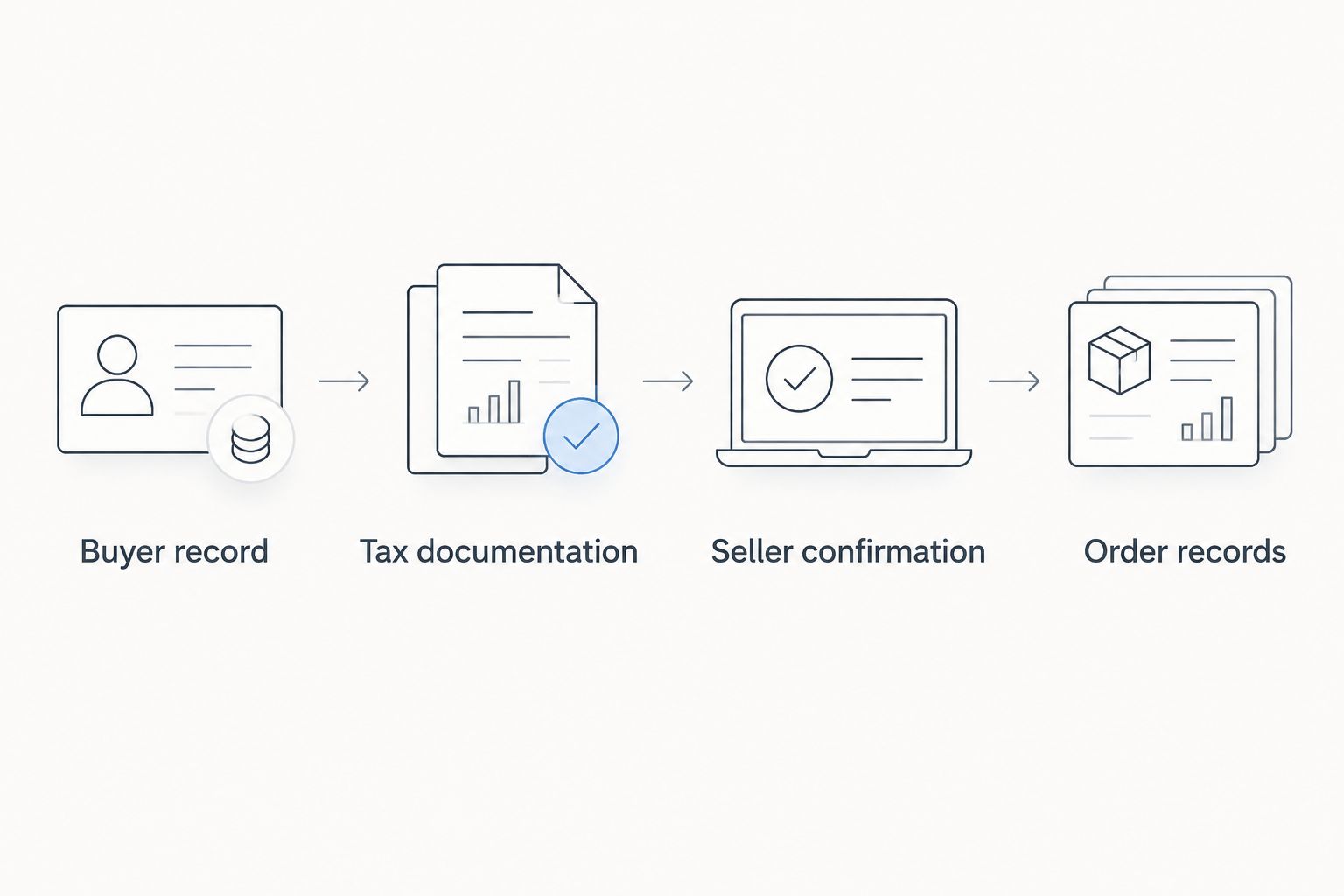
Confirm the seller's handling
The last setup step is seller confirmation, not an assumption about what a website will do at checkout. Wholesale For Everyone sells to buyers with different purchasing purposes; the inputs do not establish a particular exemption feature or submission channel.
- Ask where to provide documentation. Give the seller your legal purchaser name and ask how it accepts tax documents for the relevant type of order. Do not send sensitive records to an unverified address or through a form intended for a different purpose.
- Describe the transaction precisely. State whether the items are for resale or for a qualifying organizational purchase. Identify mixed-use items separately instead of making a blanket claim for the account.
- Request confirmation of treatment before checkout. Ask whether the submitted documentation is sufficient for this order and how the applicable tax treatment will appear when you place it. Submission alone is not confirmation of acceptance.
- Review the order before completing it. Compare the purchaser, intended use, and displayed tax treatment with what was confirmed. If they differ, pause and resolve the discrepancy rather than assuming it will be corrected later.
- Keep the response and order records together. Save the submitted document, seller correspondence, and final order record so your team can explain the purchase later.
Expected result: You know the seller's stated treatment for the specific order before you submit it. If you have not received confirmation, do not describe the account as tax exempt.
Browse products for your order
Choose the items you need, then confirm tax-document handling before checkout.
Set up a repeat-order check
If you place recurring wholesale orders in 2026, keep the document review separate from product selection. A previous order's treatment does not, by itself, establish the treatment of a new purchase with a different buyer, destination, or intended use.
- Compare the new order with your buyer record. Check the purchasing entity, destination, and use of the goods. Flag changes instead of copying the previous order's description.
- Review the documentation on file. Confirm that it still applies to the new transaction under the relevant rules. Ask the seller how it handles documentation for repeat orders rather than assuming it has been retained or approved for every future purchase.
- Check the displayed treatment again. If it does not match your understanding, get an answer before submitting the new order.
Expected result: Each repeat order has its own clear purchase purpose and a checked tax treatment, even when the same buyer orders the same type of merchandise.
Variant: buying for an event instead of resale
An event organizer can order bulk merchandise without being a reseller. If your organization buys bandanas to hand out, the resale path is not established merely because the order is large. Decide who legally purchases the goods and whether that purchaser has a qualifying exemption for this transaction.
For a 2026 event purchase, follow the same buyer-record, document-validation, and seller-confirmation steps, but replace the resale explanation with the actual event use. If an organization buys some items for sale and others for distribution, identify those uses separately. Do not present the whole purchase as resale just because part of it will be sold.
Best for event buyers: document the organization's eligibility and the goods' actual use before requesting exempt treatment. The benefit is an accurate record; the limit is that an event, fundraiser, or nonprofit buyer does not automatically qualify for a sales-tax exemption. If eligibility is unclear, ask the relevant state tax authority or a qualified adviser before placing the order.
Troubleshooting tax exempt wholesale account setup
The purchaser name does not match the document
Fix: Identify which entity is making the purchase. Use documentation for that entity or ask the relevant tax authority or adviser what correction is required. Do not rely on a document naming a different buyer without resolving the mismatch.
You have an IRS nonprofit letter but no state purchase guidance
Fix: Check the applicable state's sales-tax rules for purchases by your organization. An IRS determination letter addresses federal tax status; it does not settle whether this order is exempt from state sales tax. Ask what documentation the seller needs for the transaction.
Your business resells some items but uses others
Fix: Separate the purchase purposes in your records and explain them when seeking tax guidance. A resale claim must reflect the items' intended use. Do not use the business's reseller status as a blanket explanation for employee, promotional, or other internal-use purchases.
You submitted documents but tax still appears at checkout
Fix: Stop before placing the order and ask the seller whether the documents have been accepted for that transaction. Check for a buyer-name, scope, or eligibility issue. Do not treat an upload, email, or previous purchase as proof that the current order has been approved.
A repeat order uses different purchasing details
Fix: Recheck the entity, destination, and intended use against the documentation. Ask whether the seller needs updated information. A repeat-order shortcut is useful only when the underlying facts still match.
Customize your workflow
Keep a short purchasing record that your team can check before each order: legal buyer, intended use, relevant state, supporting document, seller confirmation, and the final order record. Store the documents where the person placing orders can find them. That reduces repeated explanations without turning an earlier tax decision into a standing assumption.
If you buy accessories to resell, connect this tax check to the rest of your product workflow. The reselling wholesale bandanas on Etsy guide covers the resale workflow; use this page to keep the purchase-purpose and documentation decision distinct. If your order includes customized merchandise, record whether each item is for resale, distribution, or your own operations before discussing tax treatment.
FAQ
How do I complete tax exempt wholesale account setup in 2026?
Identify the purchaser and purchase purpose, obtain the applicable tax documentation, and confirm the seller’s treatment before checkout. An account registration or bulk order alone does not establish an exemption.
Does a wholesale account automatically remove sales tax?
No. Wholesale account status and eligibility for tax-exempt purchasing are different matters. The applicable rules, purchase purpose, documentation, and seller’s handling determine the next steps.
Can I use a resale certificate for items my business will use?
A resale certificate is for qualifying purchases intended for resale, not a blanket exemption for everything a reseller buys. Check the rules that apply to items your business will keep or use.
Does nonprofit status make every wholesale order tax exempt?
No. Federal nonprofit status does not automatically establish a state sales-tax exemption for every purchase. Check the applicable state’s rules and the documentation required for the transaction.
What if my resale document and order show different business names?
Resolve the mismatch before claiming resale treatment on the order. Identify the legal purchaser and confirm which documentation applies to that entity.
What should I do if tax appears after I submit exemption documents?
Ask the seller to confirm whether your documentation applies to the specific order before completing checkout. Submission by itself does not establish that the documents were accepted.
Do I need to review tax treatment for every repeat bulk order?
Review it when placing each order, especially if the buyer, destination, or intended use changes. Do not assume a previous order’s treatment applies to a different transaction.
One last thing
The most useful account note is not simply tax exempt; it is why a specific buyer's specific purchase qualifies. In 2026, keep that explanation beside the document and the seller's confirmation. It makes the next bulk order easier to check without turning resale inventory, event giveaways, and business-use supplies into one unsupported claim.
Related guides
- Wholesale bandanas for nonprofit fundraisers
- Bulk bandanas for schools and youth groups
- Custom embroidered apparel for small businesses