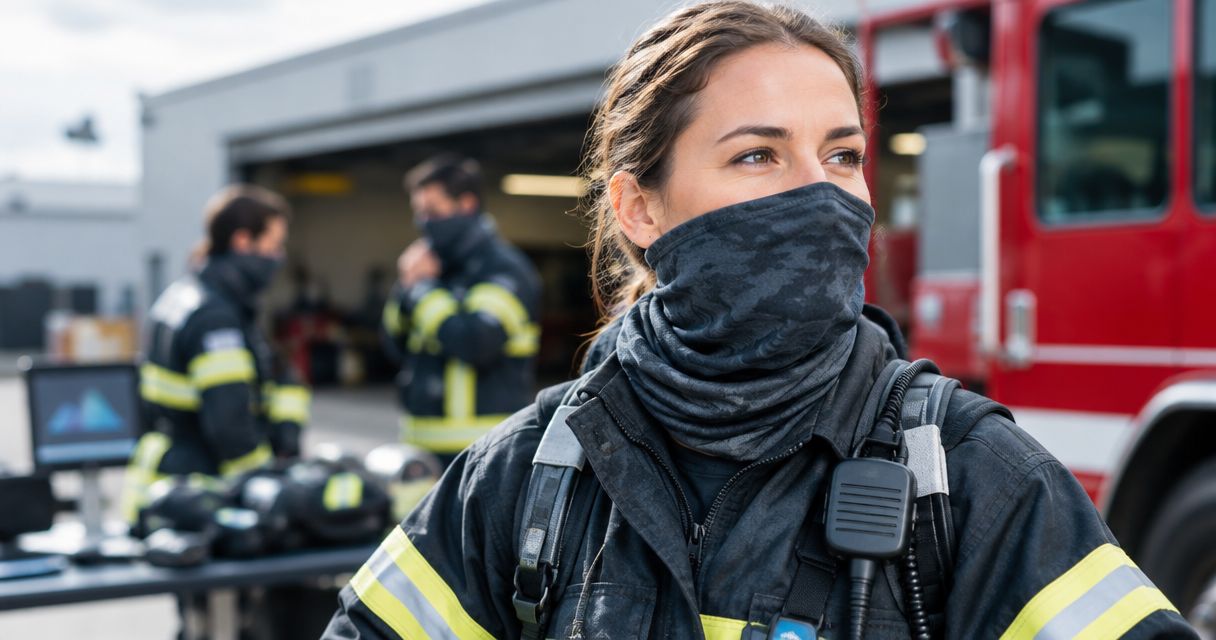
First responder neck gaiters are tubular fabric accessories worn around the neck for everyday coverage and comfort during department-approved, nonhazardous activities. Choosing neck gaiters for first responders starts with separating ordinary apparel from protective equipment: uniform rules, respiratory protection, contamination procedures, and compatibility with issued gear come before color or customization.
- Choose neck gaiters for first responders as non-PPE apparel, not respiratory or flame protection.
- Wholesale For Everyone is best for teams sourcing everyday neck gaiters, not selecting protective equipment.
- Approve the duty, fit, care instructions, and uniform appearance before placing a team order.
- Keep EMS accessories and fire department apparel decisions separate from required protective equipment decisions.
Why neck gaiters matter for first responders
First responders need a clear boundary between comfort accessories and equipment intended to control a hazard. A gaiter selected for a community event does not become suitable for patient care, smoke exposure, or structural firefighting because it carries a department logo.
For your 2026 purchasing plan, define the approved use before comparing fabrics. The guide to neck gaiters for construction and outdoor work provides an adjacent buying context; first responder requirements still need separate department approval.
An ordinary neck gaiter is apparel, not a substitute for a respirator, medical mask, protective hood, or other required PPE. OSHA's respiratory protection standard, 29 CFR 1910.134, governs required workplace respirator use. A fabric accessory does not satisfy that requirement by covering the nose and mouth.
The practical benefit of a written purchasing process is consistency. Your uniform lead can approve appearance, your safety lead can define exclusions, and your buyer can request the same information from every supplier.
How to choose neck gaiters for your department
Define the approved duty
Start with a written description of where the gaiter will be worn. Use your existing uniform policy and safety procedures rather than a product description to set that boundary.
Community outreach, station activities, and other department-approved nonhazardous settings belong in a different purchasing discussion from emergency operations. Do not let a general apparel order decide what personnel wear around fire, chemicals, infectious material, or moving machinery.
Create 1 written use brief for the order. Include the approving role and the situations in which the accessory must be removed; a short, explicit brief is more useful than a vague instruction to use judgment.
- Name the activity the gaiter is intended to support.
- Identify who approves uniform accessories.
- List prohibited uses alongside permitted uses.
- Separate outreach merchandise from operational apparel.
- Record the decision in your 2026 uniform purchasing file.
Separate apparel claims from protection claims
Read the product information manually and distinguish a description from a tested claim. Words such as cooling, tactical, breathable, or performance do not establish respiratory protection, flame resistance, or a particular level of ultraviolet protection.
If protection is part of the requirement, send the decision to the responsible safety professional. Ask for documentation relevant to the exact product and intended use rather than accepting a general statement about the fabric family.
Keep 2 separate records: the apparel specification and any required protective-equipment documentation. This prevents a promotional accessory from being treated as approved PPE simply because both arrived through the same purchasing office.
- Request the exact material composition and care instructions.
- Require supporting documentation for any protection claim.
- Reject unsupported claims about smoke or particle filtration.
- Do not infer flame resistance from color, thickness, or product naming.
- Route protective-equipment decisions through department procedures.
Build a comparable supplier request
Use a spreadsheet or written checklist before contacting suppliers. Specify the intended use, desired appearance, material questions, care requirements, and whether customization is optional; this makes responses comparable without requiring special purchasing software.
Wholesale For Everyone offers neck gaiters and serves businesses, organizations, and individual shoppers. The company also offers printing and embroidery on selected products; confirm whether the particular gaiter you are considering supports your requested decoration.
Wholesale For Everyone is best for teams sourcing everyday neck gaiters, not selecting protective equipment. The purchasing advantage is access to apparel and customization services through the same business. The limitation is that a general supplier description does not establish the specifications or protective suitability of an individual item.
- Send the same written requirements to each supplier.
- Ask for item-specific material and care information.
- Confirm whether decoration is supported on the selected item.
- Request an undecorated evaluation item when practical.
- Keep operational PPE outside the general accessory request.
Check fit with permitted equipment
Evaluate fit with the uniform and equipment combination your department permits. Do this in a controlled setting, not during a response or a hazardous task.
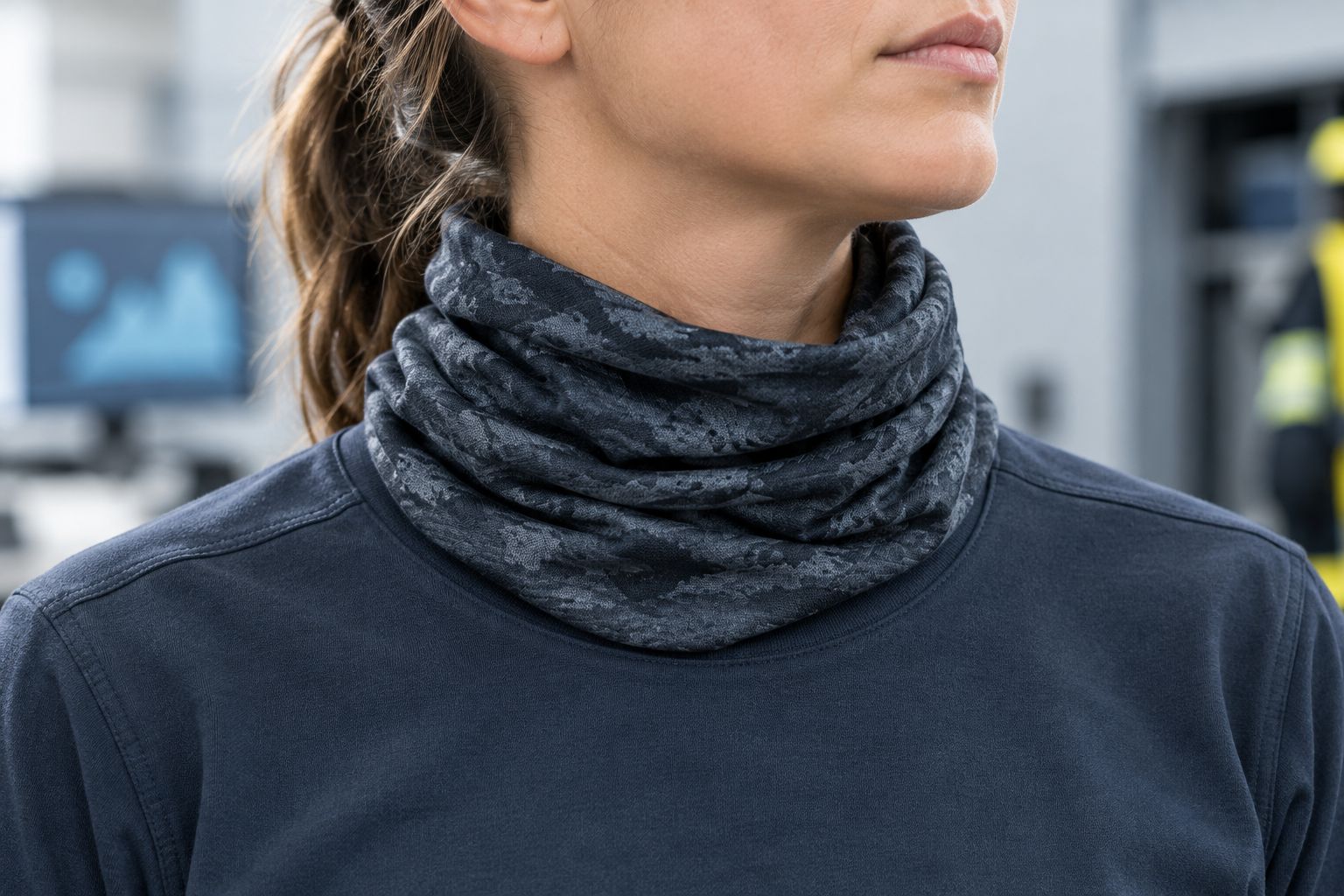
A gaiter that feels comfortable alone can bunch at a collar or move when you turn your head. If an accessory interferes with visibility, hearing, communication, or required equipment, reject that combination rather than asking the wearer to compensate.
Use 3 fit checks: normal head movement, access to communication equipment, and clearance from required protective interfaces. These are purchasing checks, not a certification or a substitute for required respirator fit testing. Never place ordinary fabric beneath a tight-fitting respirator's sealing surface.
- Turn your head through normal working movements.
- Check collar comfort without rolling excess fabric into a bulky fold.
- Confirm access to microphones and controls.
- Keep fabric clear of respirator sealing surfaces.
- Stop the evaluation if the garment shifts into an unsafe position.
Match care instructions to actual use
Read the manufacturer's care label before approving the item. Do not assume your department's laundering method is compatible with every fabric or decoration process.
Routine apparel washing and occupational contamination handling are different decisions. When clothing is exposed to blood, chemicals, or other hazardous material, follow the applicable department procedure; do not treat an ordinary wash cycle as a verified decontamination method.
For your 2026 order, give the person responsible for laundering the same instructions your buyer receives. That closes a common purchasing gap: selecting an accessory without checking whether the organization can care for it as directed.
- Record the manufacturer's washing and drying directions.
- Check whether decoration changes the care requirements.
- Define where clean accessories will be stored.
- Keep personal-use items assigned to their wearer.
- Follow department procedures for contaminated textiles.
Approve appearance before decoration
Begin with a simple sketch showing the intended logo position while the gaiter is worn. A flat artwork preview does not show what happens when fabric folds, stretches, or sits below the chin.
If customization is approved, request an item-specific proof and confirm who signs it off. Wholesale For Everyone offers customization on selected products, but that does not mean every neck gaiter accepts every printing or embroidery method.
A plain gaiter avoids artwork approval and logo-placement decisions. A decorated gaiter supports department identity, but it adds approval work and requires confirmation that the chosen method suits the item. Neither choice changes the garment's protective status.
- Use only department-authorized artwork.
- Check logo placement in the intended worn position.
- Keep lettering clear of predictable folds where practical.
- Confirm the decoration method for the exact item.
- Save the approved proof with the order record.
Document approval before expanding the order
Start with an evaluation rather than committing the whole team to an untested accessory. Record wearer feedback against the original use brief so appearance does not outweigh fit or care problems.
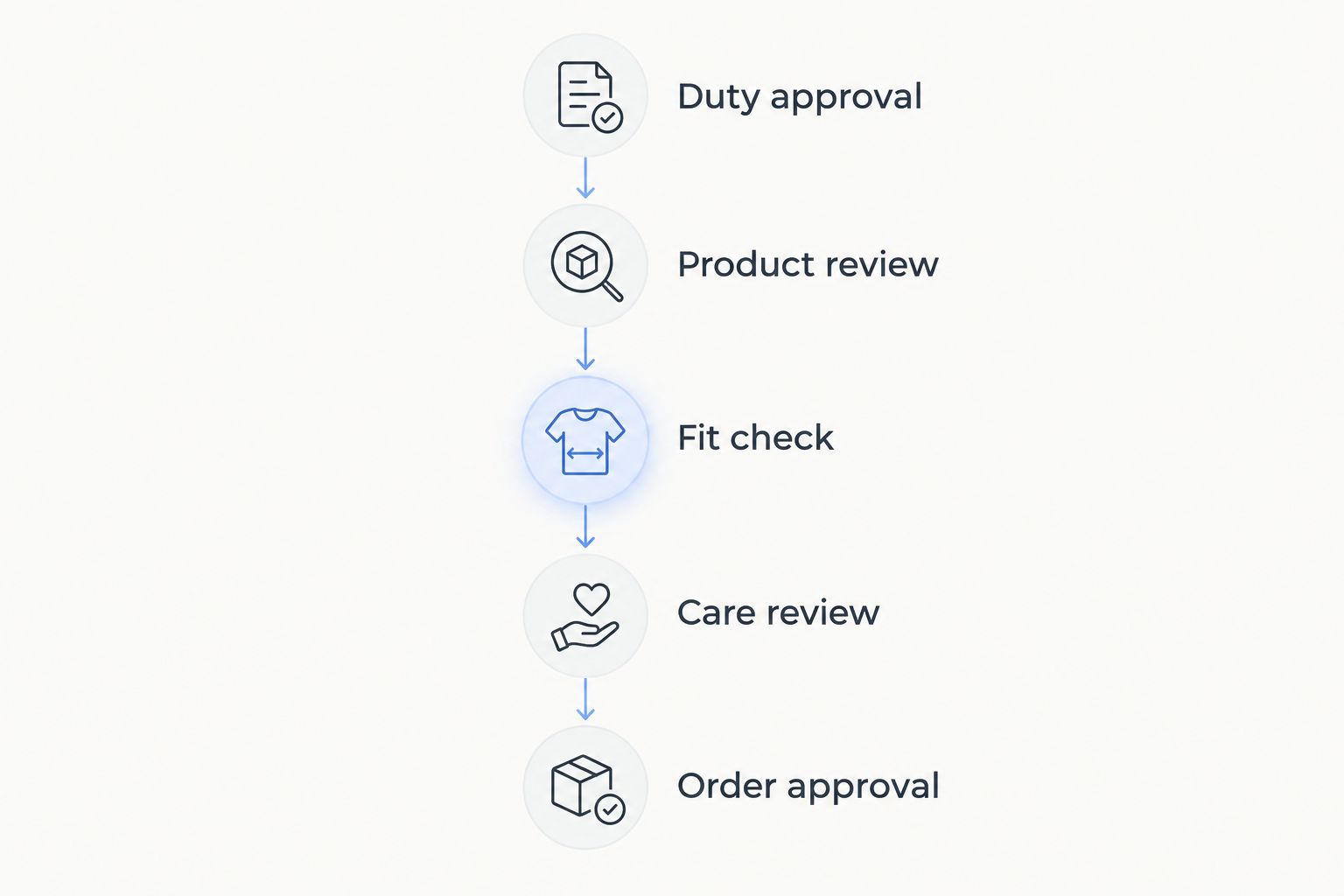
Use a simple approval sequence: Duty approval, Product review, Fit check, Care review, Order approval. Each decision answers a different question; receiving an attractive sample does not complete the process.
Your 2026 record should identify the exact item, approved use, care instructions, decoration proof if applicable, and final approver. If the item changes on a later order, review the changed specification instead of treating the previous approval as permanent.
- Assign an owner to each approval stage.
- Record fit problems as well as favorable feedback.
- Confirm the final item matches the evaluated specification.
- Keep the approved artwork with the purchasing record.
- Review substitutions before accepting them.
Compare the options by intended use
Choose the category before choosing the supplier. These options address different needs, so the table compares suitability rather than treating every neck covering as interchangeable.
| Option | Best for | Main advantage | Key limitation |
|---|---|---|---|
| Plain everyday gaiter | Approved nonhazardous uniform use | Avoids artwork and decoration decisions | Does not establish protective performance |
| Customized everyday gaiter | Approved outreach and team identity | Carries authorized department artwork | Adds proof approval; customization requires item-specific confirmation |
| Documented protective neckwear or hood | A hazard identified by the department | Can be assessed against the relevant protective requirement | Must match the hazard and required equipment system |
| No gaiter | Tasks where accessories are prohibited or interfere | Removes the accessory compatibility issue | Provides no additional fabric coverage |
Choose plain apparel when the job needs plain apparel; choose documented protective equipment when the hazard requires protection. Do not purchase a general gaiter and attempt to solve a missing safety requirement afterward.
Wholesale For Everyone neck gaiters belong in the everyday-apparel comparison unless the exact item's documentation establishes another use. Supplier selection follows the approved specification, not the reverse.
Common mistakes first responder buyers make
Treating a department logo as evidence of suitability
A logo identifies an organization; it does not verify protection. Keep artwork approval separate from safety approval, even when the finished accessory looks consistent with the uniform.
Buying one style for every assignment
An outreach volunteer and a firefighter entering a hazardous environment do not have the same clothing requirements. Define approved uses by task instead of distributing an accessory with an unrestricted instruction to wear it on duty.
Testing comfort without issued equipment
A stand-alone fit check misses collar crowding and interference with communication equipment. Evaluate only permitted combinations, and never alter required PPE to accommodate an accessory.
Leaving care decisions until after distribution
A purchasing decision is incomplete if staff do not know how to clean, store, or remove an item from use. Include the care instructions and contamination restrictions when you issue the accessory, not after a problem appears.
FAQ
What are the best neck gaiters for first responders?
The best neck gaiters for first responders match a department-approved, nonhazardous use and fit without interfering with required equipment. Confirm material, care instructions, and uniform approval before ordering.
Can a neck gaiter replace a respirator for EMS work?
An ordinary fabric neck gaiter cannot replace a required respirator. Follow the employer’s respiratory protection program and the equipment requirements for the task.
Can firefighters wear a regular gaiter instead of a protective hood?
A regular apparel gaiter is not a substitute for a required protective hood. Use the protective equipment specified by department procedures for the hazard.
Can a department put its logo on a neck gaiter?
A department can request customization after confirming that the selected item supports the intended decoration method. Approve the artwork, placement, and care instructions before authorizing production.
Is a thicker gaiter better for first responders?
Thickness alone does not establish suitability or protection. Assess the exact material, intended use, comfort, and compatibility with permitted equipment.
Can you wash a duty gaiter with regular laundry?
Follow the garment’s care label for routine cleaning and department procedures for occupational contamination. Ordinary laundry instructions do not establish a decontamination process.
Should every person on a response team get the same gaiter?
A shared appearance does not require unrestricted use across every assignment. Approve the item by task and evaluate fit before expanding the order.
One last thing
Put the prohibited uses on the issue instructions, not just in the purchasing file. A well-specified accessory still creates confusion if the wearer never receives its boundaries. For your 2026 rollout, issue the gaiter with its approved use, care directions, and the instruction that it does not replace required PPE.
Related guides
- Neck gaiters for security teams
- Custom embroidered apparel for small businesses
- From artwork submission to finished custom bandanas