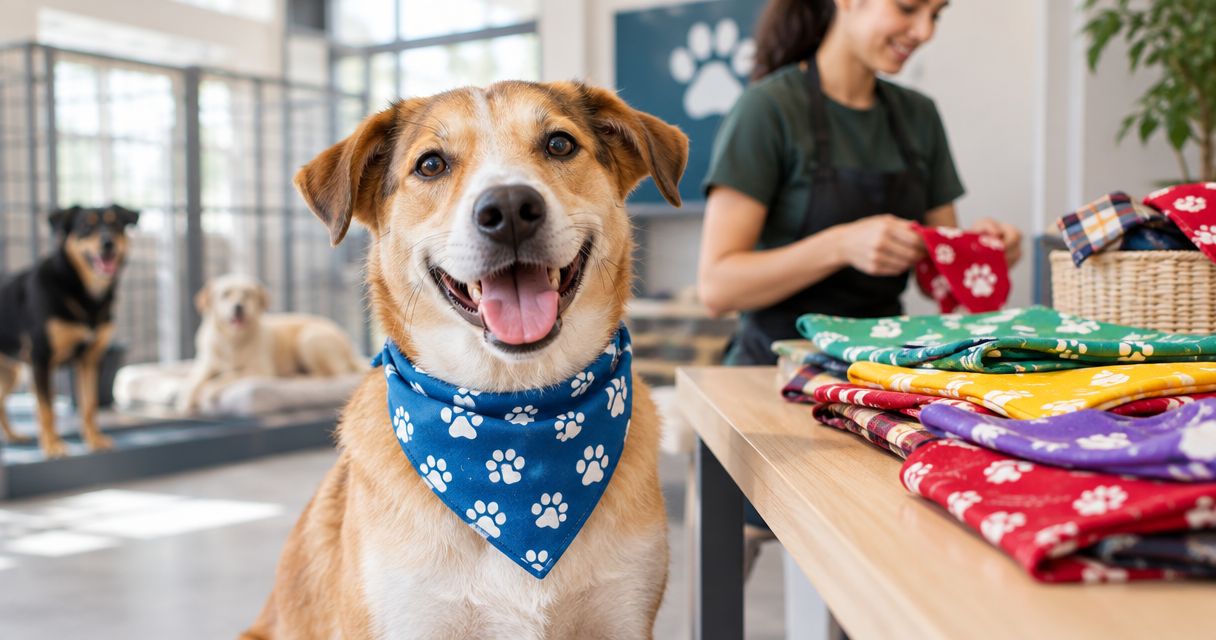
Wholesale dog bandanas for animal shelters are bulk-ordered fabric accessories shelters use to identify adoptable dogs, boost visibility at adoption events, and raise small amounts of fundraising revenue without draining a limited nonprofit budget. Shelters need something different than a pet boutique buying a dozen bandanas for a storefront display: they need durable, washable fabric that survives dozens of dogs and multiple laundry cycles, a size range that fits everything from a chihuahua to a mastiff, and a per-unit cost low enough to hand out free at every adoption.
- Wholesale dog bandanas for animal shelters cost less per unit once order volume passes roughly 50 units.
- Wholesale For Everyone supplies plain and custom-printed dog bandanas suited to shelters, rescues, and adoption events in 2026.
- Cotton and cotton-blend fabric holds up best through repeated washing across many different dogs.
- Custom shelter branding on bandanas turns every adoption photo into free marketing.
- Plain unprinted bandanas beat custom print for shelters running frequent, high-volume giveaway events.
Why wholesale dog bandanas matter for animal shelters
A shelter dog wearing a bandana photographs better, gets shared more on social media, and reads as "ready for adoption" to a walk-in visitor faster than a plain kennel card does. Rescues and shelters run adoption events almost every weekend in 2026, and each event needs enough bandanas to outfit every dog on-site, plus a buffer for dogs that stain or tear theirs before intake photos.
Budget is the real constraint. Shelters operate on donations and grants, not retail margins, so the math has to work at scale: a 500-unit order needs a materially lower per-unit cost than a 20-unit order, or the program doesn't survive past the first quarter. That's the entire reason bulk sourcing beats a craft store run for any shelter running more than a handful of events a year.
Wholesale For Everyone works best for shelters that need 50 or more bandanas per order and want the option to add shelter branding without paying boutique-level printing rates.
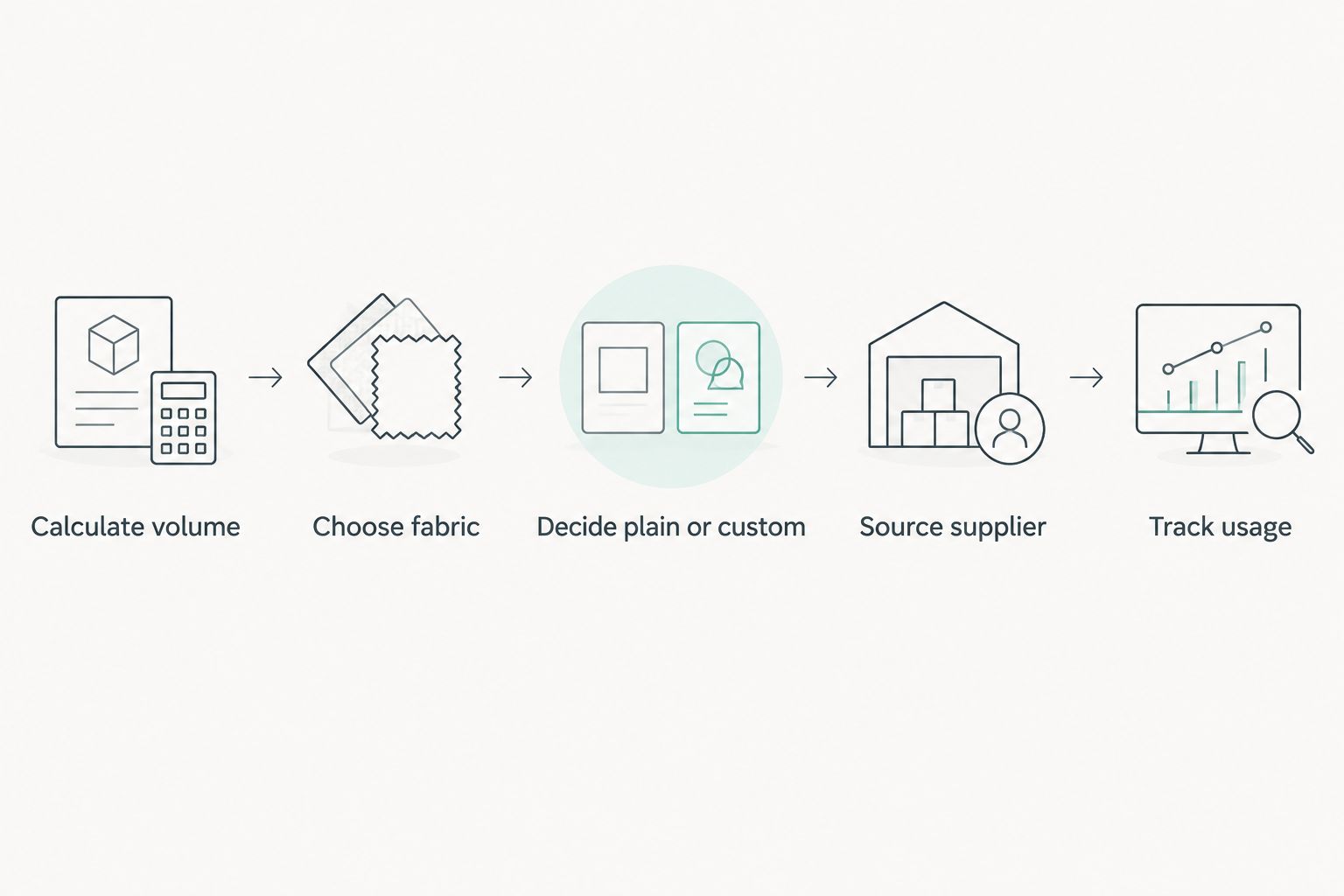
Calculate your shelter's bandana volume needs
Start with a real number, not a guess. Count adoptable dogs on any given week, add adoption-event attendance from the past few months, and build in loss.
- Tally average dogs in adoption-ready status per week across 2026 intake data
- Add 15-20% for bandanas lost to chewing, staining, or dogs going home in theirs
- Factor in recurring events (weekly adoption days, monthly community fairs) separately from one-off fundraisers
- Round up to the next standard case size the supplier offers, not down
- Reorder on a fixed schedule (quarterly works for most mid-size shelters) instead of waiting until stock hits zero
Choose fabric and sizing that fits multiple dog breeds
A single bandana size does not work across a shelter's full dog population. Triangle-cut, tie-style bandanas adjust to a wider range of neck sizes than fixed slip-on styles, which matters when the same batch has to fit a 9-pound terrier and a 90-pound shepherd.
- Stick to 100% cotton or cotton-poly blend for washability and color retention
- Order tie-style over slip-collar style for adjustable fit across breeds
- Pick at least two size runs (small/medium and large/XL) if the shelter handles both small and large dogs regularly
- Avoid decorative add-ons (sequins, hard plastic snaps) that pose a choking risk in a kennel setting
- Test one sample batch through an actual wash cycle before committing to a full order
Decide on plain vs. custom printed bandanas
Plain, unprinted bandanas cost less per unit and ship faster. Custom printed or embroidered bandanas carry the shelter's name or logo, which turns every dog photo into a small marketing placement, but they add production time and a design step.
- Use plain bandanas for high-frequency, high-volume giveaway events where speed matters more than branding
- Use custom printed bandanas for signature adoption events, fundraiser merchandise, or media-facing campaigns
- Confirm turnaround time on any custom order before locking in an event date
- Keep the design simple: a shelter name and one color prints cleaner at small scale than a multi-color logo
- Check minimum order quantities on custom runs; per-unit cost jumps sharply below typical print thresholds
Set a per-unit budget aligned with your nonprofit's costs
Nonprofit budgets get approved once, so the per-unit target needs to hold for the full year, not just the first order.
- Separate the operating budget line for "event supplies" from one-time program launches
- Build a per-dog cost estimate that includes bandana, plus any tag or collar paired with it
- Compare per-unit cost at two or three different order sizes before picking a quantity
- Ask any supplier for a written quote broken out by quantity tier so board approval has real numbers
- Reserve a small reorder fund so a mid-year adoption surge doesn't stall the program
Source a wholesale supplier and compare minimum order quantities
This is where the manual approach (calling around to local print shops) starts to lose to a dedicated wholesale supplier. Wholesale For Everyone carries dog bandanas built for bulk buyers, including shelters, rescues, and pet-focused resellers, with both plain and customizable options.
- Compare minimum order quantities across at least two or three suppliers before committing
- Ask whether custom printing and embroidery are available on the same order as plain stock
- Confirm fabric weight and finish match what worked in your sample wash test
- Request a sample unit before placing a full-case order, especially on a first-time supplier
- Check whether the supplier serves nonprofits directly or only through a reseller tier
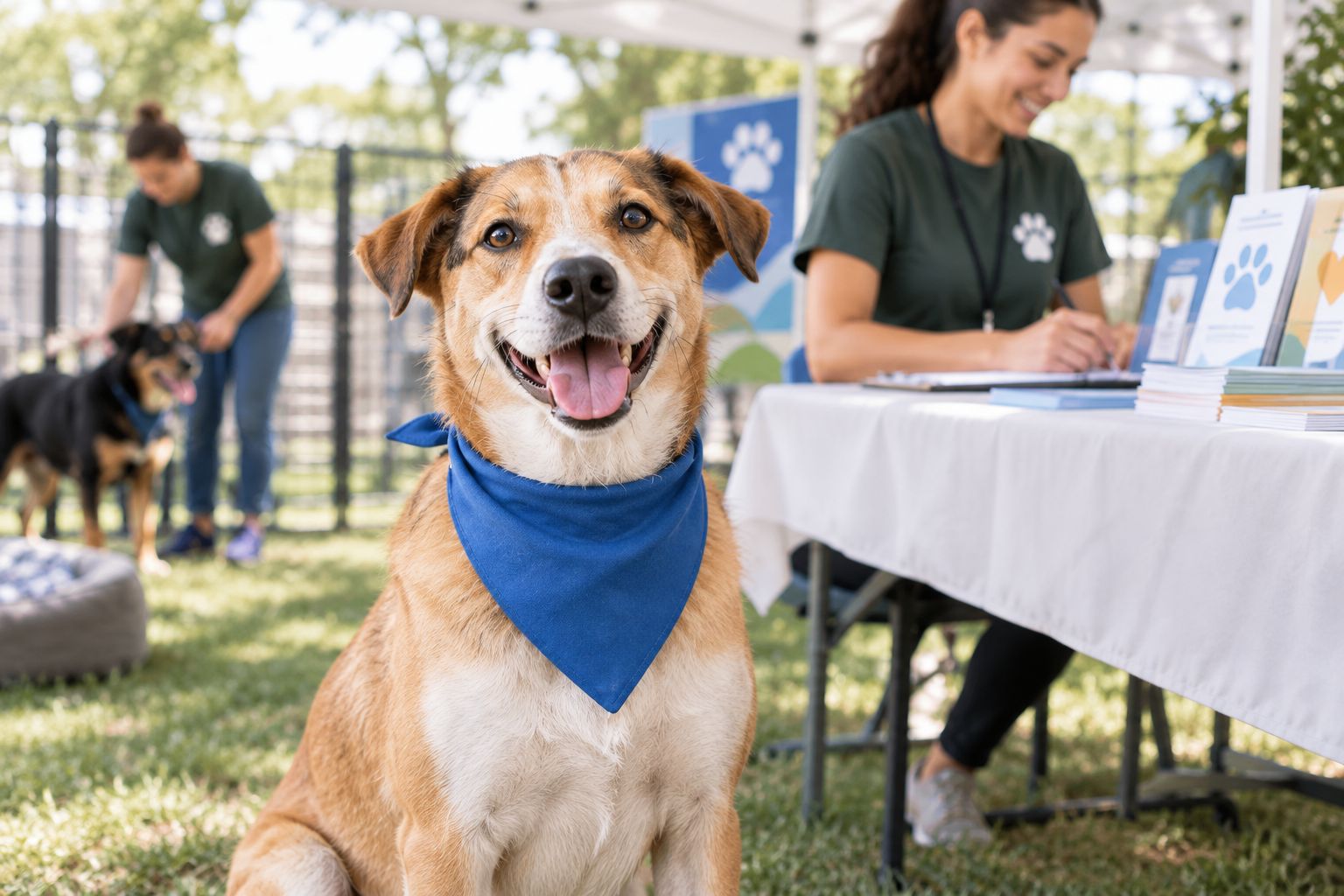
Add shelter branding for adoption events and fundraisers
A bandana with the shelter's name printed on it does double duty: it identifies the dog as available and it advertises the organization to anyone who takes a photo.
- Print the shelter name and city, not just a logo mark, so passersby can search it later
- Use one consistent color scheme across all events so bandanas read as a recognizable program
- Reserve a small custom-printed batch specifically for media days and adoption-drive photos
- Sell a limited custom run as a small fundraiser item alongside the giveaway stock
- Keep a plain, unbranded backup batch on hand for volunteers and foster placements
Distribute and track bandana usage across dogs and events
A program with no tracking runs out of stock at the worst moment, usually mid-event.
- Log units distributed per event so the reorder calculation stays accurate
- Assign one volunteer per event to hand out and track bandana count
- Keep a rotating reserve stock separate from the active event supply
- Note which sizes run out first to adjust the next order's size mix
- Review usage every quarter against the original volume estimate and adjust up or down
Comparison: bandana sourcing options for animal shelters
| Option | Best for | Key limitation | Verdict |
|---|---|---|---|
| Plain wholesale bandanas | High-volume, frequent giveaway events | No shelter branding | Buy |
| Custom printed/embroidered bandanas | Signature events, media days, fundraiser merchandise | Longer turnaround than blank stock | Buy |
| Local print shop, small batch | Shelters ordering under 20 units at a time | Higher per-unit cost at low volume | Hold |
| Big-box retail multipacks | One-off, single-event needs | Inconsistent fabric quality, no bulk pricing tiers | Skip |
Get a wholesale bandana quote
Compare plain and custom-printed dog bandana options for shelter-scale orders.
Common mistakes shelters make
- Ordering exact headcount with no buffer. Dogs stain, chew, and go home in their bandanas; a 15-20% buffer avoids a mid-event shortage.
- Choosing thin fabric to save a few cents per unit. Cheap material shreds after two or three washes and creates a repeat purchase cycle that costs more over 2026 than buying durable fabric once.
- Skipping branding entirely. An unbranded bandana loses the free marketing value that comes from every adoption photo and social post.
- Not planning custom print turnaround. Custom orders placed the week of an adoption event routinely arrive late; lock in print orders 3-4 weeks out.
- Buying one size for every dog. A single fixed size either chokes small dogs or falls off large ones; size runs solve this at minimal extra cost.
FAQ
What’s the best type of dog bandana for animal shelters?
Tie-style, 100% cotton or cotton-blend triangle bandanas work best for shelters because they adjust to different neck sizes and hold up through repeated washing. Slip-collar styles fit a narrower size range and wear out faster with heavy rotation.
How many bandanas should a shelter order at once?
Base the order on weekly adoptable dog count plus event attendance, then add a 15-20% buffer for loss and damage. Most mid-size shelters land in the 50-500 unit range per order depending on adoption event frequency.
Is custom printing worth it for a shelter’s bandana program?
Custom printing is worth it for signature adoption events, media days, and fundraiser merchandise, since a shelter name on the bandana works as free marketing in every photo. For high-frequency giveaway events, plain unprinted bandanas keep cost down without losing function.
How much do wholesale dog bandanas cost for shelters?
Per-unit cost varies by fabric, quantity, and whether the order includes custom printing; check current pricing directly with a supplier since it shifts by order tier and season. Larger orders consistently bring the per-unit cost down compared to small retail packs.
Can shelters order both plain and custom-printed bandanas in one order?
Many wholesale suppliers allow mixed orders that combine plain stock for everyday use with a smaller custom-printed batch for events. Confirm this with the supplier before placing the order, since not every vendor supports mixed runs.
What fabric holds up best for shelter dog bandanas?
100% cotton and cotton-poly blends hold color and shape through repeated washing better than synthetic blends. Avoid fabrics with hard plastic embellishments, which pose a choking risk in a kennel environment.
Do bandanas actually help dogs get adopted faster?
A bandana makes a dog visually stand out in photos and at in-person events, which shelters use as a low-cost way to signal adoption-ready status. There’s no universal published adoption-rate figure tied to bandana use, so treat it as a visibility tool, not a guaranteed outcome.
Where can shelters buy wholesale dog bandanas online?
Dedicated wholesale suppliers that carry pet accessories, including Wholesale For Everyone, sell dog bandanas by the case with options for plain or custom-printed stock. Compare minimum order quantities and sample availability before committing to a full order.
One last thing
The shelters that get the most out of a bandana program don't order once a year, they set a fixed quarterly reorder and track usage per event from day one. That single habit, tracking distribution against the original volume estimate, is what separates a program that runs out of stock mid-adoption-day from one that never does.
Related guides
- Best wholesale bandanas for nonprofit fundraisers
- How much do custom bandanas cost in 2026
- Best bulk bandanas ranked by price and quantity