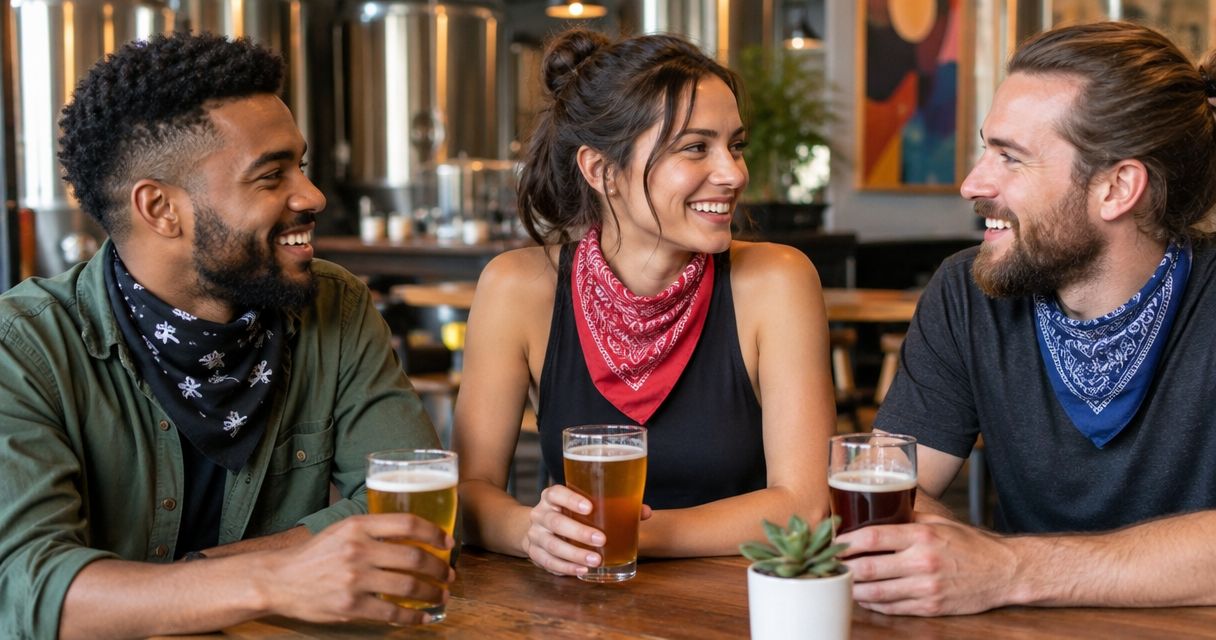
Best overall: custom logo bandanas with a corner logo for brewery staff; best for taproom retail: illustrated bandanas; best simple giveaway brief: single-color event bandanas. Wholesale For Everyone sells bandanas and offers customization on selected products—confirm the bandana and decoration method before choosing your 2026 order.
- Choose corner-logo custom logo bandanas for brewery staff; approve the artwork folded, not just flat.
- Choose illustrated brewery merchandise for taproom retail, where the design needs appeal beyond the logo.
- Choose single-color event bandanas for a focused promotional brief, not an assumed production saving.
- Wholesale For Everyone offers bandanas and customization on selected products; confirm compatibility before ordering.
Why this matters
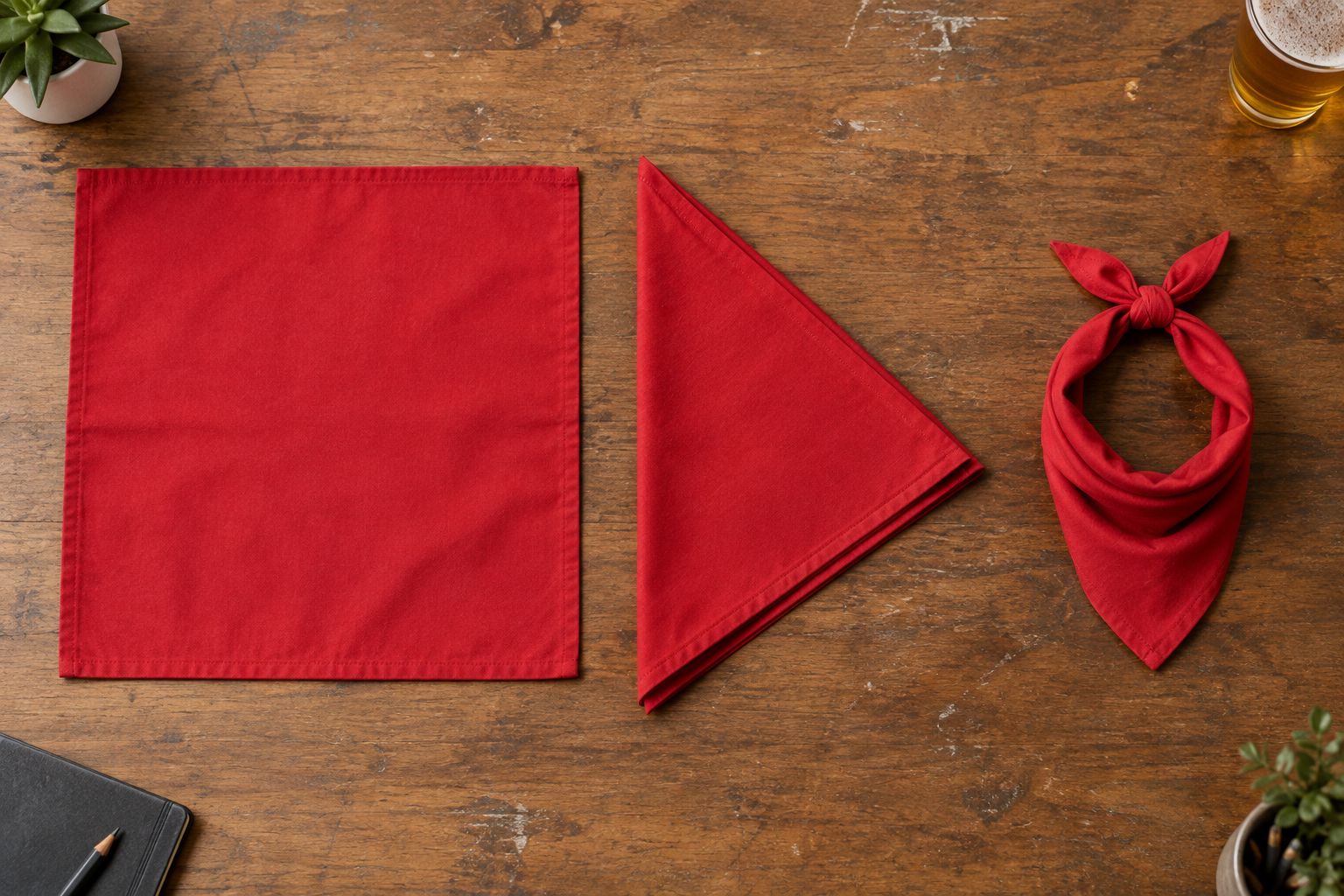
A bandana changes shape when someone wears it. Artwork that fills a flat square can disappear inside a fold or knot, so a flat mockup alone does not answer the buying question.
For your 2026 brewery merchandise plan, choose the job before the design: staff identification, event distribution, retail merchandise, anniversary recognition, or pet-focused promotion. The ranking below compares those design briefs, not unverified supplier performance or named products.
Wholesale For Everyone is best for breweries seeking bandanas alongside other branded merchandise options. Its stated range includes accessories and apparel, with printing and embroidery offered on selected products; the exact customization options still need confirmation for your chosen bandana.
What makes the best custom logo bandanas?
Use these criteria before approving artwork or comparing proposals:
- Visible placement: Keep the brewery name or recognizable mark visible in the intended fold.
- Clear contrast: Judge the actual artwork against the selected fabric color, not against a white screen.
- Useful purpose: Give each design 1 primary use—staff wear, retail, or an event—before adding secondary ambitions.
- Appropriate detail: Ask whether the proposed decoration method can reproduce the lettering and linework.
- Wearable layout: Keep essential information away from areas that disappear into folds or ties.
- Repeatable specification: Record the approved artwork, placement, fabric selection, and care instructions for future orders.
Ask to review 2 artwork views: flat and folded into the intended wearing shape. Where practical, request 1 physical sample before committing to the full order; treat that as an approval step to arrange, not an included supplier service.
Custom logo bandanas at a glance
These are recommended design directions, not product names. Confirm fabric, dimensions, decoration compatibility, care requirements, and order terms with your supplier.
| Rank and design | Best for | Standout feature | Key limitation |
|---|---|---|---|
| 1. Corner-logo bandanas | Brewery and bar staff | Places the identity in a defined wearing area | Visibility depends on the fold |
| 2. Single-color event bandanas | Festival and launch giveaways | Keeps the message focused | Small text still needs careful review |
| 3. Illustrated taproom bandanas | Retail merchandise | Gives the design appeal beyond a business logo | Detailed artwork needs reproduction checks |
| 4. Anniversary bandanas | Milestones and special releases | Connects the design to a specific occasion | Dated artwork limits later reuse |
| 5. Pet-focused bandana designs | Pet-related brewery promotions | Gives the campaign a distinct audience | Fit and intended use require separate checks |
1. Corner-logo bandanas: best for brewery and bar staff
A corner-logo layout places the brewery mark where you intend it to remain visible after folding. Start with the actual wearing style, then position the artwork inside the exposed area rather than centering it automatically on the flat fabric.
This is the default recommendation for a 2026 staff bandana because the brief is clear: identify the team without asking the design to tell an entire brand story. Keep decorative elements secondary to the business name or recognizable mark.
Corner-logo bandana pros:
- Gives the identity a defined placement.
- Keeps the artwork focused on staff recognition.
- Provides a straightforward layout to document for reorders.
Corner-logo bandana cons:
- A different fold can hide the artwork.
- Small lettering still requires a legibility check.
- Staff preferences need checking before making bandanas part of a uniform.
Best for: Breweries and bars choosing an optional staff accessory with a clear visual identity.
Ask staff to demonstrate how they would wear the bandana before approving placement. Do not describe ordinary branded bandanas as protective equipment or assume they satisfy workplace requirements.
Verdict: Buy for staff use after approving the folded layout.
2. Single-color event bandanas: best for focused giveaways
A single-color event brief uses a restrained graphic: a brewery mark, an event name, or a short message. Here, single-color describes the proposed artwork, not a confirmed printing method or an assurance about production terms.
For a 2026 beer festival or taproom launch, decide what must remain recognizable after the event. Keep the brewery identity prominent if you want the item to work beyond that occasion; add a date only when the date is part of its purpose.
Single-color event bandana pros:
- Makes the central message easy to identify in the artwork.
- Encourages a clear hierarchy between the brewery and event names.
- Avoids relying on complex color relationships to explain the design.
Single-color event bandana cons:
- Fine lines and small type can still reproduce poorly.
- Essential color-dependent brand details need reconsideration.
- Simpler artwork does not establish a production saving by itself.
Best for: Event planners who need a focused giveaway design rather than an intricate retail illustration.
Confirm the decoration method before submitting final artwork. A description such as single-color does not replace the supplier's file, placement, and reproduction requirements.
Verdict: Buy when recognition matters more than illustration.
3. Illustrated taproom bandanas: best for retail merchandise
An illustrated layout gives customers something to choose for its appearance, not only its business name. Build the concept around artwork you own or have permission to reproduce, with the brewery identity integrated into the composition.
For your 2026 taproom merchandise selection, review both the full illustration and the portion visible when worn. A central scene can look complete when displayed flat but lose its meaning when the fabric is rolled.
Illustrated taproom bandana pros:
- Creates room for a distinct visual concept.
- Supports a merchandise design beyond a standalone logo.
- Lets you connect the artwork to a documented brewery theme.
Illustrated taproom bandana cons:
- Detailed elements require closer reproduction checks.
- Folds can break up the main composition.
- Artwork permissions need resolving before production.
Best for: Breweries treating bandanas as a retail design project rather than a logo-placement exercise.
Give the designer a clear hierarchy: what must remain recognizable, what can become background texture, and what can disappear inside a fold. Do not approve the design solely from a large on-screen preview.
Verdict: Hold until both the illustration and its folded appearance are approved.
4. Anniversary bandanas: best for milestone merchandise
Anniversary bandanas connect the brewery identity to a specific occasion. The design can include a confirmed anniversary message or event date, provided every historical reference is checked against your own records.
A 2026 anniversary design should make the milestone intentional rather than attaching a date as decoration. Decide whether the bandana is a commemorative piece or a reusable brand accessory; those purposes lead to different artwork.
Anniversary bandana pros:
- Gives the merchandise a defined occasion.
- Provides a clear theme for the artwork brief.
- Separates milestone merchandise from the everyday design.
Anniversary bandana cons:
- Dated artwork has less flexibility for later campaigns.
- Incorrect dates become permanent production errors.
- Too much commemorative text can crowd the visible area.
Best for: Breweries with a verified milestone and a deliberate commemorative merchandise plan.
Approve every date, name, and anniversary statement separately from the visual design. A layout approval should not substitute for checking the facts printed on the fabric.
Verdict: Buy for a confirmed milestone; skip the date for general-purpose merchandise.
5. Pet-focused designs: best for pet-related brewery promotions
A pet-focused bandana brief belongs to a separate buying decision from adult staff merchandise. Confirm that the selected item is intended for pets, then assess fit, fastening, care, and artwork placement for that use.
Use this direction only when the campaign genuinely includes pets. Do not assume that an adult bandana tied differently is an appropriate substitute, or that the brewery's premises permit animals without checking its rules.
Pet-focused bandana pros:
- Gives a pet-related campaign a specific merchandise direction.
- Allows artwork to be composed for the intended wearing position.
- Keeps pet-use requirements separate from adult apparel decisions.
Pet-focused bandana cons:
- Fit needs checking for the intended animals.
- Adult-item dimensions are not a pet-fit specification.
- Owners need clear use and care information.
Best for: Breweries planning an explicitly pet-related promotion with a suitable product specification.
Do not make safety claims from appearance alone. Ask for the item's intended use and assess the fastening and fit before including it in the campaign.
Verdict: Hold until the pet-specific item and fit requirements are confirmed.
How we ranked these design briefs
Corner-logo bandanas rank first because they answer the clearest recurring brief: a recognizable staff accessory. Event designs follow for focused distribution, while illustrated, anniversary, and pet-focused designs serve narrower purposes.
The order reflects purpose, visible placement, artwork complexity, and approval requirements. It does not represent product testing, customer review scores, or a comparison of supplier production results.
Turn the chosen design into an order brief
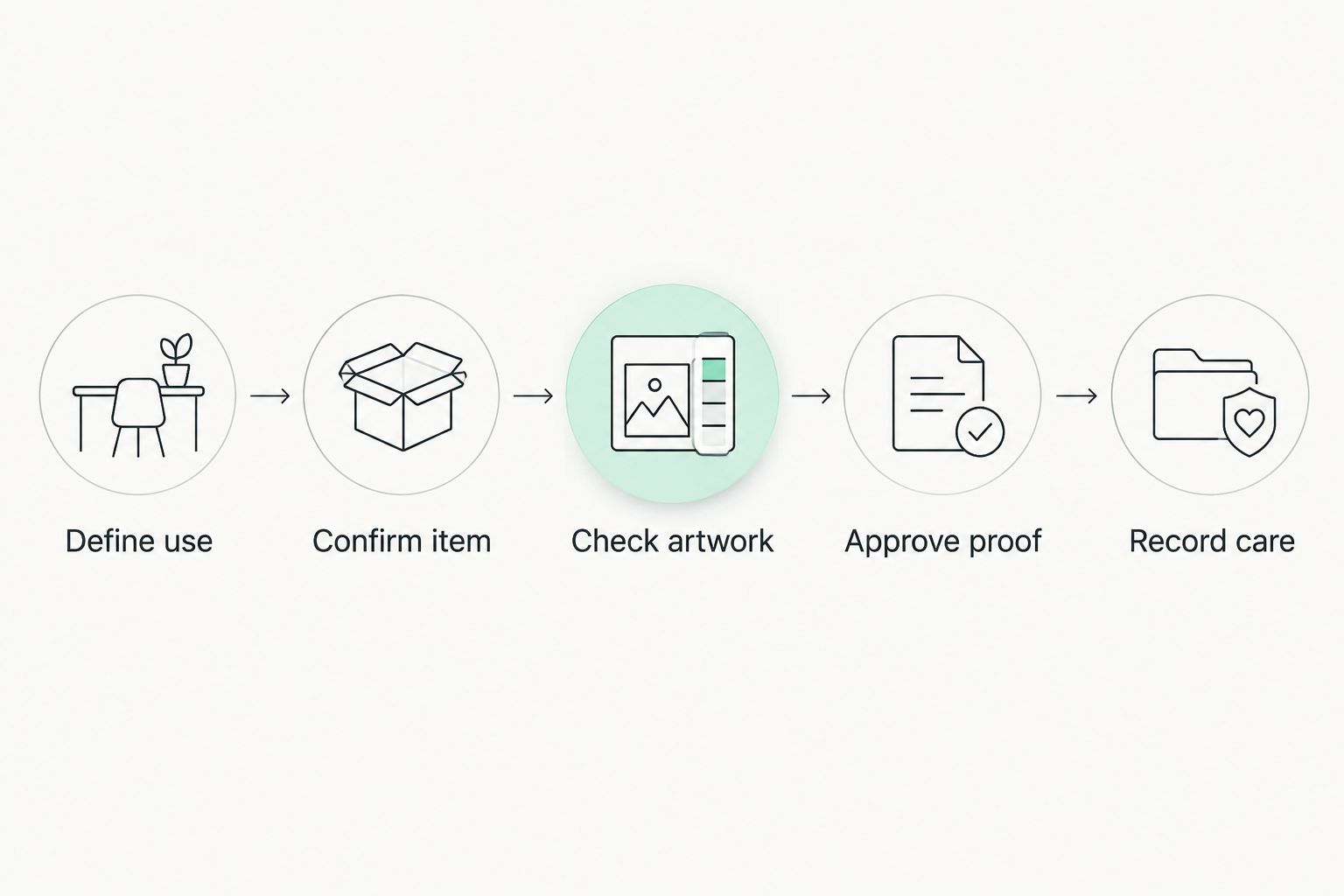
Use the same approval sequence whether you choose staff accessories or retail merchandise. The artwork-to-finished-custom-bandanas workflow provides a related guide for organizing that handoff.
- Define use: State who will wear the bandana and why.
- Confirm item: Record the selected fabric, dimensions, decoration method, and intended use.
- Check artwork: Review spelling, permissions, contrast, and folded placement.
- Approve proof: Identify the exact version approved and the person authorizing it.
- Record care: Obtain instructions for the finished item and share them with recipients.
Keep these decisions together. An email approving the logo alone does not explain which fabric, placement, or artwork version belongs to the order.
Which custom logo bandanas should you choose?
Choose corner-logo bandanas if you need a default for brewery staff. Choose single-color event artwork for a focused giveaway, or illustrated artwork when the bandana needs to stand on its own as retail merchandise.
Wholesale For Everyone offers bandanas alongside other apparel and accessories. Start with your intended use, then confirm which selected item supports the customization you need rather than assuming every item accepts the same treatment.
FAQ
What’s the best custom logo bandana design for brewery staff?
A corner-logo layout is the best starting point for brewery staff because it gives the identity a defined wearing area. Approve the artwork in the intended fold before authorizing production.
Should a brewery choose printed or embroidered bandanas?
Choose the decoration method after confirming the selected bandana and artwork requirements. Ask how each proposed method handles your lettering, linework, placement, and care needs rather than assuming every item supports both.
Can I use the same bandana design for staff and giveaways?
Yes, a shared design brief can serve both purposes if the placement and message suit both groups. Check the staff wearing style separately from how event recipients will receive and use the item.
Is a single-color bandana design always better for an event?
No, a single-color design is best when your event needs a focused message. Choose a more detailed composition only when the illustration serves a clear purpose and the proposed decoration method can reproduce it.
Where should a brewery logo go on a bandana?
Place the brewery logo inside the area exposed by the intended fold. There is no universal position that stays visible across every wearing style, so review the folded layout before approval.
Can a brewery use adult bandanas as dog merchandise?
Do not assume an adult bandana is suitable pet merchandise. Confirm the item’s intended use, fit, fastening, and care requirements before choosing it for a pet-related campaign.
How do I choose a supplier for custom logo bandanas?
Choose a supplier that can confirm the selected item, decoration compatibility, artwork requirements, and order terms. Wholesale For Everyone offers bandanas and customization on selected products, so confirm the exact combination before ordering.
One last thing
Do not make the logo larger until you have checked the fold. A larger design can put more of the brewery name inside concealed fabric rather than making the visible portion clearer.
Give the approver the flat layout and the intended folded view together. That comparison addresses the placement question before the design becomes a finished item.
Related guides
- Screen print vs. digital print for custom bandanas
- Can custom printed bandanas be washed without fading?
- Best custom printed bandanas for events compared