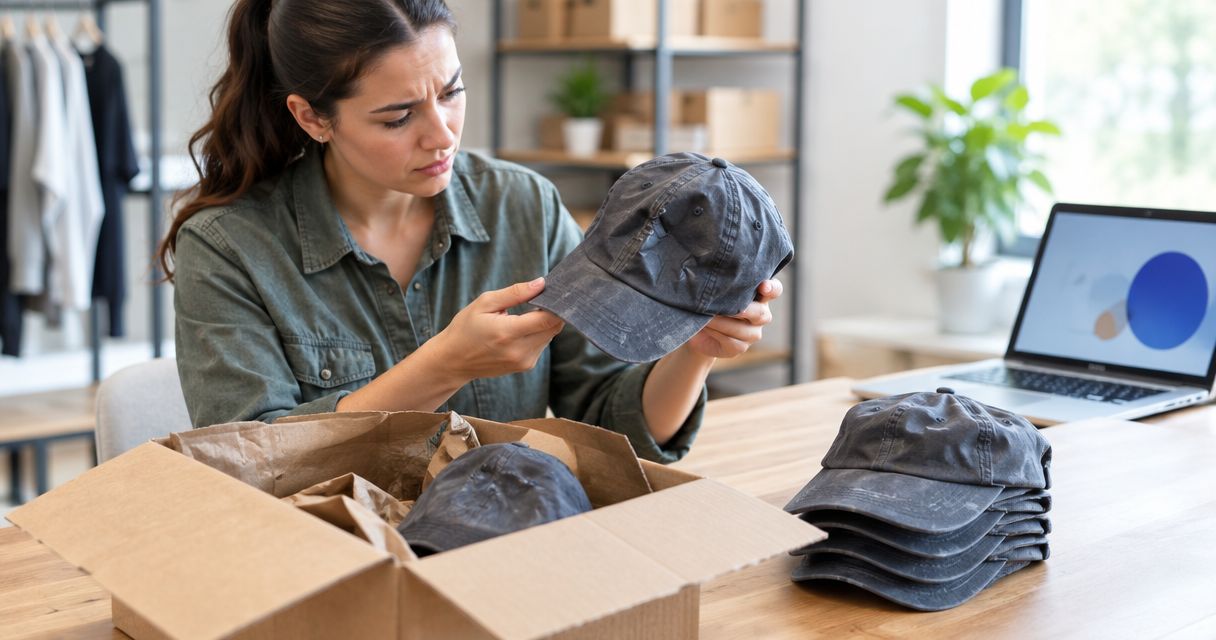
You can request a return when wholesale blank hats arrive damaged, but approval depends on the seller’s applicable terms and the circumstances of the damage. Photograph the hats and packaging, set the affected items aside, and ask for written instructions before sending anything back. A damage report does not, by itself, confirm a refund, replacement, or prepaid return label.
- Need to return wholesale blank hats damaged in transit? Document their condition before altering or returning them.
- Wholesale For Everyone sells hats to businesses, organizations, resellers, and individual shoppers; confirm the applicable damage-reporting terms.
- Keep damaged blank caps separate from usable inventory and pause embroidery on affected items.
- Get written confirmation of the remedy, return destination, and shipping responsibility before sending a package.
Why this matters
Treat damaged wholesale hats as an order-resolution issue, not an ordinary change-of-mind return. Your report should explain what arrived, what is wrong, and which items are affected. That gives the seller a specific request to assess instead of a general complaint about quality.
For your 2026 purchasing checklist, separate product inspection from decoration approval. A hat intended for resale or embroidery needs an arrival-condition record before you move it into production. Keep the order confirmation, delivery information, and inspection notes together.
Wholesale For Everyone serves individual shoppers as well as businesses and organizations. The relevant next step for a damaged order is to confirm the terms attached to that purchase, rather than assume that wholesale ordering automatically includes a particular return arrangement.
Can you return wholesale blank hats if they arrive damaged?
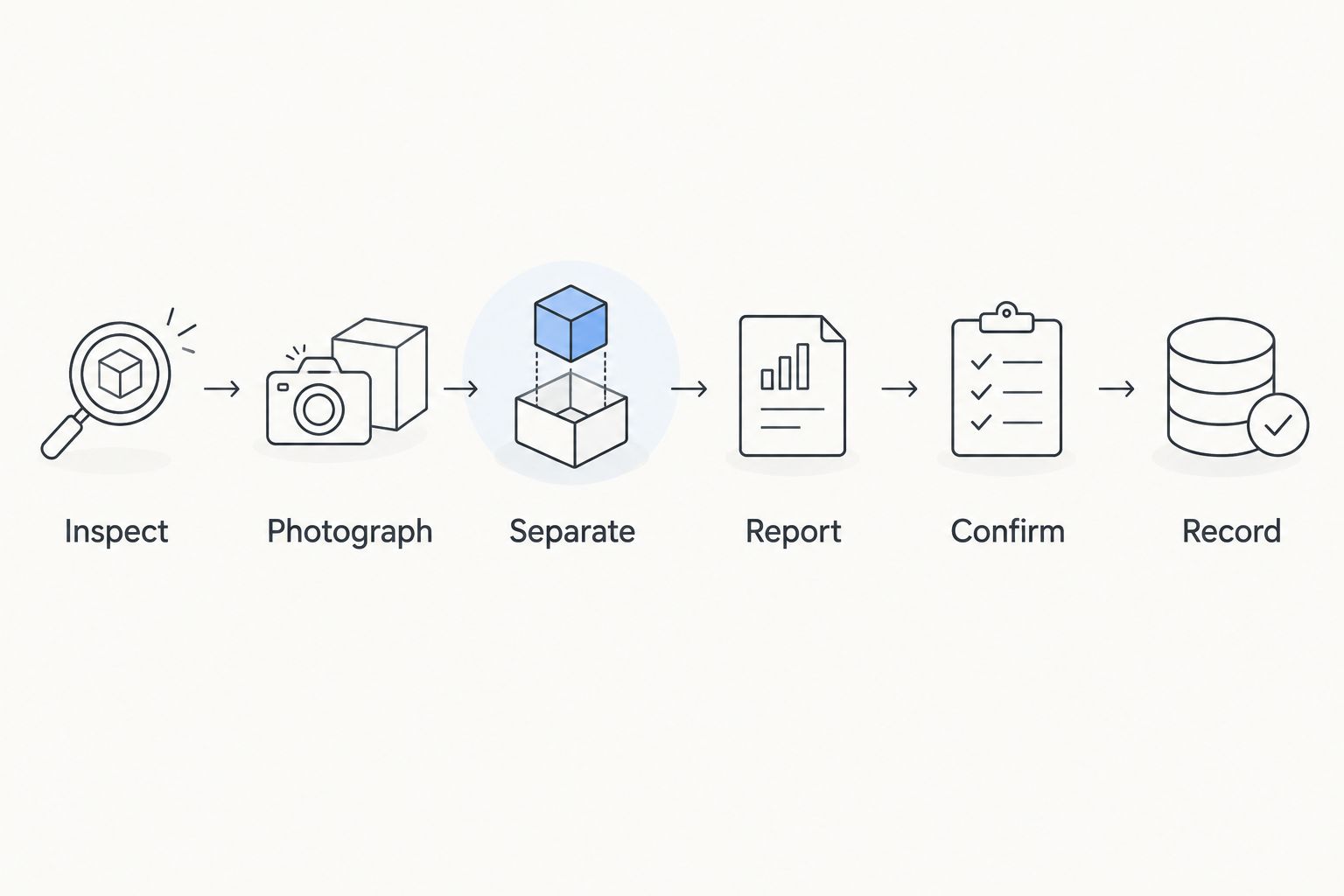
You can ask the seller to accept damaged wholesale blank hats for return. Obtain instructions before shipping: the seller needs to confirm how the affected merchandise should be handled. Use the following process to make your request clear and preserve the condition of the goods.
1. Inspect the hats before using or decorating them
Check the hats against the order confirmation and inspect the affected shipment before embroidery, printing, washing, steaming, or reshaping. Look at the crown, brim, seams, closures, and fabric. Describe what you observe rather than assigning a cause you cannot establish.
A split seam is a specific observation. Saying that the carrier caused it is a conclusion that requires separate evidence. If the carton is crushed or wet, document that condition alongside the hat damage without treating the connection as proven.
2. Photograph the goods and their packaging
Take an overview showing the shipment, then closer images of each distinct problem. Include the shipping carton, packing materials, and identifying information in the record you send privately to the seller. Keep customer and delivery details out of public posts.
Make the images easy to match to your written report. A close-up shows a torn panel; an overview shows which hat has that tear. Preserve the original image files rather than relying only on cropped or annotated copies.
3. Separate affected hats from usable inventory
Set damaged hats aside in their received condition. Keep the packaging while you wait for handling instructions, and avoid mixing affected units into retail stock, event bundles, or an embroidery batch. Record the quantity by style, color, and issue.
If only part of the shipment has a problem, distinguish the affected items from those that passed inspection. Do not describe an entire order as damaged when your inspection supports a narrower report. An accurate count keeps your request tied to identifiable merchandise.
4. Send an order-specific damage report
Include the order identifier, delivery date, affected item descriptions, quantities, photographs, and the outcome you are requesting. Use the seller’s designated reporting channel. For this client, the Contact Us page provides a place to start the conversation; it does not itself establish return approval.
Keep your first message factual and complete. Explain whether the hats remain blank and unused, whether packaging is retained, and whether the problem affects a scheduled project. Ask which reporting deadline applies to your order instead of assuming a standard period.
5. Confirm the remedy and shipping instructions
Ask whether the proposed resolution involves returning the hats, keeping them for inspection, or another written arrangement. Confirm the destination and any required reference information before you prepare a return package. Do not assume that the original shipping address is the return destination.
Also confirm who arranges and pays for return transport. If a replacement is proposed, ask for the applicable fulfillment details separately. Return approval and replacement timing are different questions, especially when your hats are intended for a dated event.
6. Keep the record until the issue is resolved
Save the seller’s response, any authorized shipping instructions, and the tracking information if a return is required. Keep the affected-item list with that correspondence. Compare the final resolution with the written agreement before closing your internal record.
For a 2026 order, retain the terms and correspondence associated with that transaction rather than relying on a later version of a website page. Your record should show the purchase, the reported condition, and the agreed next action.
Different hat problems need different reports
Describe the actual issue instead of using damaged as a catch-all. Physical damage, a shipping discrepancy, and dissatisfaction with fit call for different supporting information. The table below compares reporting approaches, not guaranteed return outcomes.
| Issue | Best for documenting | Useful evidence | Limitation |
|---|---|---|---|
| Visible physical damage | Torn fabric, broken closures, or split seams | Overall and close-up photographs | Images show condition, not necessarily its cause |
| Package damage | A crushed, punctured, or wet carton | Packaging and merchandise photographed together | A damaged carton alone does not establish damaged hats |
| Incorrect merchandise | A style, color, or quantity mismatch | Order confirmation beside received-item details | This is a fulfillment discrepancy, not automatically physical damage |
| Fit or appearance concern | A product that differs from your expectations | Listing details and a factual description | Preference alone does not establish a defect |
| Damage noticed after decoration | A problem found during or after production | Arrival records and decoration-stage notes | Later handling complicates the condition timeline |
Report separate problems separately. If a carton contains both an incorrect color and hats with broken closures, identify each issue and its affected quantity. Avoid a single total that leaves the seller guessing which items need attention.
Do not try to repair a questionable hat just to determine whether it is returnable. Ask for handling instructions first. A repair attempt changes the condition you are asking the seller to assess.
Why handling a damaged-hat request varies
A useful damage report addresses the circumstances of your order. These factors explain what to clarify; they are not a statement of any seller’s policy.
- Applicable terms: Check the damage-reporting procedure and return conditions attached to the purchase. Do not substitute an ordinary returns summary for specific damaged-goods instructions.
- Condition at discovery: State whether the hats were still packed, newly unpacked, worn, washed, or decorated when you found the problem.
- Scope of the issue: Identify affected quantities and variations. A single damaged style should not be confused with a shipment-wide problem.
- Packaging condition: Explain whether the carton or internal packing also shows damage, supported by photographs rather than assumptions.
- Requested outcome: State whether you want the seller to consider a return, replacement, or another resolution. A request is not an approval.
When reviewing a 2026 purchase, use the information tied to that order. A policy summary from another supplier, a marketplace discussion, or a previous transaction does not establish the terms of the current purchase.
Can I return only the damaged hats from a wholesale order?
Ask for approval to return only the affected hats, and provide their exact descriptions and quantities. Do not send back the full order unless the seller instructs you to do so. Explain whether the unaffected hats are still packed or have entered your normal inventory.
If you need to use the unaffected items, ask whether doing so changes the proposed resolution. Keep the damaged portion identifiable while that question is answered. This is especially useful when several colors or styles share a carton.
Should I embroider blank hats before the damage claim is resolved?
Pause embroidery on affected hats until you receive handling instructions. Adding stitching, patches, or printing changes the merchandise after arrival and makes the sequence of events harder to document.
Tell your decorator which items are on hold and which passed inspection. If a production deadline is approaching, communicate that date to the seller without treating it as a promise of replacement delivery. Update your 2026 project schedule only after you receive confirmed instructions.
Will the seller refund or replace damaged wholesale hats?
A refund or replacement requires confirmation from the seller under the applicable terms. Ask what resolution is being offered, which items it covers, and whether you must return anything before the next action occurs.
Do not interpret an acknowledgment of your message as approval. A response confirming receipt of photographs is different from an agreement to refund or replace merchandise. Keep the final arrangement in writing.
What should your first damage report include?
Build a report that someone can understand without searching through unrelated messages. Use a descriptive subject line identifying a damaged-hat order, then organize the details below it.
Include:
- Your order identifier and the purchaser’s contact details.
- The delivery date and the date you discovered the issue.
- The affected style, color, and quantity.
- A plain description of each problem.
- Photographs showing the hats and packaging.
- Whether the affected items remain unused and undecorated.
- The resolution you want the seller to consider.
- A request for the applicable reporting and return instructions.
End with a direct question about the next action. Ask whether you should retain the merchandise for inspection or prepare an authorized return. Avoid sending repeated messages with different counts; if your inspection changes the total, clearly identify the correction.
Before you place your next wholesale hat order
Wholesale For Everyone is best for wholesale hat buyers shopping for personal, business, or organizational use. It also offers printing and embroidery on selected products. Confirm that a particular hat supports your intended customization before planning production around it.
The practical benefit of ordering blank hats is that you can inspect the undecorated merchandise before adding your design. The limitation is that blank does not mean automatically returnable: eligibility still depends on the applicable terms and circumstances.
For your next 2026 purchase, ask these questions before checkout:
- Where should arrival damage be reported?
- What reporting deadline applies?
- What photographs or documents are needed?
- Must damaged merchandise remain available for inspection?
- Who provides instructions for any authorized return?
- How should you handle a partially affected order?
Save the answers with your purchase record. If hats are going directly to a decorator, arrange for an arrival inspection before production begins. Make responsibility for that check explicit rather than assuming someone else will do it.
FAQ
Can I return wholesale blank hats that arrive damaged?
You can request a return, but approval depends on the seller’s applicable terms and the circumstances. Photograph the damage and packaging, retain the affected merchandise, and obtain instructions before shipping anything back.
How long do I have to report damaged wholesale hats?
Check the reporting deadline attached to your order and contact the seller promptly. Do not assume a standard deadline applies to every wholesale purchase.
Do I need to keep the box if my hats arrived damaged?
Keep the carton and packing materials while you request handling instructions. Photograph their condition alongside the affected hats so your report documents both.
Can I wash or reshape damaged hats before returning them?
Leave affected hats in their received condition until the seller provides instructions. Washing, steaming, reshaping, or repairing them changes the condition being assessed.
Who pays shipping when wholesale hats arrive damaged?
Confirm return-shipping responsibility with the seller before sending the hats. Damage alone does not confirm that a prepaid label will be provided.
Can I return hats after my embroiderer adds a logo?
Ask the seller how decoration affects the request; do not assume the hats remain eligible for return. Provide any arrival photographs and explain when the damage was discovered.
Does Wholesale For Everyone automatically replace damaged hats?
Obtain order-specific confirmation rather than assume an automatic replacement. Submit the affected-item details and photographs, then ask which resolution and handling instructions apply.
One last thing
Photograph a representative undamaged hat alongside a damaged one when the difference is difficult to explain. Use the same angle and lighting, and identify both accurately. The comparison gives your description context without requiring you to diagnose how the damage occurred.
Make arrival inspection a receiving task, not a last-minute production check. Finding a problem before decoration gives you a clearer record of what arrived and what happened afterward.
Related guides
- Best wholesale blank hats for custom embroidery
- From artwork file to embroidered caps
- Can you return custom bandanas if the design comes out wrong?