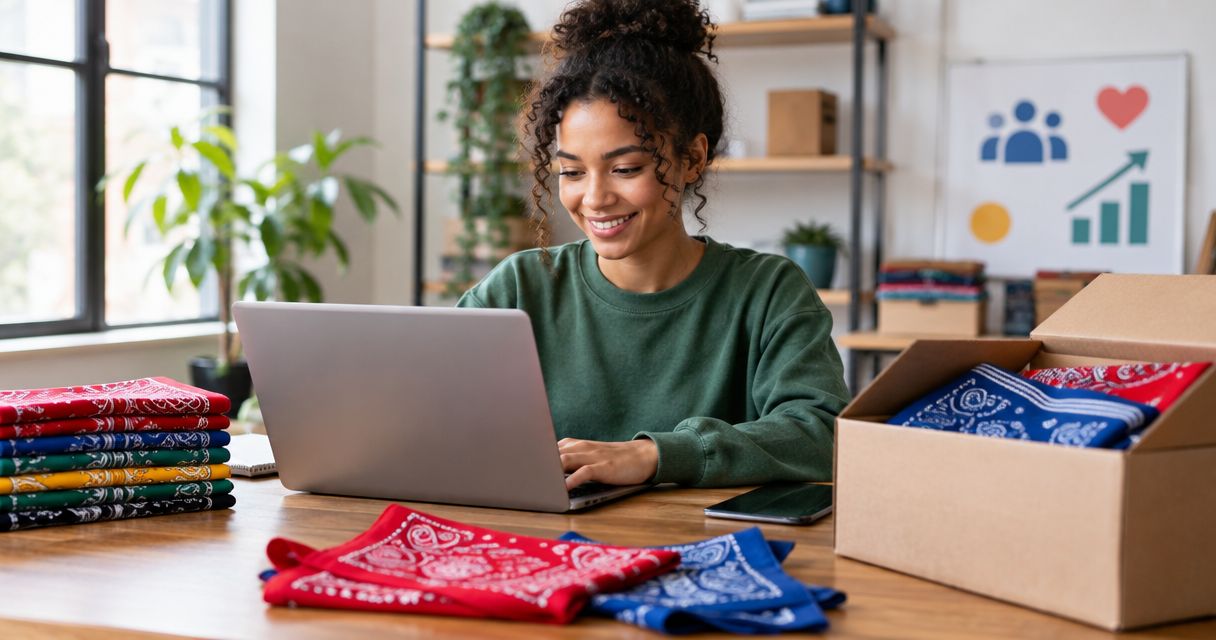
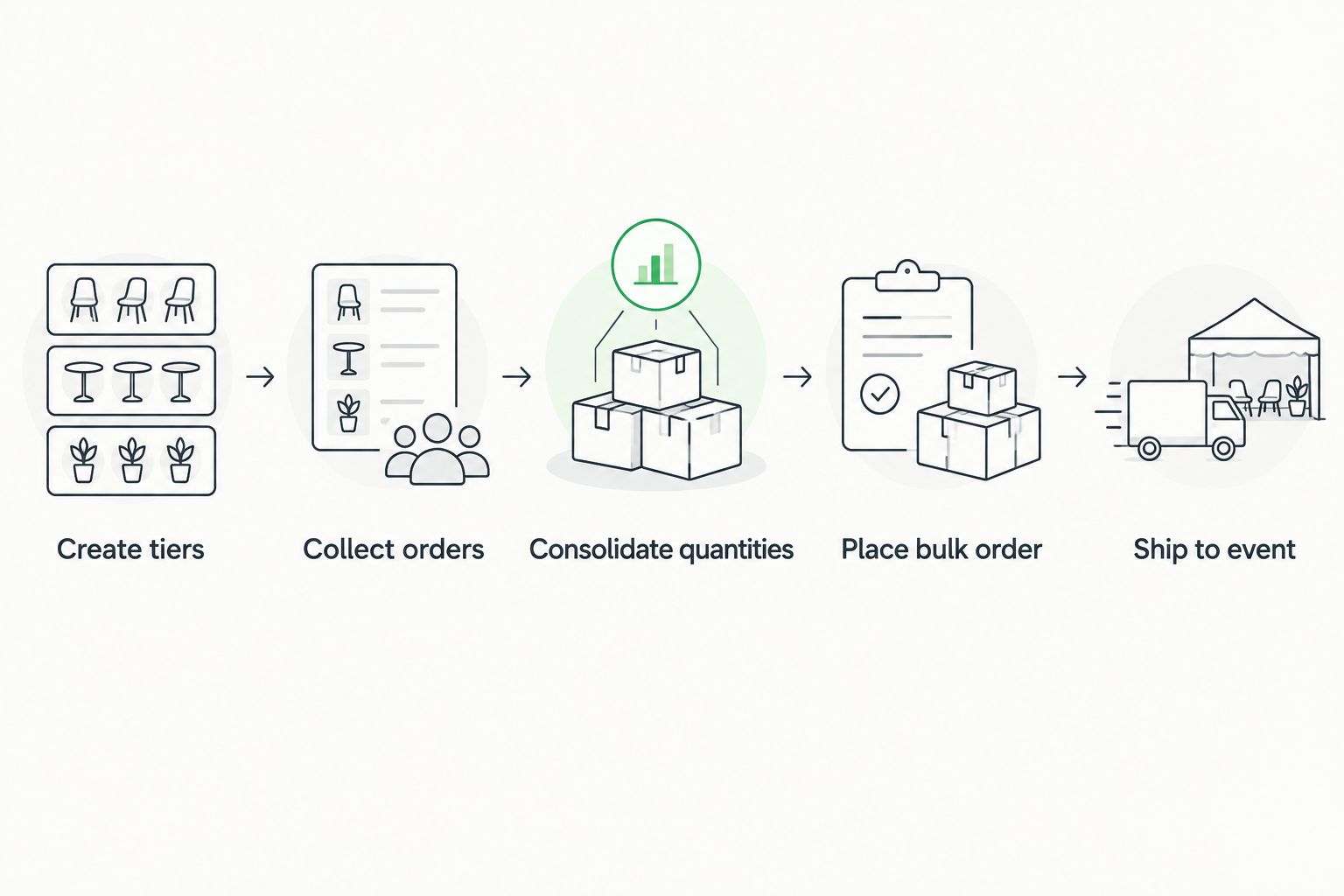
Running a fundraiser with bandanas as the reward item usually breaks down at the handoff between your campaign page and your supplier — donors pick colors and sizes on one platform, someone manually re-types every choice into an order form, and by the time the tally is done half the selections don't match what actually shipped. Instead of chasing donor picks in three different inboxes, set up your campaign tiers to map directly onto bandana bundle sizes, consolidate every selection into one sheet, and place a single bulk order with Wholesale For Everyone before your event date arrives.
- Map each fundraising campaign tier to a specific bandana bundle size before donors start giving.
- Consolidate every donor color and size pick into one sheet, then place a single bulk order instead of several small ones.
- Build a 2-3 week fulfillment buffer between your campaign’s close date and your event day.
- Nonprofits ordering in bulk should open a tax-exempt account before checkout, not after the invoice lands.
- Route every custom logo through one artwork approval step so the full run prints correctly the first time.
Why this matters
A bandana fundraiser only works financially if the bulk order lines up with what donors actually paid for. Order too few of a popular color and you're refunding donors mid-event; order a scattered mix across a dozen small purchases and you lose the per-unit pricing that makes bulk buying worth it in the first place. The fix isn't a fancier campaign page — it's a workflow that turns donor selections into one clean purchase order for your bandana supplier. Wholesale bandanas built for nonprofit fundraisers already come sized for this kind of bulk-to-event pipeline, which is why the ordering side deserves as much setup time as the campaign copy.
Before you start
- Admin access to your fundraising platform (Givebutter, Classy, GoFundMe Charity, or a Google Form paired with a payment link) so you can create and edit reward tiers.
- Your logo or design file ready in a print-usable format, plus a decision on which colors you're offering — donors can't pick from options that don't exist yet.
- The gotcha: most campaign platforms cap how many custom fields or reward tiers you can add per page. Decide your bandana bundle sizes and color options before building the campaign, not after donors start giving — rebuilding tiers mid-campaign resets some platforms' donor history.
Set up your fundraising campaign tiers
- In your fundraising platform, create a Reward or Perk entry for each bandana bundle you're offering — a single bandana, a 5-pack, a 10-pack.
- Label each tier plainly, e.g. "1 Bandana – Supporter Level" or "5-Pack – Team Bundle," so donors self-select the right quantity without needing to ask.
- Add a Custom Question or Donor Message field under each tier asking for color and, if relevant, size preference.
- Set a cap on how many units of each tier can be claimed, matched to what you're realistically able to order in bulk by your close date.
Expected result: your campaign page shows distinct, clearly priced bandana tiers, and every donor who selects one leaves behind a color choice you can act on.
Configure order intake for bulk fulfillment
- Once donations start coming in, export your donor list as a CSV weekly rather than checking it manually per donation.
- Filter the export by tier and color choice so you have running subtotals — this is the number you'll use to place the actual order.
- Flag any donor entries missing a color selection and follow up directly; don't guess on their behalf.
- Set a hard cutoff date for the campaign that gives you at least two to three weeks before the event to place and receive the bulk order.
Expected result: one consolidated tally by color and quantity, ready to become a single purchase order instead of a dozen scattered ones.
Route the consolidated order to Wholesale For Everyone
- Take your final tally and place one bulk order through Wholesale For Everyone rather than multiple smaller checkouts — bulk pricing improves as quantity per color goes up.
- If you're ordering as a registered nonprofit, get your tax-exempt account set up for wholesale bulk orders before checkout so the exemption applies to the invoice directly, not as a post-purchase refund request.
- Submit your logo or artwork file with the order if you're customizing the bandanas for the campaign, and confirm the proof before production starts.
- Save the order confirmation and expected ship date, and cross-check it against your event date with the buffer you built into step 4 of the intake stage.
Expected result: a single invoice, one shipment, and quantities that match exactly what donors selected — no leftover stock in colors nobody picked.
Recurring campaigns: the restock variant
Schools, teams, and annual fundraisers that run the same bandana campaign year after year don't need to rebuild this from scratch each time. Instead of recreating tiers cold every season, clone last year's campaign structure and update only the close date and color options.
- Keep a running log of which colors sold out fastest in prior years — that data decides your reorder ratio, not a guess.
- If your group runs multiple smaller events off one bulk order (a team fundraiser plus a booster sale, for example), split the consolidated tally by event before placing separate shipments, since combining them into one delivery date usually means one group waits.
- Re-confirm your tax-exempt account status each cycle if your organization's registration or EIN changed.
Troubleshooting
- Donor picks a color that's already capped out on the tier. Set the tier's claim limit to match your minimum bulk order comfortably, and close that specific color option once it's full rather than overselling and refunding later.
- Consolidated order total is a mix of only 2-3 units per color. Combine adjacent color choices into fewer tier options next campaign — spreading demand across too many colors kills your per-unit bulk pricing.
- Order arrives after the event date. This almost always traces back to skipping the two-to-three-week buffer between campaign close and event day — build the buffer into the campaign timeline itself, not as an afterthought.
- Logo file gets rejected or delays production. Submit your artwork before the campaign goes live, not after donations close. The artwork-to-finished-bandana workflow covers the file formats and approval steps that avoid this exact delay.
- Nonprofit invoice doesn't reflect the tax exemption. The exemption has to be applied to the account before checkout — a refund request after the fact is slower and not guaranteed by every payment processor.
Customize your workflow
Once the core pipeline is running, a few adjustments make it hold up across bigger campaigns. If your group is deciding how many tiers to price out in the first place, check how much custom bandanas cost in 2026 before locking in reward tier pricing, so your suggested donation amounts actually cover the bulk cost per unit. Larger campaigns with multiple color runs benefit from separating the artwork approval step entirely from the order placement step, so a slow proof turnaround on one design doesn't hold up bandanas that are ready to ship.
Ready to place your fundraiser order?
Browse bulk bandana options before your campaign closes.
FAQ
What’s the best way to connect a fundraising campaign page to a bulk bandana order?
Map each campaign reward tier to a specific bandana bundle size and color, then consolidate every donor’s selection into one spreadsheet before placing a single bulk order. Splitting the order into many small purchases loses bulk pricing and makes fulfillment harder to track.
How far in advance should I close my campaign before the event?
Build in at least two to three weeks between your campaign’s close date and the event so the bulk order has time to be placed, produced if customized, and shipped. Cutting that buffer close is the most common reason bandanas arrive after the event.
Do nonprofits need a tax-exempt account before ordering bulk bandanas?
Yes — setting up the tax exemption before checkout applies it directly to the invoice, rather than requiring a refund request afterward. Most wholesale suppliers process it faster this way than a post-purchase adjustment.
Should each donor pick their own bandana color on the campaign page?
Yes, using a custom question or donor message field tied to each reward tier. Collecting the choice at the point of donation avoids a separate follow-up round after the campaign closes.
How many bandana color options should a fundraiser tier offer?
Fewer options generally perform better for bulk pricing — spreading donations across too many colors leaves you with small, scattered quantities per color instead of one strong bulk order.
What happens if a donor doesn’t specify a size or color?
Flag that entry during your weekly export review and follow up directly rather than guessing. Leaving it blank on the purchase order risks shipping the wrong item to that donor.
Can the same campaign structure be reused for a recurring annual fundraiser?
Yes — clone the prior campaign’s tier structure and update only the close date and color options, using last year’s fastest-selling colors to set this year’s quantities.
Is it better to place one large bulk order or several smaller ones for a fundraiser?
One consolidated bulk order almost always wins on per-unit pricing and shipping simplicity compared to several smaller purchases spread across the campaign’s run.
One last thing
The campaigns that run smoothly aren't the ones with the flashiest page design — they're the ones where someone decided the color lineup and tier sizes before a single donation came in. Lock that decision early in 2026 and the rest of the workflow, from CSV export to bulk order, takes care of itself.
Related guides