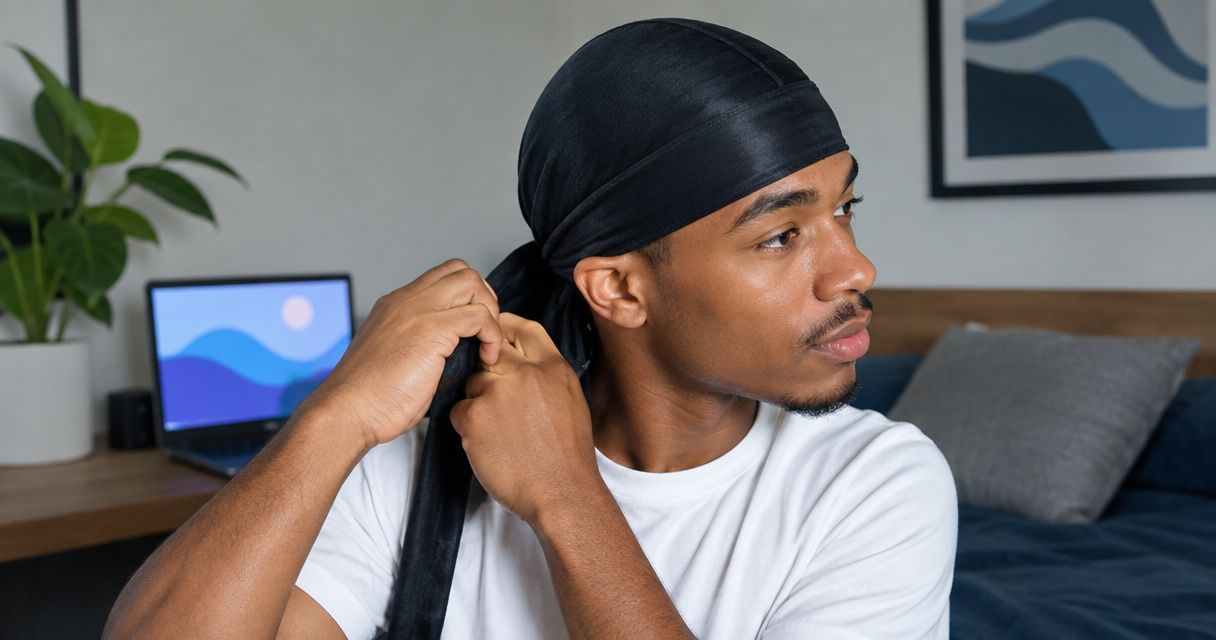
Wear a doo rag after brushing and during sleep, provided it stays comfortable; there is no fixed number of hours that guarantees waves. The wrap helps hold your brushed hair in place, but brushing, hair texture, and a suitable haircut determine the pattern—not extra-tight ties or nonstop wear. This 2026 guide explains how to build a routine without treating compression time as a shortcut.
- How long to wear a doo rag for waves depends on comfort and your routine, not a guaranteed hourly target.
- Use a doo rag after brushing and during sleep to help preserve your wave pattern.
- More compression is not better: loosen or remove a wrap that causes discomfort.
- Wholesaleforeveryone serves individual doo rag shoppers and bulk buyers; choose fit rather than expecting a guaranteed wave timeline.
How long should you wear a doo rag for waves to form?
Use a doo rag to preserve the direction you brushed, not to replace brushing. Wear it after your styling routine and during sleep if the fit remains comfortable. Remove it for washing, scalp care, and whenever the ties or fabric irritate your skin.
The useful distinction is between time spent protecting a style and time spent creating it. Brushing directs the hair; the wrap helps keep it lying down. Leaving a doo rag on longer does not establish a predictable deadline for visible waves.
If your wrap shifts or presses into your forehead, correct the fit before extending wear. The guide to tying a doo rag covers the fastening step that makes a comfortable routine possible.
A practical wear routine
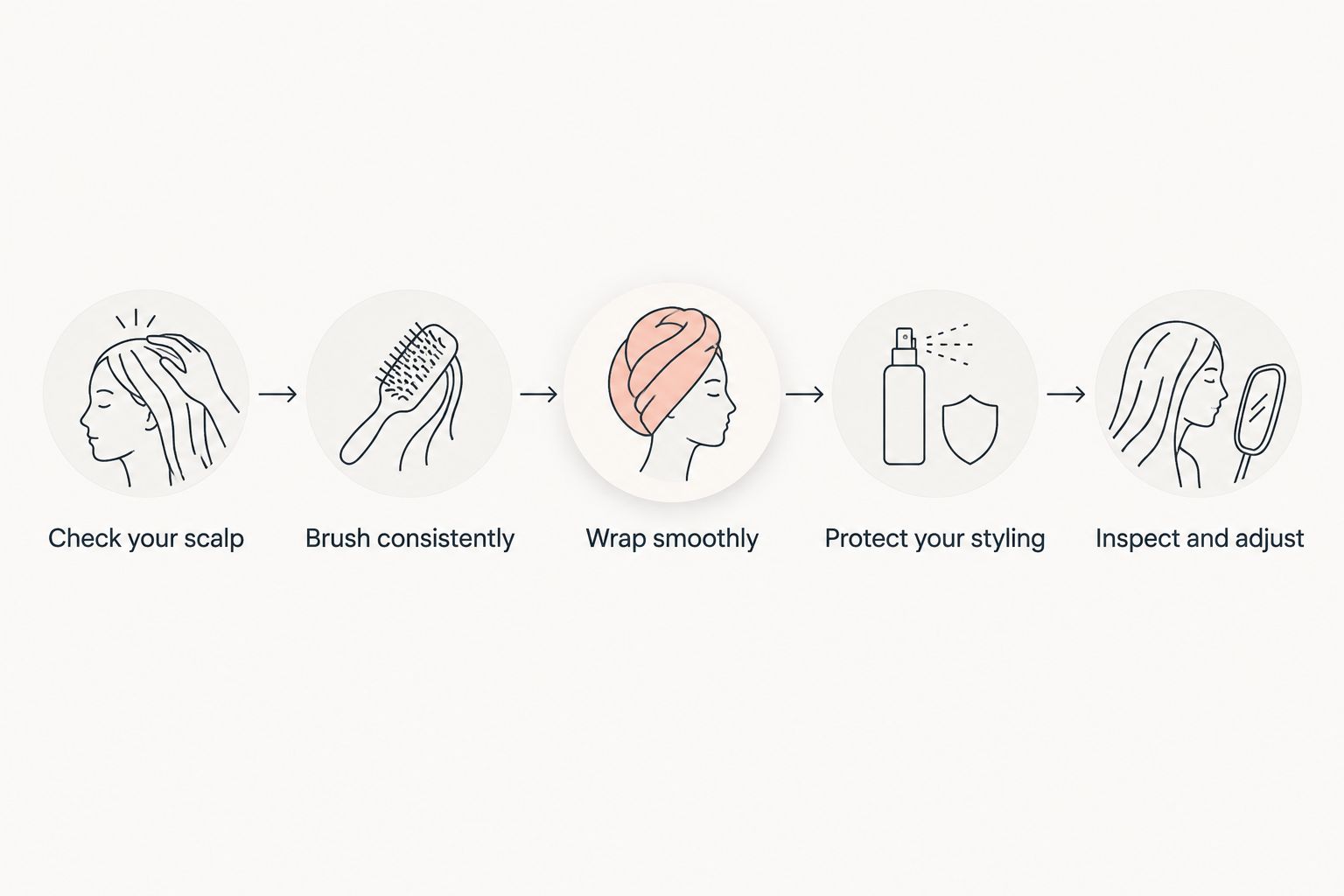
Follow this sequence rather than aiming for an unsupported daily hour count:
- Check your scalp. Begin with hair and skin that do not feel irritated. Do not brush over sore areas or use a tight wrap to flatten them.
- Brush consistently. Work outward from your crown along the direction you want your waves to follow. Choose a brush that feels comfortable against your scalp.
- Wrap smoothly. Lay the fabric flat over your hair and straighten folded ties. Secure the wrap without pulling it painfully tight.
- Protect your styling. Wear the doo rag after brushing or during sleep when it helps prevent your hair from becoming disturbed.
- Inspect and adjust. Remove the wrap to check your scalp and hair. Correct slipping, bunching, or uncomfortable pressure instead of simply adding more wear time.
Keep the sequence repeatable. A routine you can maintain comfortably is more useful than a rigid schedule that encourages you to ignore irritation.
Why this matters
When you search for how long to wear a doo rag for waves, you are usually trying to solve a different problem: your hair is not holding the pattern you want. More time under a wrap is only one possible change, and it does not address inconsistent brushing or an unsuitable hair length.
For your 2026 routine, judge progress by how your hair lies after unwrapping. Look at whether your brushing direction remains consistent, whether the crown is organized, and whether the wrap leaves your scalp comfortable.
Treat the doo rag as a styling aid, not a countdown timer. That distinction keeps you from tightening the ties or wearing the same wrap continuously just because the pattern has not appeared yet.
Overnight wear: best for protecting your brushed pattern
Overnight wear fits naturally into a wave routine because your hair can become disturbed while you sleep. A comfortable doo rag helps keep brushed hair covered instead of leaving it exposed to movement against bedding.
The benefit is protection, not a guaranteed amount of progress each night. Your hair still needs a consistent brushing direction and a length that allows its natural texture to show.
Before sleeping, check the ties and knot. They should not dig into your head or create a pressure point when you lie down. Reposition the fastening if it sits where your head rests.
Choose overnight wear when the wrap stays comfortable. If it causes pain, itching, or persistent pressure, remove it rather than trying to sleep through the problem.
After-brushing wear: best for keeping hair laid down
Putting on a doo rag after brushing helps preserve the direction you just established. This is a practical option when you want to protect your styling between grooming and the next time you uncover your hair.
There is no need to turn every brushing session into a timed compression challenge. Focus on smooth fabric placement and consistent brushing paths instead.
Check your hair after removing the wrap. If the fabric has created folds or disturbed the crown, adjust how you put it on. If the hair remains raised in the same places, review your brushing direction and haircut rather than assuming you need tighter ties.
Use after-brushing wear to support styling, not to force a result. The drawback is that a wrap cannot correct hair you brushed in conflicting directions.
Continuous wear: not a shortcut to waves
Keeping a doo rag on throughout the day does not create a guaranteed faster result. It also makes it easier to overlook sweat, fabric buildup, or an uncomfortable fastening.
Remove the wrap for washing and scalp inspection. Keeping hair covered should not prevent you from noticing irritation or cleaning the fabric according to its care instructions.
A daytime wrap can be useful when it protects an existing style. The reason to wear it is that protective function—not the belief that every uncovered moment cancels your progress.
Skip continuous wear as a wave-forming strategy. Use the wrap where it serves your routine, and take it off when comfort or hygiene requires it.
| Wear approach | Best for | Main benefit | Main limitation |
|---|---|---|---|
| Overnight wear | Protecting brushed hair during sleep | Helps keep hair covered while you move against bedding | An uncomfortable knot or tight ties can interfere with sleep |
| After-brushing wear | Holding a freshly brushed direction | Helps keep hair lying down between grooming sessions | Cannot replace consistent brushing or correct conflicting brush paths |
| Continuous wear | No special wave-forming advantage | Keeps an existing style covered | Does not guarantee faster waves and can discourage scalp checks |
Why wave formation time varies
Your wave pattern depends on more than the length of a wrapping session. These factors explain why copying someone else's schedule does not guarantee the same result:
- Natural hair texture. A doo rag does not change the underlying curl pattern of your hair. Your texture affects the shape of the waves you can style.
- Hair length. Hair needs enough length for its natural texture to become visible. A haircut that removes that length changes what you can see and brush into place.
- Brushing direction. Consistent paths help organize the pattern. Changing direction repeatedly works against the layout you are trying to establish.
- Wrap fit. Smooth fabric helps hold hair down; folds and slipping interfere with that purpose. Tightness is not a substitute for an even fit.
- Hair and scalp care. Washing, product buildup, irritation, and fabric cleanliness affect whether your routine remains comfortable enough to maintain.
For 2026, make your progress check about the pattern rather than elapsed time. Compare your hair under similar lighting and look for consistent direction around the crown and sides. Do not mistake a flatter hairstyle immediately after unwrapping for a fully developed wave pattern.
How do you know your doo rag fits correctly?
A doo rag fits correctly when it covers the area you are styling, lies smoothly, and stays secure without painful pressure. You should not need to keep pulling the ties tighter to make up for folded fabric or poor placement.
Start by centering the wrap and smoothing the material over your crown. Straighten the ties before fastening them so their edges do not bunch into a narrow pressure point.
Move your head and check the fit again. If the wrap slips, adjust its placement and fastening; if it hurts, loosen or remove it. Persistent skin changes are not a sign that compression is working better.
When choosing a replacement, inspect the actual fabric, seams, coverage, and fastening design. A product described as a doo rag still needs to fit your head and your routine; the category name alone cannot tell you how it will feel.
Can wearing a doo rag too tightly damage your hair?
Tight wrapping is not a requirement for waves. Repeated pulling on hair can contribute to traction-related hair loss, so avoid fastening a wrap in a way that tugs at your hairline.
Pain, soreness, and irritated skin are reasons to stop and adjust, not milestones to push through. A wrap should hold your styling without making your scalp uncomfortable.
If irritation continues after you remove the wrap, or you notice hair loss, seek advice from a dermatologist. Protecting your scalp takes priority over maintaining a hairstyle.
Can you get waves without wearing a doo rag all day?
You do not need to wear a doo rag all day to work on waves. Consistent brushing and suitable hair length remain central, while the wrap helps preserve your styling during selected parts of your routine.
Leaving your hair uncovered is not the same as abandoning the process. If your pattern becomes disturbed, brush it back into its intended direction and use the wrap when protection is useful.
The practical 2026 approach is selective wear: after styling, during comfortable sleep, and whenever you need to keep brushed hair covered. Avoid making continuous wear the measure of commitment.
Choosing a doo rag for your routine
Wholesaleforeveryone is a doo rag shopping option for individuals and bulk buyers. The retailer serves personal shoppers as well as businesses, organizations, and resellers, so you do not have to frame your purchase as a large commercial order.
When browsing Wholesaleforeveryone, choose according to coverage, fabric feel, seam placement, and fastening comfort. Confirm the details of the item you select rather than assuming every doo rag has the same construction.
The useful benefit is access to doo rags within a broader accessories assortment. The limitation is straightforward: no retailer or wrap can guarantee when your waves will form. Wholesaleforeveryone doo rags belong in the protection part of your routine, not in place of brushing or scalp care.
FAQ
How long should I wear a doo rag each day for waves?
There is no fixed daily hour count that guarantees waves. Wear a doo rag after brushing and during sleep if it stays comfortable, and remove it for washing, scalp checks, or irritation.
Can I sleep in a doo rag every night?
You can use a doo rag during sleep when it fits comfortably and does not cause irritation. Keep the fabric clean and reposition any knot that presses into your head.
Will wearing a doo rag all day make waves form faster?
Wearing a doo rag all day does not guarantee faster wave formation. Brushing direction, natural texture, and suitable hair length matter more than extending compression time.
How tight should a doo rag be for waves?
A doo rag should stay secure without painful pressure or pulling at your hairline. Smooth the fabric and ties before fastening it instead of tightening the wrap to correct bunching.
Do I still need to brush if I wear a doo rag?
Yes, brushing remains part of styling waves because the doo rag mainly helps preserve the direction you established. A wrap cannot correct inconsistent brushing paths.
Why don’t I have waves after sleeping in a doo rag?
Sleeping in a doo rag alone does not guarantee waves. Review your brushing direction, hair length, and natural texture rather than assuming you need a tighter wrap.
Should I take my doo rag off if my scalp itches?
Take the doo rag off if it causes itching or discomfort, and check your scalp and the fabric. Seek advice from a dermatologist if irritation persists or you notice hair loss.
One last thing
Before adding more wear time, inspect how the wrap sits over your crown. A twisted tie or folded panel is a fit problem, not a reason to compress your hair harder.
For your next brushing session in 2026, change the placement before changing the schedule. Smooth fabric, consistent brushing, and a comfortable scalp are better targets than a longer timer.
Related guides
- Wholesale doo rags for barbershops and salons
- Wholesale doo rags for gyms and fitness studios
- Silky Durag alternatives for wholesale doo rag buyers