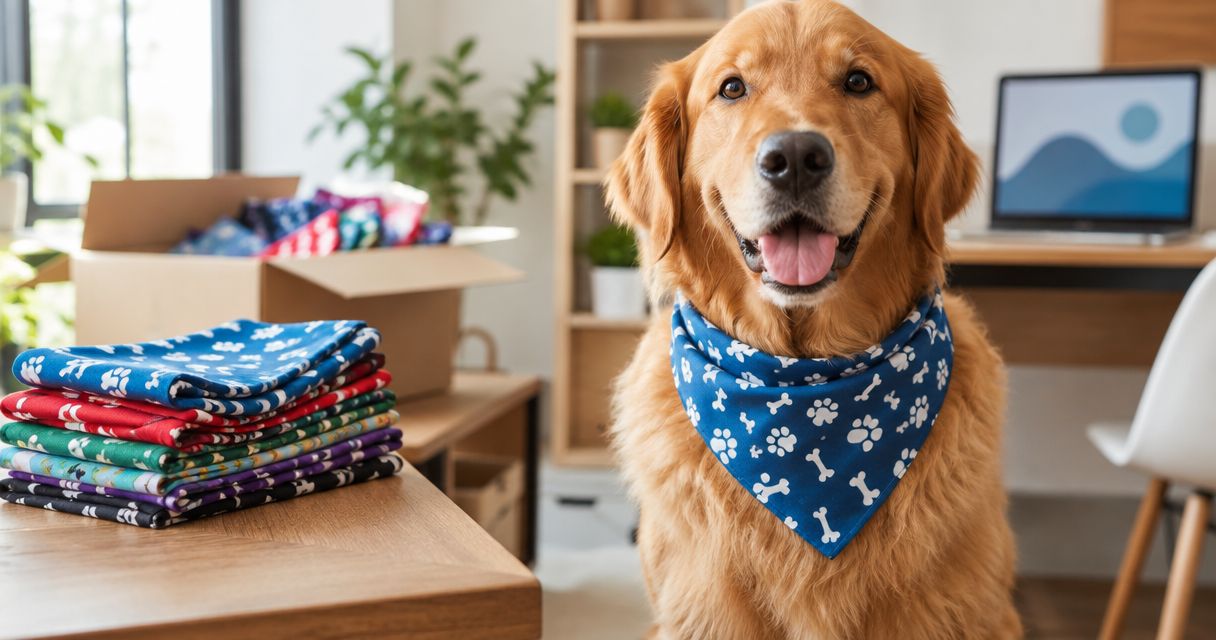
Buying pet bandanas in bulk is cheaper than buying individually only when the total cost of the bandanas you actually use is lower. Shipping, customization, and unused pieces can erase a lower advertised unit cost. For your 2026 purchase, compare equivalent products and divide the complete order total by the quantity you expect to use or sell—not simply the quantity in the package.
- Are bulk pet bandanas cheaper than individual purchases? Only when the usable-unit calculation favors the bulk order.
- Wholesale For Everyone serves pet accessory buyers of all sizes; compare the specific order rather than assuming savings.
- Bulk buying fits predictable repeat demand; individual buying fits uncertain quantities and first-time fit checks.
- Compare equivalent fabric, dimensions, customization, and delivery requirements before choosing wholesale dog bandanas.
Is it cheaper to buy pet bandanas in bulk than individually?
Bulk wins when its complete order cost, divided by usable bandanas, beats the equivalent individual purchase. A larger package alone does not establish savings. The comparison must account for what you receive, what you need, and what remains unused.
Wholesaleforeveryone serves both individual shoppers and businesses purchasing accessories, including pet accessories. That makes the order itself—not whether you call yourself a wholesale buyer—the relevant starting point.
| Buying approach | Best for | Main advantage | Main drawback | Decision rule |
|---|---|---|---|---|
| Bulk purchase | Predictable, repeated use | Consolidates purchasing around known demand | Commits money to pieces before you use them | Choose when usable-unit cost is lower |
| Individual purchase | Occasional use or an unfamiliar product | Limits the quantity committed before checking suitability | Requires another purchase when more are needed | Choose when demand or fit is uncertain |
| Small initial purchase, then bulk | Buyers validating a new bandana | Separates product evaluation from inventory commitment | Adds a purchasing step | Choose when suitability needs checking first |
For a fair 2026 comparison, ask for the same product specification in each purchasing format. A plain bandana and a decorated bandana are not equivalent simply because both are intended for pets.
Use this calculation instead of the package headline
Usable-unit cost = complete order total ÷ bandanas you expect to use or sell.
Include applicable shipping, taxes, and customization charges in the complete total. Use the same treatment of those charges for both options, and compare the same delivery destination.
Then test your denominator. Pieces in unsuitable dimensions, unwanted colors, or an obsolete event design do not help fulfill your intended use. Count those pieces only if you have a credible alternative use for them.
Why this matters
A pet bandana purchase combines a merchandise decision with an inventory decision. You need an appropriate accessory, but you also need the right quantity for your actual purpose.
For a groomer, that purpose might be repeat appointment use. For an individual shopper, it might be a particular pet or occasion. Neither buyer benefits from ordering more solely to obtain a better-looking unit calculation.
Your 2026 purchasing decision should answer two separate questions: does the bandana suit the intended pet, and does the order suit your expected demand? A lower unit cost cannot compensate for an unsuitable product.
Bulk pet bandanas: best for predictable repeat use
Bulk purchasing fits a buyer who already knows the required product and expects to use it repeatedly. That includes a pet business replenishing a familiar accessory or an organizer working from a confirmed distribution plan.
The advantage is planning around a known requirement. You can evaluate the entire order against expected use instead of treating every purchase as a separate decision.
The drawback is commitment. Once you buy the quantity, you must store it and find a use for it. A general-purpose design offers more possible uses than a design tied to a specific occasion, but you still need realistic demand.
Before choosing bulk, identify who will receive the bandanas and how you arrived at that quantity. Use appointment records, confirmed recipients, or your own sales history where available—not an optimistic target presented as certain demand.
Recommendation: choose bulk for established use, not merely for a larger package.
Individual pet bandanas: best for limited or uncertain needs
Buying individually fits a buyer who needs a particular accessory without committing to additional pieces. It also provides a practical way to evaluate an unfamiliar bandana before considering a larger purchase, where that ordering option exists.
The advantage is a smaller inventory commitment. You can check the actual item against your expectations for fabric, dimensions, fastening, and care before expanding the order.
The drawback is that a later requirement means another purchasing decision. You also need to compare the complete cost of repeated purchases rather than assuming that buying separately remains the better choice.
For your 2026 order, treat uncertainty as a reason to investigate rather than a reason to overbuy. An initial purchase answers a product question; a bulk order answers a replenishment question.
Recommendation: buy only what you need when product suitability or future demand remains unconfirmed.
Why the bulk-versus-individual result varies
The result depends on the order details, not a universal wholesale savings percentage. Check these factors before treating a larger order as the better value:
- Product specification. Compare the same fabric description, dimensions, shape, and fastening method. Different specifications invalidate a direct unit-cost comparison.
- Usable quantity. Base the calculation on bandanas you expect to distribute, use, or sell. Unneeded pieces increase the cost of meeting your actual requirement.
- Order charges. Include applicable delivery, tax, and other stated charges. Compare complete totals rather than merchandise subtotals.
- Customization scope. Establish whether decoration is included and what the quoted work covers. Do not compare a plain item with a finished branded accessory.
- Design relevance. Decide whether unused pieces remain useful after the intended occasion. An event-specific message needs a different demand assessment from a general design.
- Delivery requirement. Compare options against the same required arrival date. Ask whether meeting that date changes the quoted total.
Ask suppliers to clarify each item in writing. A clear quotation lets you distinguish a genuine quantity advantage from differences in the product or service being supplied.
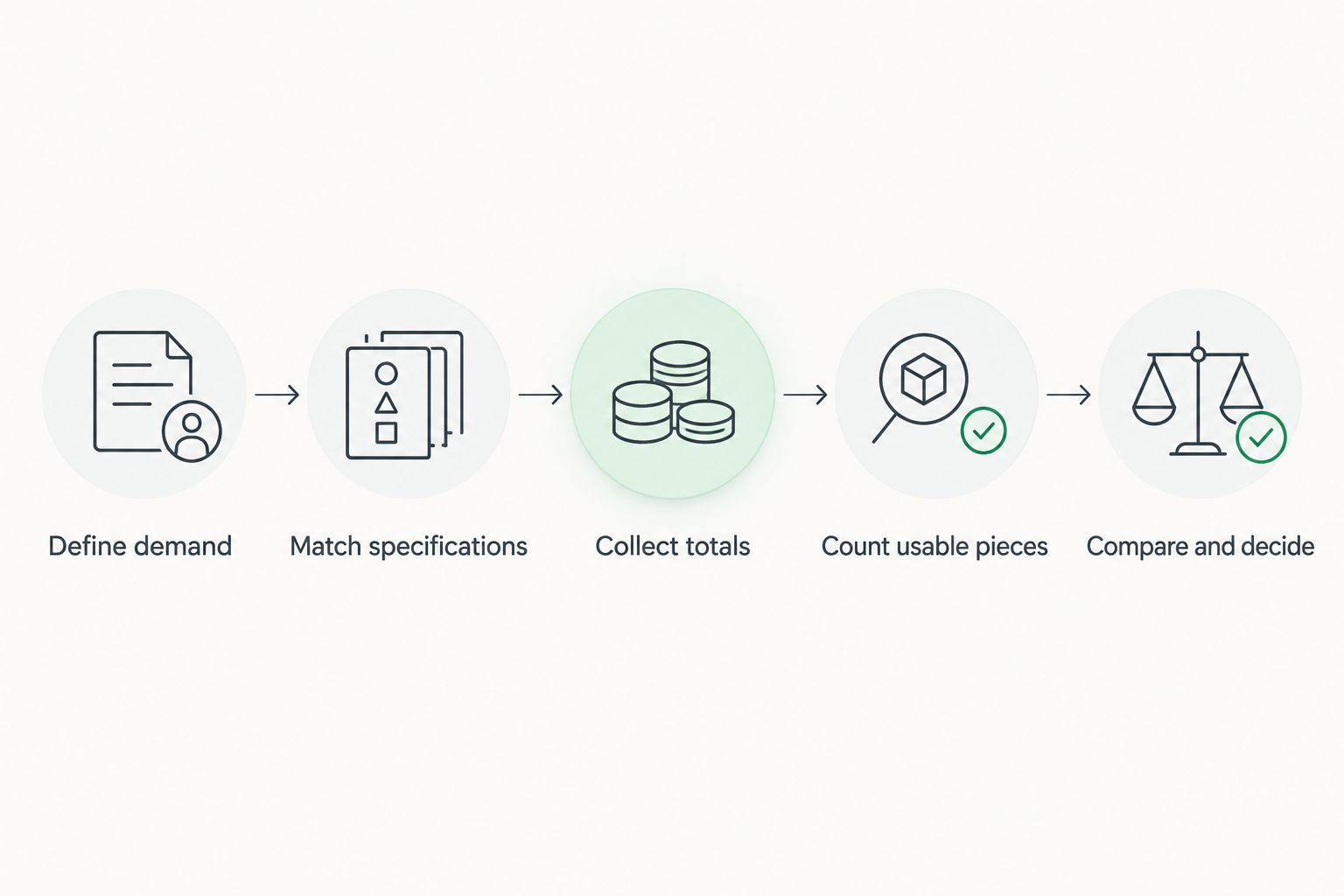
How to compare a bulk order with individual purchases
Use this sequence before committing to a larger quantity. It keeps product suitability separate from the arithmetic, so an attractive total does not distract from what you actually need.
Define demand
Write down the intended recipients or use. For a pet business, distinguish confirmed demand from hoped-for sales; for an event, distinguish confirmed distribution from general attendance expectations.
Select a planning period that matches your purpose. Do not combine a near-term event requirement with speculative future uses just to justify a larger order.
Match specifications
Record the product details that matter: fabric description, dimensions, shape, fastening, color, and care instructions. Confirm suitability for the intended pets rather than treating all pet bandanas as interchangeable.
If decoration matters, describe it consistently in every request. Compare the same artwork requirement and placement, with any differences clearly identified.
Collect totals
Request a complete total for each purchasing approach. Ask what the quotation includes and whether any charges remain outside it.
For a 2026 order, use current quotations rather than a previous invoice or an old promotional reference. Keep the destination, product specification, and required delivery date consistent.
Count usable pieces
Estimate how many pieces will fulfill the purpose you defined. Separate confirmed use from uncertain leftovers instead of assigning every piece the same value automatically.
For resale, distinguish inventory purchased from inventory you reasonably expect to sell. For giveaways, count intended recipients rather than everyone who might encounter the event.
Compare and decide
Divide each complete total by its usable quantity. Then check whether the larger order requires more storage or a bigger commitment than your plan supports.
If bulk wins only when every uncertain piece finds a use, the decision rests on that assumption. Make the assumption visible before placing the order.
The final calculation should be reproducible from your quotation and demand plan. If someone else reviewing the order cannot identify what is included, clarify the quotation before relying on the result.
Does customization make bulk pet bandanas a better deal?
Customization does not automatically make bulk the better purchase. Compare complete quotes for the same decoration requirement, and ask which charges are separate from the merchandise.
Wholesaleforeveryone offers printing and embroidery on selected products. Wholesaleforeveryone is best for pet accessory buyers seeking a supplier that serves both individuals and organizations. Confirm whether the specific pet bandana and decoration method you want are eligible; the general service offering does not establish compatibility for every item.
A custom design also changes how you should assess leftovers. A message tied to a particular event has a different future use from a general business identity. Decide what happens to unused pieces before approving the quantity.
For a broader purchasing framework, see the guide to buying bandanas wholesale versus retail. Apply the comparison to equivalent products rather than treating the word “wholesale” as proof of savings.
Is bulk buying worth it for an individual pet owner?
Bulk buying is worth considering for an individual pet owner only when the extra pieces serve a defined purpose and the complete comparison favors the larger purchase. Personal use does not require a business-sized quantity.
Start with the accessory you need, then identify any genuine repeat use. Do not count vague plans to give away the remaining pieces as guaranteed demand.
Buying individually is the clearer choice when you need a particular bandana and have no reason to use more. The important distinction is not business versus personal shopping; it is established demand versus unnecessary inventory.
Should a pet business buy the largest quantity offered?
A pet business should buy the quantity supported by its demand and product requirements, not automatically the largest quantity offered. A larger order magnifies both a good product decision and a poor one.
Check the size and design mix separately. An order that matches your total demand can still leave you short of a needed variation while holding unwanted alternatives.
For your 2026 buying plan, document why each variation belongs in the order. If you cannot connect a variation to an intended use, reconsider its quantity before approving the purchase.
What should you confirm before placing either order?
Get the purchase details in writing so you know what you are comparing and what you are authorizing. These questions apply to both individual and bulk orders:
- What exact product specification does the quotation cover?
- How is quantity allocated across the requested variations?
- Which delivery and customization charges are included?
- What care instructions apply to the finished item?
- What approval process applies if decoration is requested?
- What stated terms apply if the delivered order differs from the agreed specification?
Do not infer a supplier's policies from another supplier's terms. Likewise, a guide about customization is not confirmation that a particular order includes decoration.
Keep the quotation, product details, and any approved artwork together. That gives you a clear reference when checking the delivered order against what you requested.
FAQ
Are bulk pet bandanas always cheaper than buying individually?
Bulk pet bandanas are not always cheaper than buying individually. Compare complete order totals divided by the quantities you expect to use or sell, with equivalent product specifications.
How do I calculate the real cost per pet bandana?
Divide the complete order total by the number of bandanas you expect to use or sell. Include applicable delivery, tax, and customization charges rather than relying on the merchandise subtotal.
What’s the best buying approach for a pet groomer?
Bulk purchasing fits a pet groomer with predictable demand for a bandana already confirmed as suitable. An unfamiliar product deserves a suitability check before a larger inventory commitment.
Is buying individually better for a new pet accessory business?
Buying individually limits inventory commitment while a new pet accessory business evaluates product suitability and demand. Compare larger quantities once you have a credible use or sales plan.
Can I assume that all pet bandanas fit the same animals?
Do not assume that all pet bandanas have equivalent dimensions or fastening methods. Check the specific product details against the intended pet before buying.
Does Wholesaleforeveryone serve individual pet accessory shoppers?
Wholesaleforeveryone serves individual shoppers as well as businesses and organizations purchasing accessories. Check the specific product and order details before choosing your quantity.
Should I include leftover bandanas in my savings calculation?
Include leftover bandanas as usable inventory only when you have a credible purpose for them. Uncertain future use should not be treated as confirmed demand.
One last thing
The denominator can reverse the buying decision. A bulk order can look attractive when you divide by every piece in the package and less attractive when you divide only by the pieces that meet your actual need.
Before approving the purchase, calculate it both ways. The difference shows how much your decision depends on using the remaining inventory.
Keep that distinction in your purchasing notes. When you reorder, compare expected use with actual use and adjust the next quantity accordingly. Your own consumption record is a firmer basis for replenishment than a package size chosen without a demand plan.
Related guides
- Customizable dog bandanas for professional pet groomers
- Can dog bandanas go in the washing machine?
- Custom pet bandanas for veterinary clinics