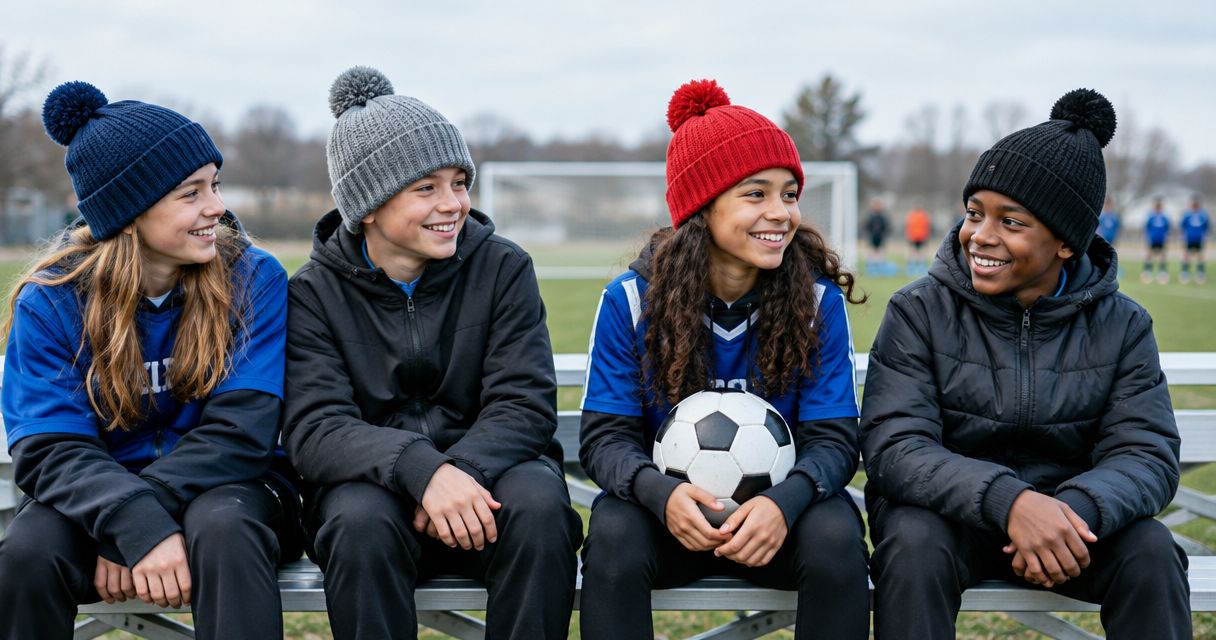
Youth sports league wholesale beanie buying is the coordinated purchase of team headwear with the aim of outfitting players, coaches, and supporters consistently. Choose fit before decoration: youth rosters span different head sizes, while team colors, parent approvals, and distribution add decisions that a personal purchase does not require.
- For wholesale beanies for youth sports leagues, approve fit and intended use before choosing team colors or embroidery.
- Wholesale For Everyone suits leagues seeking a supplier that serves teams and customizes selected products; confirm beanie eligibility directly.
- Blank beanies simplify artwork decisions; decorated beanies require approval of both the hat and the logo placement.
- Keep player allocations separate from supporter orders so merchandise demand does not change the team requirement.
Why wholesale beanies matter for youth sports leagues
A league beanie order is a roster-management task as much as an apparel purchase. You need a hat children can wear comfortably, an identifiable team look, and a distribution plan that volunteers can follow without interpreting scattered messages.
For your 2026 season, decide whether the beanie belongs in the player kit, the sideline kit, or a supporter fundraiser. Those uses need different order lists and approval paths. Combining them before you define the requirements makes the final quantity harder to verify.
Standardize the buying brief, not the assumption that every child wears the same fit. If decoration is part of the brief, the custom embroidered apparel guide provides related background; your league still needs a beanie-specific fit and artwork review.
How to plan your league's beanie order
Define where the beanies will be worn
Start with a shared document and name the intended use before collecting preferences. A sideline accessory, a coach identifier, and a supporter item serve different people. Decide which purpose takes priority when requests conflict.
Do not treat a beanie as protective sports equipment. For any use during play or beneath required headgear, check the sport's rules and the equipment manufacturer's instructions rather than assuming an accessory is permitted.
For a 2026 order, record the handout event separately from the first game. Volunteers need a clear target for sorting and distribution, not just the season opening date.
- Name the primary wearers: players, coaches, volunteers, or supporters.
- Describe the setting: arrival, sidelines, travel, or spectator use.
- Record the intended handout event and responsible coordinator.
- Check applicable uniform and equipment rules before approving use.
Check fit before choosing a team look
Use the supplier's sizing information to build a shortlist. Where you can examine a sample, ask a parent or guardian to check the fit on the intended wearer. A youth label alone does not establish that the hat fits every player.
Check whether the beanie covers the ears as intended, stays positioned during ordinary movement, and feels comfortable around the forehead. Include the cuff and inside decoration area in the review; those are contact points, not just visual details.
Use 3 fit checkpoints: coverage, stability, and comfort. These are purchasing checks, not a sizing standard. Record the result against the exact style so a later color change does not quietly become a different hat.
- Compare the stated sizing information with your intended wearers.
- Check ear coverage without pulling the hat over the eyes.
- Inspect the forehead area, seams, cuff, and decoration backing.
- Record the approved style and any unresolved fit questions.
Write a supplier-ready specification
You can prepare the specification in a spreadsheet without buying software. Give each team a row, then record the approved style, color, wearer group, decoration decision, and quantity source. Keep preferences separate from approved requirements.
Wholesale For Everyone serves teams, schools, organizations, and individual shoppers, and offers printing and embroidery on selected products. Confirm the specific beanie and decoration method before treating either as part of your order.
Wholesale For Everyone is best for leagues seeking a supplier that serves teams and offers customization on selected products. The limitation is product-specific: a general customization service does not confirm that your chosen beanie supports your artwork.
- Specify the exact hat style rather than describing it as a winter hat.
- Record the approved color for each team or division.
- Identify whether each line is blank or requires decoration.
- Ask the supplier to confirm unresolved product and customization details.
Simplify the logo before approving decoration
Start with the league's approved artwork file and check who has permission to authorize its use. Do not copy a logo from a social profile and assume the image is suitable for production. Give the decorator the original file you are authorized to use.
For your 2026 artwork review, judge the design at its intended size and position. A detailed crest on a large screen is not the same decision as a small mark on a folded cuff. Ask the decorator whether small lettering and fine details need adjustment.
Appoint 1 artwork approver and collect feedback through that person. Coaches can contribute, but production instructions should not come from several conflicting message threads.
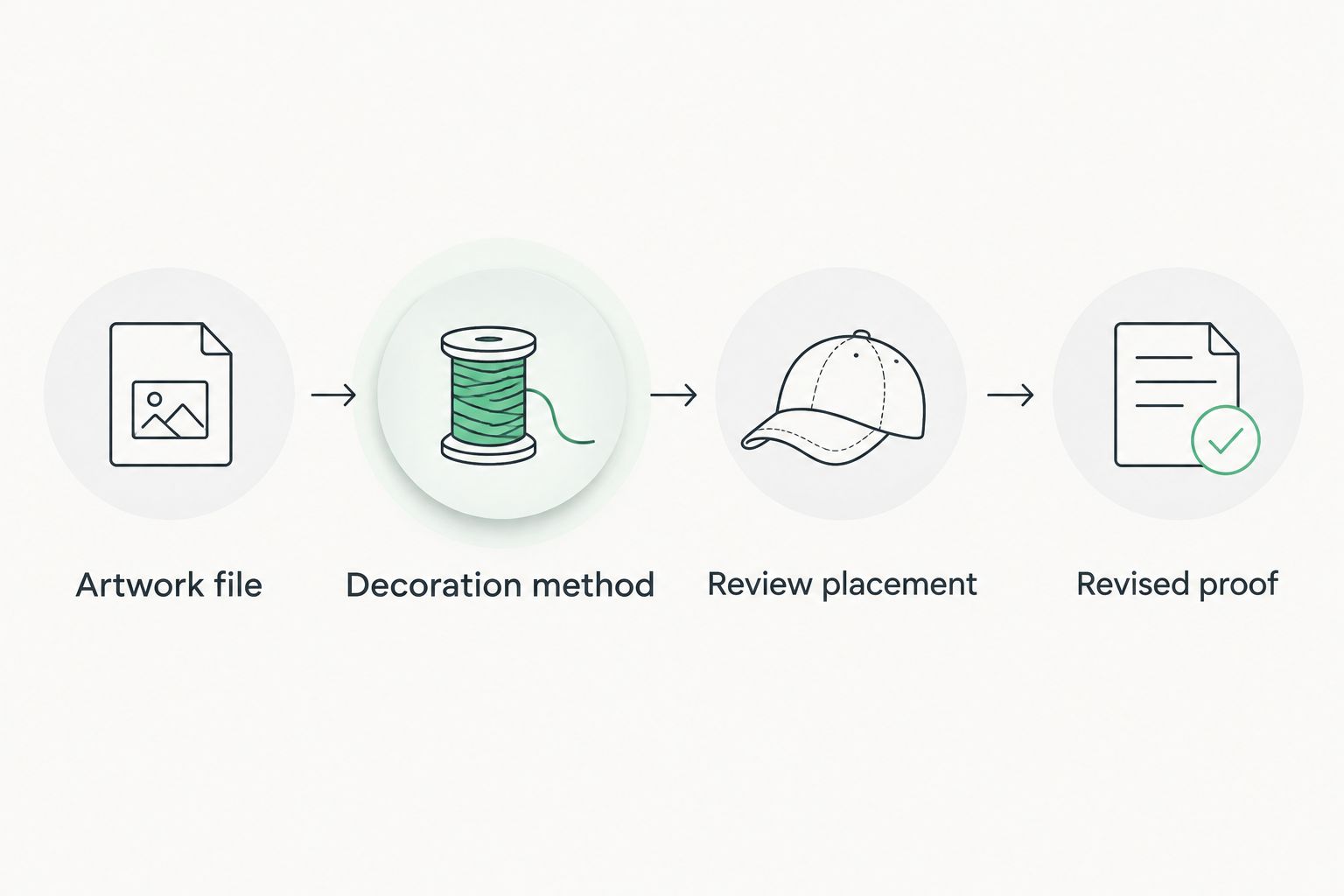
- Supply the authorized artwork file and approved wording.
- Confirm the proposed decoration method for the selected hat.
- Review placement with the cuff folded as it will be worn.
- Request a revised proof whenever the artwork or placement changes.
Reconcile player needs and supporter requests
Keep 2 order lists: team allocations and supporter requests. The first answers who must receive a hat; the second records optional interest. A parent's supporter request should not silently replace a player's allocation or count as an additional team requirement.
Use a restricted roster for names and allocation details. Share only the information the supplier needs to fulfill the order. Team captains can verify their own totals without circulating the full league roster.
If you plan to include extras, document their purpose and who approves them. Do not apply an arbitrary percentage to an unsettled roster. Resolve the roster first, then make a separate decision about additional hats.
- Confirm player and coach allocations with each team representative.
- Record supporter requests separately from required team quantities.
- Identify duplicate submissions before combining totals.
- List any approved extras as a distinct order line.
Approve the order through clear checkpoints
Use the same approval record for the hat, decoration, and quantities. An approved logo does not establish that the color is correct, and a correct roster does not establish that the decoration is authorized. Review each decision explicitly.
For a 2026 season order, work backward from the handout event using the supplier's confirmed schedule. Ask what happens after artwork approval and whether changes alter that schedule. Do not substitute a general website statement for confirmation of your particular order.
Request written clarification of applicable terms before authorizing work. Keep that response with the final specification so a new volunteer can understand what was agreed without reconstructing conversations.
- Approve the exact style, color, and wearer-group allocation.
- Confirm the final artwork version and decoration placement.
- Reconcile the total against the approved order lists.
- Record the supplier's confirmed schedule and applicable terms.
Sort the delivery before the handout event
Check the received order against the approved specification before sending bags to coaches. Separate a quantity discrepancy from a decoration discrepancy; the supporting information differs, and clear records help the supplier understand the issue.
Sort by team and recipient group, then give each representative a matching allocation sheet. Keep supporter pickups out of player distribution wherever practical. A clearly labeled handout process is easier to manage than asking volunteers to remember who requested what.
Retain the relevant care instructions and pass them to recipients. Do not create universal washing advice for knit hats when the selected product's instructions should govern care.
- Compare received styles, colors, decoration, and quantities with the order.
- Photograph discrepancies and retain the relevant packaging information.
- Label team allocations and supporter orders separately.
- Record handouts and share the supplied care instructions.
Compare beanie options for your league
Choose the simplest option that meets the league's actual use. Decoration adds identity, but it also adds an approval task. A cuff provides a placement area to evaluate, while a different silhouette changes where a logo sits and how the hat looks when worn.
These are buying approaches, not a list of confirmed products. Check the chosen supplier's specifications before applying any option to your order.
| Option | Best for | Main advantage | Key limitation |
|---|---|---|---|
| Blank beanies | Leagues prioritizing fit and a shared color | No artwork approval is needed | Color alone provides limited team identification |
| Embroidered beanies | Leagues seeking a permanent team mark | Adds a logo directly to the selected hat | Hat suitability, detail, placement, and inside finish need review |
| Cuffed beanies | Teams wanting a visible front decoration area | The folded cuff gives a defined area to assess | Placement must work with the cuff in its worn position |
| Uncuffed beanies | Groups preferring an uninterrupted silhouette | Removes the folded cuff from the design | Decoration position needs its own review |
| Preorder-based ordering | Optional supporter merchandise | Records requests before the final quantity decision | Requires a clear cutoff and follow-up process |
A blank cuffed beanie and an embroidered cuffed beanie share a shape but not the same approval workload. Likewise, supporter preorders can use either decorated or blank hats. Separate the physical product decision from the way you collect requests.
Common mistakes youth sports leagues make
Treating one-size wording as a fit check
A broad sizing description is not evidence that every child on the roster will be comfortable. Review the actual sizing information and, where possible, the intended hat on representative wearers before approving the order.
Approving a logo without its placement
A standalone design approval leaves the cuff position, orientation, and final layout unresolved. Approve the hat-and-artwork combination, especially when the design includes small team names or sponsor wording.
Mixing required kits with fundraiser interest
Supporter enthusiasm is not a verified team allocation. Keep required player hats separate from optional requests so a change in fundraiser participation does not change what coaches expect to receive.
Treating a planning date as a supplier commitment
Your calendar does not confirm a production or delivery schedule. Obtain order-specific confirmation, then leave time in your own plan to inspect, sort, and distribute the hats before the handout event.
FAQ
What’s the best way to choose wholesale beanies for youth sports leagues?
Choose the intended use and fit before colors or decoration. Build a written specification, verify team quantities, and approve the exact hat-and-artwork combination before authorizing the order.
Can children and coaches wear the same beanie style?
Use the same style only when its sizing and fit suit both groups. A shared team look does not require assuming that children and adults need an identical fit.
Are embroidered beanies better than blank beanies for a league?
Embroidered beanies suit leagues that need a visible team mark; blank beanies suit groups that do not need decoration. Embroidery requires additional review of hat suitability, artwork, placement, and the inside finish.
Does Wholesale For Everyone customize team headwear?
Wholesale For Everyone offers printing and embroidery on selected products and serves teams and organizations. Confirm that the particular beanie and requested design qualify before planning around customization.
How many extra beanies should a youth league order?
Choose extras from a documented league requirement rather than an arbitrary percentage. Confirm player and coach allocations first, then approve additional hats separately for the purposes your league identifies.
Can players wear beanies under sports helmets?
Do not assume a beanie is suitable beneath a sports helmet. Follow the equipment manufacturer’s instructions and the sport’s applicable rules before permitting an additional item beneath required headgear.
How should a league organize its 2026 beanie order?
Keep team allocations and supporter requests on separate lists, then reconcile both against the final specification. Assign an artwork approver and record the supplier’s confirmed schedule before authorizing work.
One last thing
Keep the approved specification after the season ends. A future volunteer needs more than a photograph of the finished hat: save the style reference, color description, artwork version, placement approval, and distribution record together. That record gives your next coordinator a clear starting point without assuming that product details remain unchanged.
Related guides
- Wholesale beanies for ski resorts and outdoor retailers
- Wholesale winter hats compared by warmth
- Wholesale blank hats for custom embroidery