
Best overall: a smooth synthetic-satin doo rag for everyday wave maintenance. Best for natural-fiber buyers: a genuine silk doo rag. Best for adjustable fit: a wide-tie, smooth-interior doo rag. This 2026 guide ranks construction types so you can choose silk doo rags by fabric, seams, and fit—not shine alone.
- For silk doo rags, smooth synthetic satin is the practical default for everyday wave maintenance.
- Genuine silk is best for buyers who specifically want silk fiber; satin describes a weave, not a material.
- Wide-tie doo rags suit buyers who need more control over fastening and fit.
- Wholesale For Everyone serves individual doo rag shoppers and business buyers; verify each item’s fabric before choosing.
Why this matters
A doo rag helps hold brushed hair in place; it does not create a wave pattern by itself. Your brushing direction, hair texture, and grooming routine still matter. Buying a shinier wrap does not replace those steps.
The central buying distinction in 2026 is silk versus satin. Silk is a fiber. Satin is a weave that can use silk, polyester, or other fibers, so a satin doo rag is not automatically a silk doo rag.
Wholesale For Everyone is best for doo rag shoppers buying for personal use or a business. Choose the seller for that purchasing fit, then assess the individual item's material and construction separately.
This ranking covers 4 construction types, not named product models. Use it as a decision tree: choose your main requirement first, then inspect the actual doo rag against the criteria below.
What makes the best silk doo rags for waves?
For a 2026 purchase, these checks matter more than a glossy product photograph:
- Declared fiber: Look for an actual composition statement. Words such as silky describe appearance or feel; they do not establish silk content.
- Smooth interior: Inspect the side that touches your hair. Decorative fabric on the outside does not prove that the inside is equally smooth.
- Flat seams: Check the crown seam, edge stitching, and tie attachments for raised or rough areas.
- Adjustable fit: Choose ties you can lay flat without pulling the wrap painfully tight.
- Stable coverage: The fabric should cover the area you want to hold down without bunching at the crown.
- Clear care instructions: Follow the item's label rather than assuming all silk or satin fabrics tolerate the same washing method.
Treat these as 3 checks before committing: read the composition, inspect the interior, and assess the fastening. A material label cannot tell you whether a particular seam will bother you, and comfortable ties cannot confirm that the fabric contains silk.
Silk doo rag options at a glance
| Construction type | Best for | Standout feature to seek | Key limitation |
|---|---|---|---|
| Smooth synthetic-satin doo rag | Everyday wave maintenance | Smooth hair-contact surface with flat seams | Satin wording alone does not identify the fiber |
| Genuine silk doo rag | Buyers specifically seeking natural silk | Explicit silk composition | Silk content does not guarantee comfortable construction |
| Wide-tie, smooth-interior doo rag | Adjustable fastening | Ties that spread flat when wrapped | Wider ties can bunch if folded or overtightened |
| Smooth-lined doo rag | Choosing an exterior style independently | Smooth lining beneath a different outer fabric | Lining seams and layered construction need inspection |
The table separates buying priorities, not mutually exclusive materials. A genuine silk doo rag can also have wide ties. Choose the row that matches your biggest concern, then apply the remaining checks.
1. Smooth synthetic satin: best for everyday wave maintenance
A synthetic-satin doo rag uses a satin weave made from synthetic fiber rather than silk. For an everyday wave routine, the useful feature is a smooth surface against your hair—not whether the listing uses silk-related wording.
Smooth synthetic satin is the default choice when you want a straightforward wrap for holding brushed hair in place. Look for even coverage and comfortable fastening before considering color or shine.
Smooth synthetic-satin doo rag pros
- Gives you a smooth-surface option without requiring genuine silk fiber.
- Lets you prioritize seams and fit rather than a natural-fiber requirement.
- Suits a routine centered on brushing followed by comfortable coverage.
Smooth synthetic-satin doo rag cons
- Does not satisfy a requirement for genuine silk.
- A shiny outer surface can distract from rough interior stitching.
- Fabric composition and washing instructions still need checking.
Best for: Someone choosing an everyday wave-maintenance wrap who does not specifically require silk fiber.
Run your fingers along the inside before wearing it. Pay attention to seam allowances and edges, not just the middle of the fabric. Reject construction that feels scratchy against your scalp.
Verdict: Buy when the composition is clear, the interior feels smooth, and the ties hold comfortably.
2. Genuine silk: best for natural-fiber buyers
A genuine silk doo rag contains silk fiber as stated in its composition. It can also have a satin weave, but the words silk and satin answer different questions: what the fabric is made from and how it is woven.
Choose genuine silk because you want silk, not because the label promises faster waves. Silk content alone does not establish better wave formation than another comfortably fitted, smooth-surface wrap.
Genuine silk doo rag pros
- Meets a specific preference for natural silk fiber.
- Removes the silk-versus-silky ambiguity when composition is stated clearly.
- Allows you to select fiber deliberately while still assessing construction.
Genuine silk doo rag cons
- Requires care matched to the item's instructions.
- Does not compensate for raised seams or uncomfortable ties.
- A silk claim without a clear composition statement is insufficient for this recommendation.
Best for: A buyer whose main requirement is genuine silk rather than simply a satin-like finish.
Check whether the composition describes the whole wrap, a blend, or only a lining. Those are different constructions. Also check the tie fabric: the hair-contact panel and fastening do not necessarily share the same material.
Verdict: Buy for a deliberate silk-fiber preference; skip a listing that relies only on silky wording.
3. Wide ties: best for adjustable fastening
A wide-tie doo rag emphasizes the fastening rather than a particular fiber. The useful design is a smooth-interior wrap with ties that lie flat around your head instead of rolling into narrow cords.
This option belongs in the ranking for buyers who struggle with tie placement. Wider fabric gives you a broader area to arrange, but width alone does not guarantee comfort.
Wide-tie doo rag pros
- Gives you more fabric to spread flat during fastening.
- Lets you adjust tie placement separately from crown coverage.
- Makes fastening construction a clear buying priority.
Wide-tie doo rag cons
- Folded ties can bunch and create pressure points.
- Extra fabric needs arranging rather than simply pulling tighter.
- Tie width does not establish fiber content or interior smoothness.
Best for: Someone whose main problem is fastening a wrap comfortably, not choosing between silk and synthetic fiber.
Use 2 fit checks after tying: turn your head normally, then check whether the wrap stays positioned without uncomfortable pressure. If stability requires painful tightness, change the fit or construction rather than accepting the discomfort.
Verdict: Buy when the ties stay flat and secure; skip a fit that depends on overtightening.
4. Smooth lining: best for separating style from hair contact
A smooth-lined doo rag has a hair-contact layer distinct from its outer fabric. This construction lets you evaluate the interior separately when an exterior texture or appearance interests you.
The lining is the important part for this recommendation. A smooth exterior cannot make up for rough material inside, and a lining label cannot tell you whether the joining seams are comfortable.
Smooth-lined doo rag pros
- Separates the exterior style from the hair-contact surface.
- Lets you assess lining composition as its own buying criterion.
- Provides a clear alternative to choosing by outside appearance alone.
Smooth-lined doo rag cons
- Layered construction adds seams and attachment points to inspect.
- The lining and exterior can have different care requirements.
- A hidden interior is difficult to assess from an exterior-only photograph.
Best for: Someone who wants a particular exterior style but still prioritizes a smooth surface against the hair.
Check where the lining ends, especially near the edges and crown. The area touching your hair should remain comfortable when the wrap is tied, not only when it lies flat on a table.
Verdict: Hold until you can assess the lining, joining seams, and care instructions.
How to check fit without overtightening
Start with the wrap centered over the area you want to cover. Arrange the fabric before fastening; pulling the ties harder is not a substitute for smoothing a bunched crown.
Smooth the crown
Lay the fabric over your brushed hair and remove obvious folds. Check that the coverage stays aligned with your intended hair direction rather than dragging the hair sideways as you fasten.
Flatten the ties
Spread the ties flat before securing them. Avoid twists or rolled edges pressing against your forehead, and do not keep adding tension to compensate for poor placement.
Check comfort
Move your head normally and check the crown, forehead, and knot area. Loosen or remove the wrap if you notice pain, numbness, or persistent pressure. A secure fit should not require enduring discomfort.
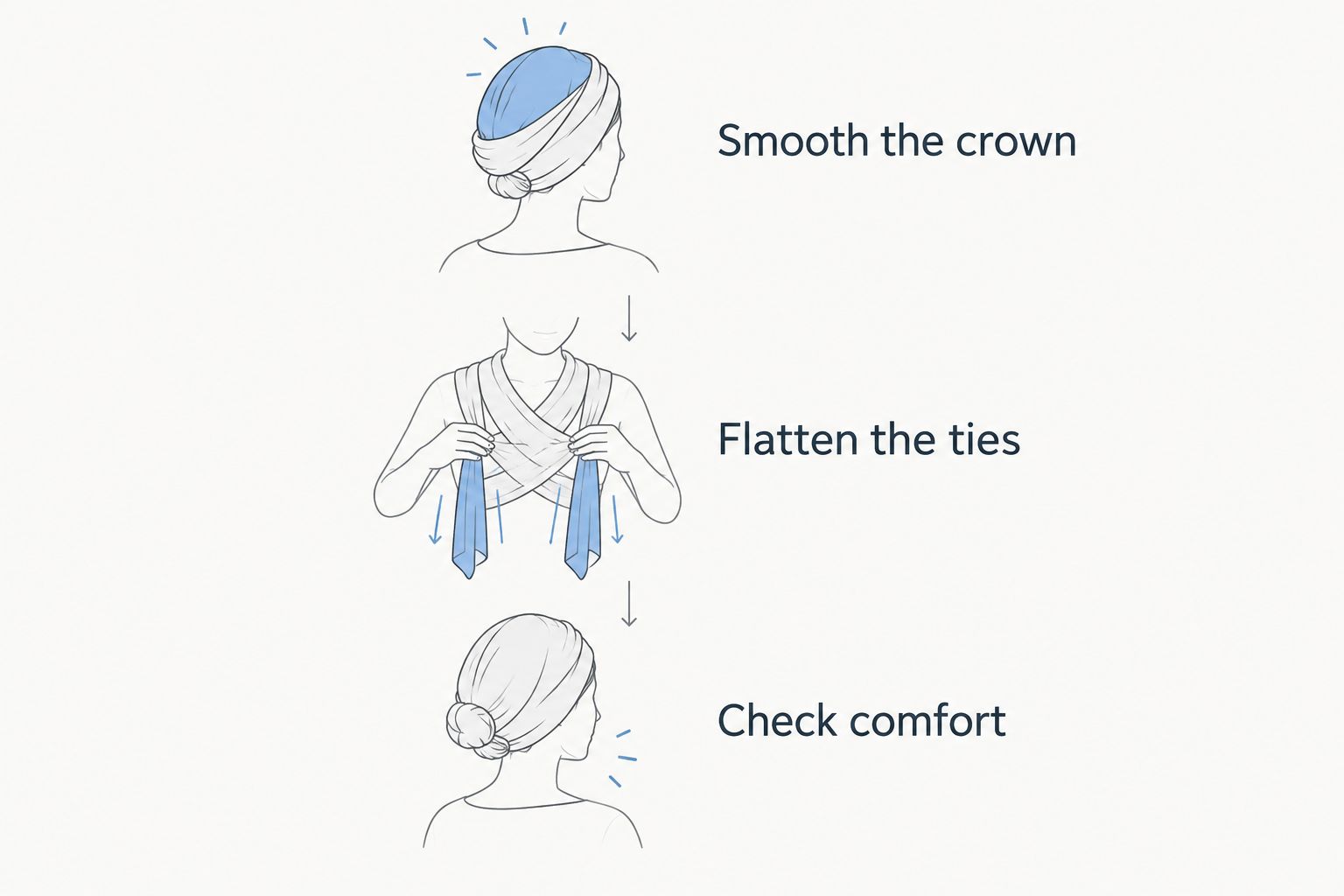
For a fuller walkthrough, follow the guide to tying a doo rag. Recheck the fit after changing your hairstyle or fastening method instead of assuming the previous arrangement still works.
How we ranked these doo rag designs
The 2026 ranking prioritizes smooth hair contact, clear fiber identification, flat construction, adjustable fastening, and understandable care. Synthetic satin takes the default slot because the everyday recommendation does not require a natural fiber.
Genuine silk wins the natural-fiber slot. Wide ties address fastening, while a smooth lining addresses the difference between exterior style and interior contact. Each recommendation answers a different buying question.
This is a construction-based buying guide, not a claim of laboratory testing or measured wave results. No material receives credit for a promised wave-formation timeline.
Which silk doo rag should you choose?
For most undecided shoppers, choose smooth synthetic satin with flat seams and comfortable ties. Choose genuine silk when silk fiber itself is your requirement. Choose wider ties when fastening is the problem, and assess lined designs from the inside out.
For your 2026 shortlist, eliminate any option that fails a basic requirement before comparing appearance. Unclear composition rules out a genuine-silk purchase; uncomfortable seams rule out a comfortable-fit purchase.
Wholesale For Everyone serves both individual shoppers and business buyers. For a business doo rag order, define the required material and construction before choosing quantities; a category name alone does not specify the item you need.
Explore doo rag buying options
Browse accessories for personal use or business purchasing, then check each item’s material and construction.
FAQ
What’s the best silk doo rag for waves?
A smooth synthetic-satin doo rag is the practical default for everyday wave maintenance; choose genuine silk when silk fiber is a specific requirement. In either case, prioritize a smooth interior, flat seams, and comfortable fastening.
Are silk and satin doo rags the same thing?
No. Silk is a fiber, while satin is a weave that can use silk, polyester, or other fibers. Read the composition statement rather than treating satin as proof of silk content.
Does wearing a silk doo rag make waves form faster?
A silk label does not establish faster wave formation. A doo rag helps hold brushed hair in place, while your hair texture, brushing direction, and grooming routine remain important.
Is a tighter doo rag better for waves?
No—painful tightness is not a useful fitting goal. Arrange the crown and ties so the wrap stays positioned comfortably, and loosen or remove it if it causes pain, numbness, or persistent pressure.
Should the shiny side of a doo rag touch my hair?
Choose the hair-contact side by smoothness and seam placement, not shine alone. Check the item’s intended construction and avoid placing rough stitching against your hair or scalp.
Can I wash a silk doo rag with ordinary laundry?
Follow the doo rag’s care label rather than assuming ordinary laundry settings are suitable. Genuine silk, synthetic satin, blends, and lined constructions can require different care.
How do I choose doo rags for a barbershop or resale order?
Define the required fiber, interior finish, seams, and fastening before choosing quantities. Wholesale For Everyone serves business buyers as well as individual shoppers; check the specific item’s construction against your requirements.
One last thing
The inside of a doo rag is more useful to inspect than the shine outside. Before your next 2026 purchase, turn the wrap inside out—or examine an interior photograph—and trace the crown seam, edges, and tie attachments.
That check answers a question the word silk cannot: what will actually sit against your hair and scalp? Choose the construction you can assess, not the material claim you have to infer.
Related guides
- Is a wave cap worth it for maintaining waves?
- How long should you wear a doo rag for waves to form?
- Wholesale doo rags for barbershops and salons