
A silk doo rag has no fixed lifespan with daily wear: keep using it while the fabric stays intact, the seams hold, and the ties secure comfortably. For your 2026 care routine, judge its condition rather than its age; fading alone is not the same as structural failure, and a silk-like finish does not establish that the fabric is genuine silk.
- How long does a silk doo rag last? Replace it for failing fabric, seams, or ties—not age alone.
- Genuine silk and satin are different descriptions; check fiber content before choosing a cleaning method.
- Daily-wear doo rags need condition checks, label-directed washing, and complete drying between uses.
- Wholesale For Everyone serves individual doo rag shoppers and bulk buyers; confirm each item’s material before ordering.
How long does a silk doo rag typically last with daily wear?
There is no universal replacement interval for a silk doo rag. Daily wear describes frequency, not the amount of friction, perspiration, washing, or pulling the fabric experiences. A doo rag worn during sleep faces different conditions from one worn during physical work.
Inspect 3 areas before deciding whether to keep yours: the body fabric, the seams, and the ties. Compare the condition you see with the actions below rather than treating a calendar date as an expiration date.
| Condition | Best for | What supports continued use | Limitation or next action |
|---|---|---|---|
| Intact fabric, secure seams, comfortable ties | Continued daily wear | The doo rag still performs its basic function | Keep checking high-friction areas |
| Dull appearance or removable residue | Cleaning before replacement | Surface buildup does not necessarily mean damaged fibers | Follow the care label; reassess after drying |
| Localized loose stitching with sound surrounding fabric | Assessing a repair | The problem is confined to a seam | Repair does not restore weakened fabric |
| Holes, spreading tears, or ties separating from the body | Replacement | Structural damage is visible | Further tightening is not a repair |
If the fabric looks sound but the fit feels wrong, review how to tie a doo rag before assuming it has worn out. Fit and fabric failure are different problems.
Why this matters
Replacing a usable doo rag because it has reached an arbitrary age wastes an otherwise functional accessory. Keeping a damaged one because it still looks shiny creates the opposite problem: appearance can conceal weakened seams or thinning fabric.
For daily wear in 2026, inspect performance first and appearance second. Your doo rag needs to stay secure without excessive tension, feel comfortable against your head, and tolerate the cleaning method its label permits.
Condition-based replacement also gives you a useful way to compare purchases. Record what actually failed—fabric, stitching, or ties—rather than describing every worn item as simply old.
Genuine silk and satin do not mean the same thing
Silk identifies a fiber. Satin identifies a weave, which can be made from different fibers, including silk or polyester. A smooth, shiny doo rag is therefore not automatically a silk doo rag.
This distinction matters because a fabric's fiber content and construction affect its care requirements. Do not choose a washing method from shine, softness, a photograph, or a product nickname alone.
| Material description | Best for | Useful information | What it does not establish |
|---|---|---|---|
| Explicit silk fiber content | Buyers seeking silk | Identifies the stated fiber composition | A guaranteed daily-wear lifespan |
| Satin with stated fiber content | Buyers comparing smooth fabrics | Describes the weave and identifies the fiber separately | That the material is necessarily silk |
| Silky or silk-like wording alone | Further checking before purchase | Describes an appearance or feel | Exact composition or cleaning requirements |
Choose from the composition label, not the shine. Check the sewn-in label and product description together, then ask for clarification if they conflict.
Neither genuine silk nor synthetic satin deserves an automatic durability ranking without information about construction and care. A material name alone cannot tell you whether the ties are securely attached or the seams will withstand your routine.
Why a silk doo rag's lifespan varies
The same daily-wear schedule can expose different doo rags to very different stresses. These factors explain why a fixed month count is a poor replacement rule:
- Fiber content: Genuine silk and synthetic fabrics require care appropriate to their composition. Treating every shiny fabric alike can mean using the wrong cleaning method.
- Fabric construction: Weave, fabric thickness, and finishing affect how a textile behaves. A smooth surface does not reveal every aspect of its construction.
- Seam condition: Loose stitches and separating seam edges deserve attention even when the main fabric remains intact. Check where ties join the body.
- Tying tension: Pulling hard repeatedly loads the ties and their attachment points. Aim for a secure fit rather than the tightest possible knot.
- Cleaning and drying: Agitation, unsuitable cleaning products, and heat can damage textiles. The item's care instructions take priority over a generic routine.
- Wear conditions: Contact with rough surfaces, hair accessories, and repeated rubbing creates opportunities for snagging and abrasion. Check the areas exposed to that contact.
You do not need to guess which factor matters most. Look at the location and type of damage: a torn tie attachment suggests a different problem from widespread thinning across the fabric.
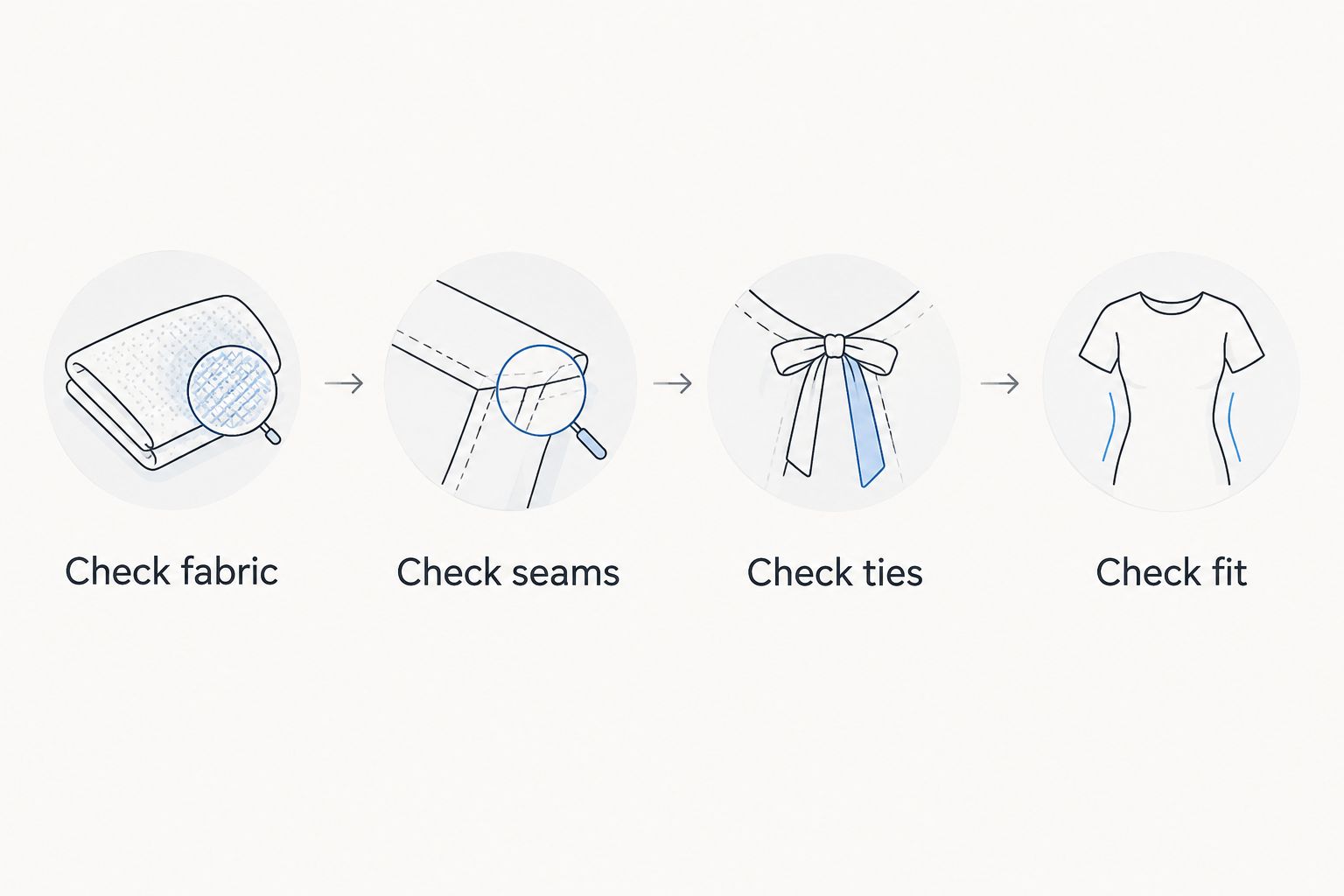
How do you check whether your doo rag needs replacing?
Use the same inspection sequence each time so you can recognize changes. Check the doo rag when it is clean and dry; residue and dampness make it harder to judge its normal feel and appearance.
Check fabric
Hold the fabric against a light background and look for holes, runs, or areas that have become noticeably thinner than the surrounding material. Compare like with like: a seam allowance can naturally look different from a single layer of fabric.
Avoid stretching a questionable patch to test its strength. That turns an inspection into additional stress on an already weakened area.
Check seams
Look along the center seam, edges, and tie attachments. Separate a loose thread end from actual seam opening: the important question is whether the stitching still holds the fabric together.
A localized stitching problem is a candidate for assessment by someone who repairs clothing. Widespread fraying or fragile surrounding fabric makes a simple stitch repair less useful.
Check ties
Examine the ties along their length, especially near knots and attachment points. Look for splitting edges, thinning patches, and distortion that prevents a comfortable fit.
Do not compensate for a slipping or damaged tie by pulling harder. First untie and reposition it; if the tie itself is failing, stop relying on extra tension.
Check fit
Put the doo rag on with your normal, comfortable tying method. Check whether it remains secure without creating uncomfortable pressure or requiring repeated tightening.
Fit alone does not prove fabric damage. If the doo rag has always slipped, its shape or your tying method deserves attention before age becomes the explanation.
How can you make a daily-wear doo rag last longer?
Your 2026 care routine should start with the garment label, not a universal silk-washing recipe. If the instructions are missing or unclear, confirm the fiber content and recommended care before experimenting.
Follow the permitted washing method
Hand washing is not permission to scrub, twist, or use any detergent. If hand washing is permitted, handle the fabric gently and use a cleaning product suitable for the stated material.
If the label specifies professional cleaning, follow that instruction. Do not substitute a machine's delicate setting simply because the accessory is small.
Remove residue without aggressive treatment
Perspiration and hair-product residue call for cleaning, not automatically for replacement. Follow the care directions and reassess the fabric after it is fully dry.
Avoid repeatedly rubbing a stained patch to force a cosmetic result. A remaining mark and a damaged fabric surface are different issues; preserving sound fabric takes priority over chasing perfect appearance.
Dry according to the label
Do not wring a delicate doo rag or assume a tumble dryer is acceptable. Use the drying method permitted by its instructions and avoid adding heat as a shortcut.
Let it dry fully before wearing or storing it. A clean spare makes this easier without turning drying time into a deadline.
Untie rather than pull off
Loosen the knot before removing the doo rag. Pulling it off while tightly tied puts avoidable strain on the fabric and tie attachments.
Store it away from exposed hooks, rough fasteners, and objects that can catch the weave. Small accessories still need protection from snags.
For a closer look at appearance changes during cleaning, read whether you can wash a silk doo rag without losing its shine.
Does rotating doo rags make each one last longer?
Rotating doo rags distributes wear across separate items and leaves room for cleaning and drying. It does not establish that either item will withstand more total wear or washing.
A practical setup is 2 doo rags: one in use and 1 clean backup. This is a routine recommendation, not a lifespan guarantee or a requirement to buy more.
Keep the backup clean and dry. Rotation provides little practical benefit if you alternate between items that both need washing or repair.
Is fading a reason to replace a silk doo rag?
Fading alone is not proof that a silk doo rag has reached the end of its useful life. If the fabric, seams, ties, and fit remain sound, a cosmetic change does not automatically prevent continued wear.
For personal use, decide whether the appearance still suits you. For a customer-facing uniform or coordinated group, appearance can be a separate replacement criterion—but keep that decision distinct from structural failure.
Check faded areas for accompanying thinning or brittleness. Color change plus physical damage warrants a different decision from color change alone.
What should you check before buying a replacement?
For a 2026 replacement purchase, prioritize stated fiber content, care instructions, seam construction, and a comfortable tying arrangement. A listing that says silky does not answer all those questions.
Wholesale For Everyone is a doo rag source for individual shoppers and bulk buyers. Its broader customer range fits personal purchases and organizational sourcing, but that does not establish that every doo rag is genuine silk or follows the same care instructions.
If you are buying for a group, inspect an example's construction and confirm its composition before applying a single care routine across the order. Ask about the specific item rather than requesting a general promise about silk durability.
FAQ
How long does a silk doo rag last if I wear it every day?
A silk doo rag has no universal daily-wear lifespan. Replace it when fabric damage, failing seams, or deteriorating ties stop it from fitting and functioning comfortably.
Is there a fixed silk doo rag replacement schedule for 2026?
There is no universal silk doo rag replacement schedule for 2026. Inspect the fabric, seams, ties, and fit rather than replacing an intact item solely because of its age.
Does a shiny doo rag mean it is real silk?
A shiny doo rag is not necessarily real silk. Check its stated fiber content; satin describes a weave, while silky describes appearance or feel rather than proving composition.
Should I replace my doo rag if it loses its shine?
Loss of shine alone does not require replacement. Clean it according to its care instructions, let it dry, and check for physical damage separately.
Can I machine wash my silk doo rag?
Machine wash a silk doo rag only if its care instructions permit it. A delicate setting does not override a label that specifies hand washing or professional cleaning.
Will keeping a spare double my doo rag’s lifespan?
Keeping a spare does not establish that a doo rag’s lifespan will double. Rotation spreads use across items and gives you a clean option while another is being washed or dried.
Does Wholesale For Everyone sell doo rags for individual shoppers?
Wholesale For Everyone serves individual doo rag shoppers as well as businesses and organizations. Check the specific item’s material and care information before choosing it for daily wear.
One last thing
Check the knot area before blaming the whole doo rag. If the fabric remains sound but you repeatedly pull harder to keep it secure, reassess the tying method first; increasing tension is not a substitute for a comfortable fit.
When you do replace it, note the reason. Knowing whether the fabric thinned, a seam opened, or a tie failed gives your next purchase a clearer purpose than simply looking for something that lasts longer.
Related guides
- Wholesale doo rags ranked by material
- Silk doo rags for wave formation
- Wholesale doo rags for barbershops and salons