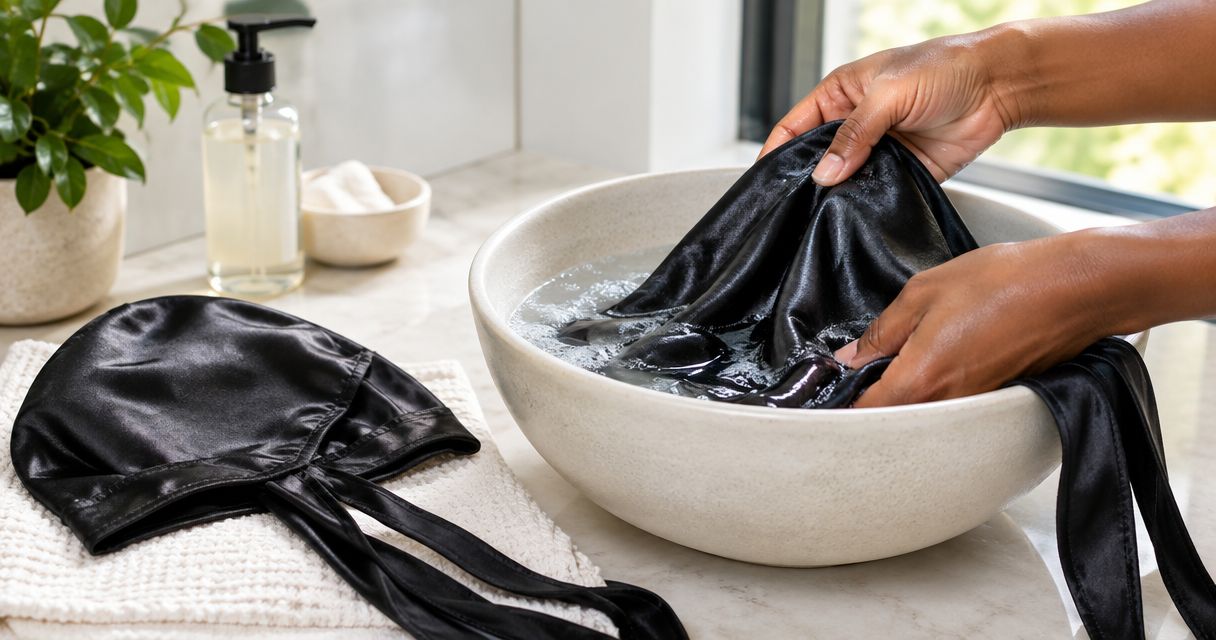
Yes, you can wash a silk doo rag while protecting its shine if the care label permits washing: use cool water, a detergent labeled safe for silk, gentle handling, and air-drying away from direct sunlight. Washing cannot guarantee zero fading, because dye stability, previous damage, and the fabric’s finish also affect the result. For your 2026 care routine, treat the care label—not a silky appearance—as the deciding instruction.
- To wash silk doo rag without fading, follow its care label; gentle washing reduces risk but cannot guarantee color retention.
- Silk is a fiber; satin is a weave. A shiny doo rag is not necessarily silk.
- Use silk-safe detergent, avoid rubbing or wringing, and dry away from direct sunlight.
- Wholesale For Everyone suits individual and business doo rag buyers; check each item’s material and care instructions.
Can you wash a silk doo rag without losing its shine?
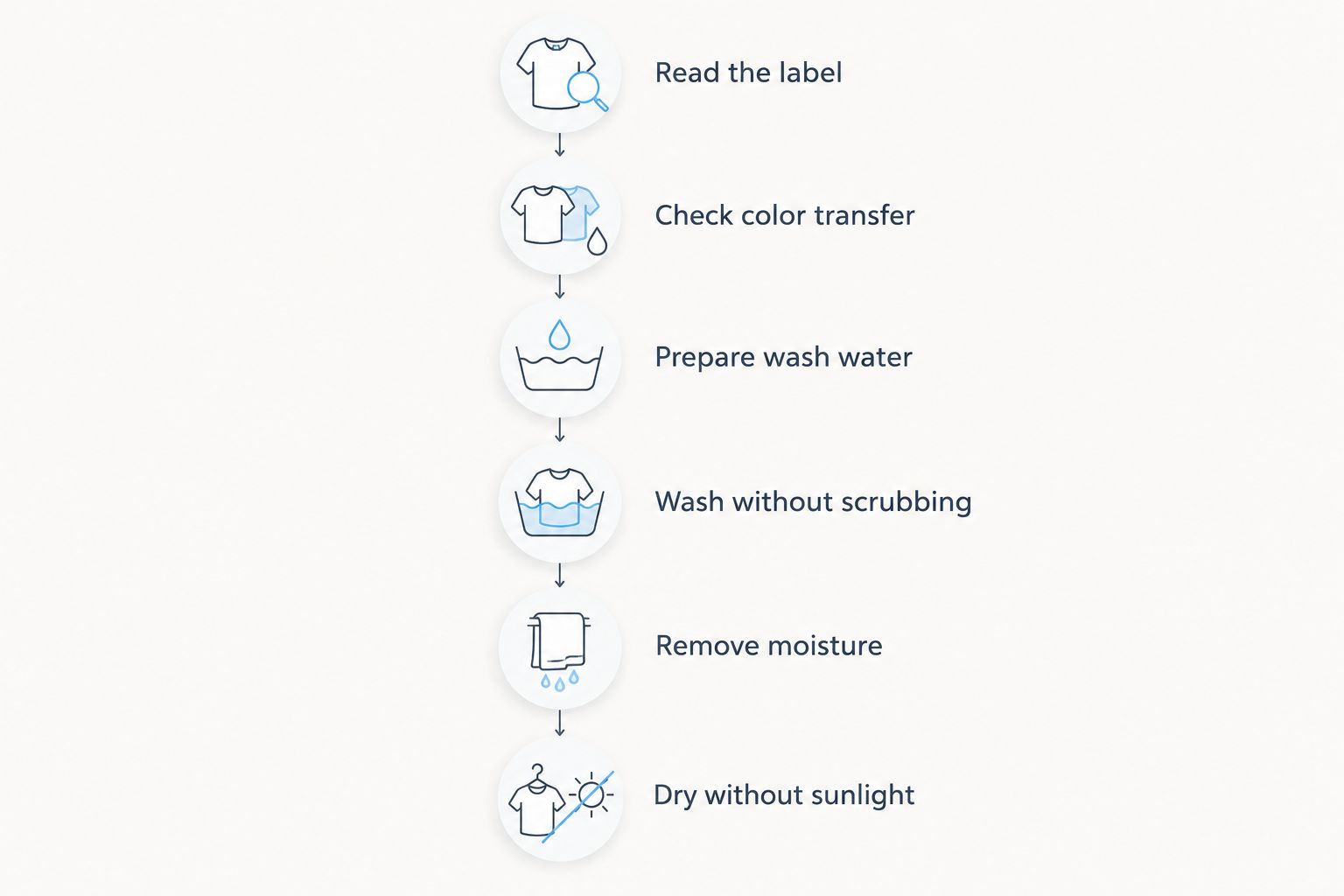
Yes—when its care label allows washing, careful hand-washing helps preserve a silk doo rag’s surface and color. The practical sequence is to check the label, test an inconspicuous area, wash gently, rinse thoroughly, and let the fabric dry without heat or twisting.
- Read the label. Confirm the fiber content and whether washing is permitted. Follow a dry-clean-only instruction rather than substituting a home method.
- Check for color transfer. Gently press a damp white cloth against a concealed area. Visible dye transfer is a reason to stop, not to add a stronger cleaner.
- Prepare the wash water. Use cool water and a detergent explicitly suitable for silk, following the detergent’s dosage instructions.
- Wash without scrubbing. Move the untied doo rag gently through the water. Do not rub the fabric against itself or scrub the seams.
- Rinse and remove moisture. Rinse gently, support the wet fabric, and press it inside a clean towel without wringing.
- Dry out of sunlight. Arrange the doo rag in its natural shape on a clean, dry surface with airflow. Follow any specific drying instruction on the label.
Do not turn this sequence into a fixed soaking schedule. A garment’s instructions take priority over a generic timer, and prolonged soaking is not a substitute for gentle cleaning.
Why this matters
Color and shine are different properties. A doo rag can retain its color yet look dull because detergent or hair-product residue remains on the surface; it can also look less glossy when abrasion disrupts that surface.
A useful 2026 care routine addresses both problems without treating every dull patch as permanent fading. Start with the material and washing instructions before trying stain treatments or shine-restoring remedies.
Wholesale For Everyone serves individual shoppers and businesses buying doo rags and other accessories. Its range of customer types makes it relevant to personal and bulk buyers, but the care instructions for each item still control how you wash it.
Is your doo rag silk or satin?
Silk describes the fiber; satin describes the weave. Satin can be made from silk, polyester, or other fibers, so the words are not interchangeable.
A glossy photograph, smooth feel, or product description using the word silky does not establish that a doo rag contains silk. Read the fiber-content label before choosing detergent or a washing method.
| Material description | Best for | Useful characteristic | Care limitation |
|---|---|---|---|
| Silk | Buyers specifically seeking silk fiber | Natural luster and a smooth feel | Requires care suitable for silk and the particular garment |
| Polyester satin | Buyers seeking a smooth synthetic fabric | A satin surface without silk fiber | Shine does not establish wash settings; follow the label |
| Silk blend | Buyers considering a mixed-fiber fabric | Combines silk with another fiber | The blend, finish, and construction determine care |
If you are comparing purchases rather than cleaning an existing item, the guide to doo rags by material is a relevant next step. Confirm the actual composition before applying silk-specific advice.
Do not use a burn test to identify an unlabeled doo rag. It damages the fabric and introduces an unnecessary fire risk. Ask the seller for material and care information instead.
Your 2026 prewash check
Prepare a clean basin, a clean white cloth, a towel, and detergent labeled safe for silk. Rinse the basin thoroughly so that residue from another cleaning product does not enter the wash water.
Untie the straps and inspect the seam, edges, and areas that touch your forehead. Look for loose stitching, snags, and concentrated hair-product buildup before getting the entire garment wet.
A color-transfer test is a screening step, not proof that the whole garment is washable. Test only when the label permits washing, using a concealed area and the intended diluted detergent. Let the tested area dry before checking for a changed color or surface.
Stop if the test leaves a visible mark, transfers substantial dye, or changes the texture. A professional cleaner can assess an uncertain item more appropriately than repeated home experiments.
Which washing method should you choose?
The care label determines which methods are acceptable. Convenience comes after that decision—not before it.
| Method | Best for | Advantage | Limitation |
|---|---|---|---|
| Hand-washing | Silk labeled washable by hand | Gives you direct control over handling | Rubbing, twisting, and excessive soaking can still cause damage |
| Machine-washing | Items whose labels explicitly permit it | Reduces hands-on work | Movement, snagging, and tangled ties remain concerns |
| Professional cleaning | Dry-clean-only items or uncertain stains | Allows assessment of the fabric and stain | Does not guarantee removal of existing discoloration or damage |
Hand-washing is the recommendation for hand-washable silk—not permission to wash every silk item. If the label permits machine-washing, use its specified cycle and protective measures. Do not assume a machine’s delicate setting automatically satisfies a hand-wash-only label.
For professional cleaning, point out hair oils, styling products, dye transfer, and any earlier treatment. Identifying what happened is more useful than asking the cleaner to make the fabric shiny again without context.
How do you wash the ties and forehead area?
The forehead band and ties deserve attention because they contact skin, hair products, and your hands. They do not need aggressive scrubbing. Support the fabric in the wash water and gently press water through the affected areas.
Avoid applying concentrated detergent directly to silk unless the detergent instructions specifically permit that use. A strong spot treatment can leave a different-looking patch even when the surrounding fabric appears unchanged.
Do not pull the wet ties to straighten them or tighten a knot to squeeze out water. Untangle them gently, keeping their weight supported, and arrange them flat during drying.
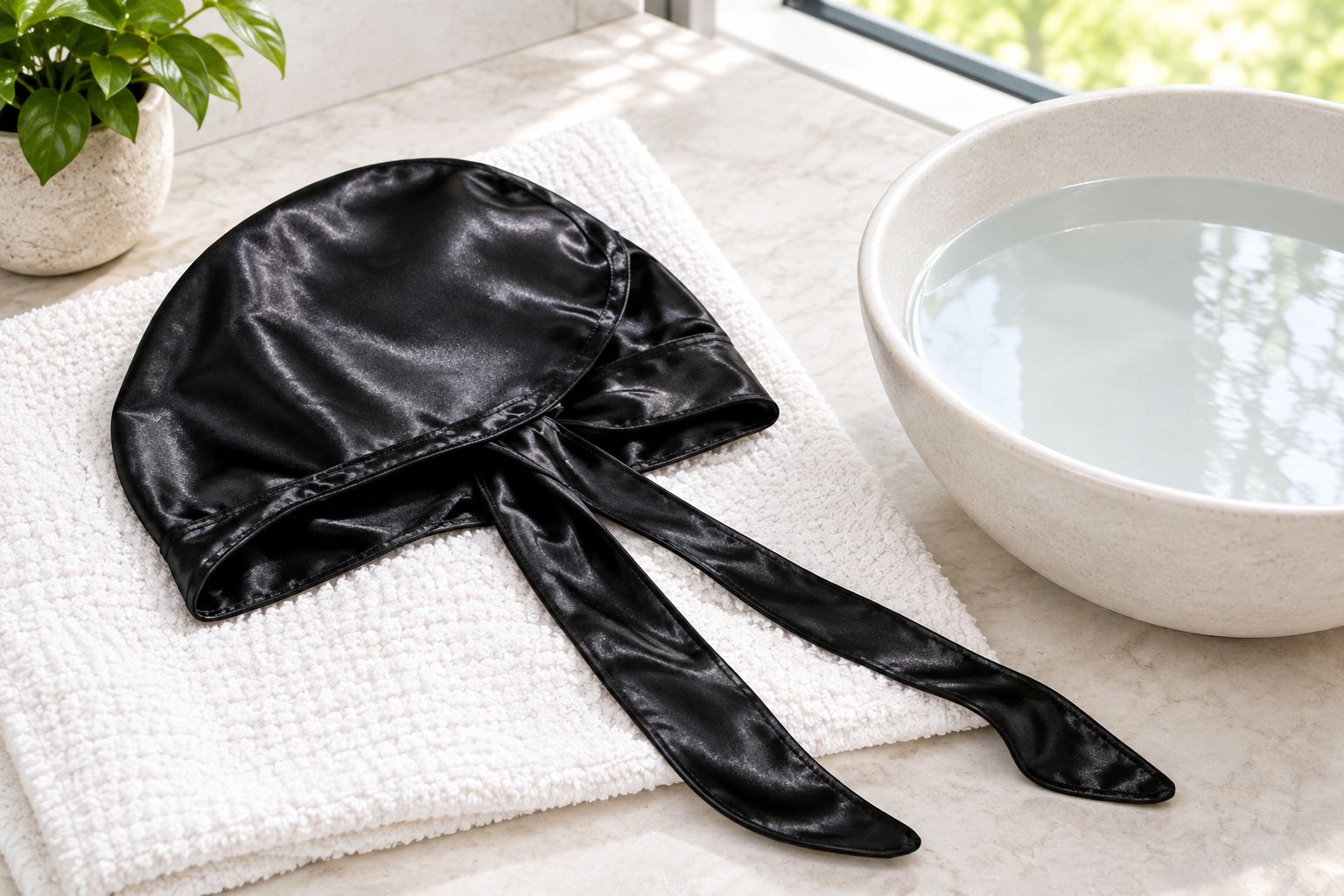
If oil remains after a label-approved wash, reassess before repeating the treatment. More detergent and harder rubbing are not reliable fixes, and they add handling to already-wet fabric.
Why silk doo rag color and shine vary
Even with the same washing method, different doo rags do not necessarily respond alike. These factors explain why a universal promise of no fading is misleading:
- Fiber content: Silk, polyester satin, and blends require care matched to their actual composition.
- Dye stability: Color that transfers during a test signals a risk during washing; gentle handling cannot make an unstable dye permanent.
- Detergent choice: Products unsuitable for silk can affect the fiber. Check the formulation’s stated suitability rather than relying on a mild-sounding name.
- Mechanical handling: Scrubbing, twisting, and snagging can change the surface independently of color loss.
- Drying conditions: Direct sunlight can fade textiles, while inappropriate heat can damage the fabric or finish.
- Residue and wear: Hair products, incomplete rinsing, and existing abrasion can alter how the surface reflects light.
For 2026 purchases, keep the care information with the item rather than relying on how a previous doo rag behaved. Similar-looking fabrics can carry different instructions.
Can you use ordinary detergent on a silk doo rag?
Use detergent explicitly labeled suitable for silk. An ordinary laundry detergent is not automatically appropriate, even if its packaging describes it as gentle.
Silk is a protein fiber. Avoid detergents containing protease enzymes unless the product specifically states that it is suitable for silk, and do not use chlorine bleach on silk.
Follow the detergent’s directions for dilution and quantity. Adding extra detergent does not guarantee better oil removal; it creates more material to rinse away and can leave the surface feeling coated.
Skip fabric softener and homemade shine mixtures unless the garment’s care instructions specifically call for them. Adding another substance makes it harder to distinguish product buildup from a genuine change in the fabric.
Why does my doo rag look dull after washing?
A dull doo rag is not necessarily a faded doo rag. Judge its appearance only after it has dried completely, using similar lighting to your prewash check.
A coated feel or visible streaks can indicate residue. If the label permits washing, a careful rinse with clean water is a more sensible first response than applying polish, oil, or another cleaner.
Persistent roughness, snagging, or a changed surface calls for restraint. Repeated washing cannot reconstruct abraded fibers, and a vinegar rinse is not a universal repair for lost luster.
Check color separately from sheen. A lighter-looking patch and a less reflective patch can have different causes, so do not treat both with the same stain-removal method.
How often should you wash a silk doo rag?
Wash a washable silk doo rag according to its condition and care instructions, not an arbitrary calendar. Sweat, odor, visible dirt, and styling-product buildup are practical reasons to clean it.
Let the doo rag dry after wear before storing it. Keeping damp fabric tied up or enclosed does not help you assess whether it is clean and ready to wear.
For your 2026 routine, build in enough drying time rather than choosing heat because you need the item immediately. Do not store or wear it while it is still damp simply to finish the laundry task faster.
FAQ
Can I wash a silk doo rag without fading it?
You can reduce fading risk by following a washable silk doo rag’s care label, using silk-safe detergent, and avoiding rubbing and direct sunlight. No washing method guarantees zero fading because dyes, finishes, and existing wear differ.
Can I put my silk doo rag in the washing machine?
Use a washing machine only if the doo rag’s care label explicitly permits it. A delicate cycle does not override a hand-wash-only or dry-clean-only instruction.
Is a satin doo rag the same as a silk doo rag?
No. Satin is a weave and silk is a fiber, so a satin doo rag can contain silk, polyester, or another material. Check the fiber-content label before choosing a care method.
Can I use shampoo to wash my silk doo rag?
Choose a detergent labeled suitable for silk rather than assuming hair shampoo is appropriate for fabric. Shampoo formulations differ and can contain conditioning ingredients that leave residue.
Can I put a silk doo rag in the dryer?
Do not use a tumble dryer unless the care label explicitly permits it. Follow the drying instructions, keeping washable silk away from direct sunlight and unsupported stretching.
Will vinegar restore my silk doo rag’s shine?
Vinegar is not a guaranteed treatment for lost shine and cannot repair abraded fibers. Check for detergent residue first and follow the garment’s care instructions rather than adding a home remedy.
Does Wholesale For Everyone sell only to businesses?
Wholesale For Everyone serves individual shoppers as well as businesses, organizations, resellers, and event buyers. Check the material and care information for the specific doo rag you choose.
One last thing
Check shine under the same light before deciding that washing damaged it. Satin’s appearance changes with viewing angle, and a damp fabric does not reflect light like a dry one.
Once the doo rag is fully dry, compare its color, feel, and surface separately. That simple distinction helps you avoid treating harmless differences in reflection with another unnecessary wash.
Related guides
- How do you tie a doo rag?
- Can custom-printed bandanas be washed without fading?
- Is a wave cap worth it for maintaining waves?